
Last updated November 15, 2026
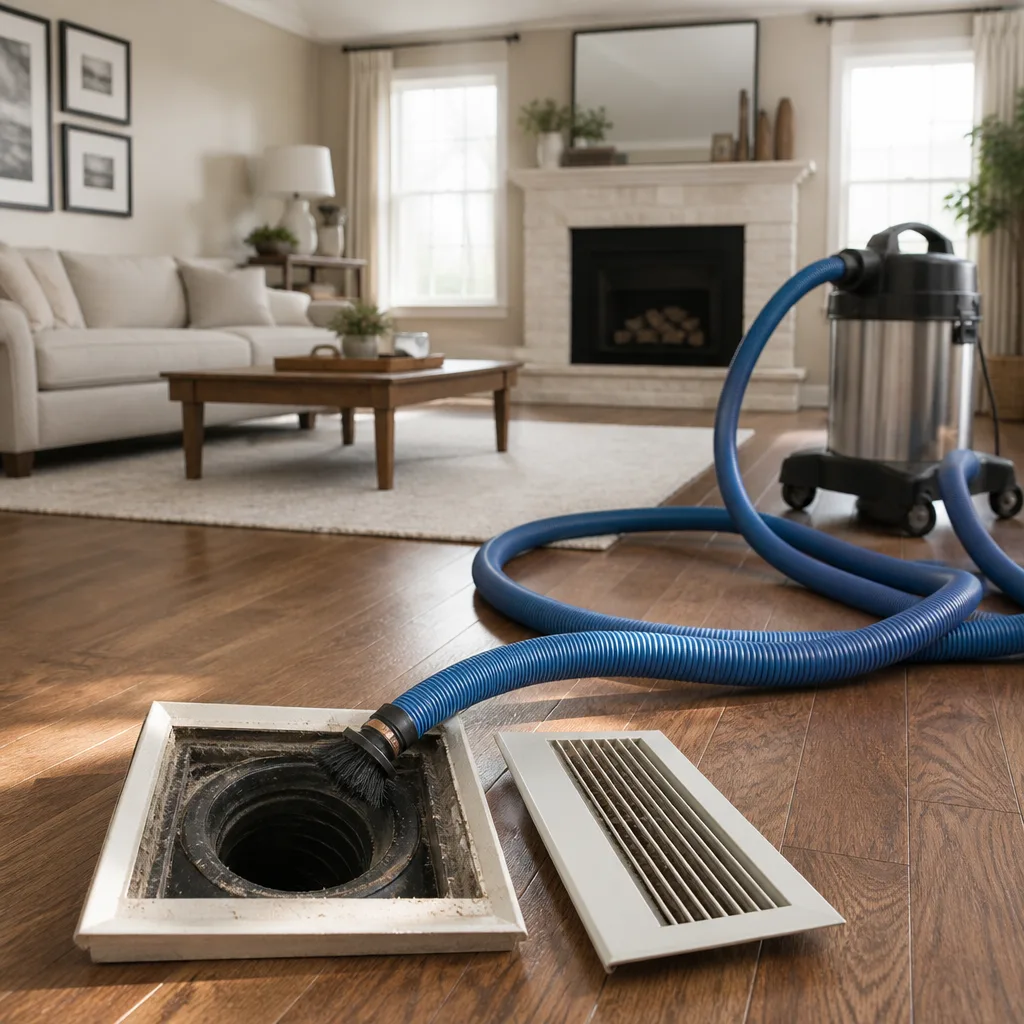 Whole-home duct cleaning
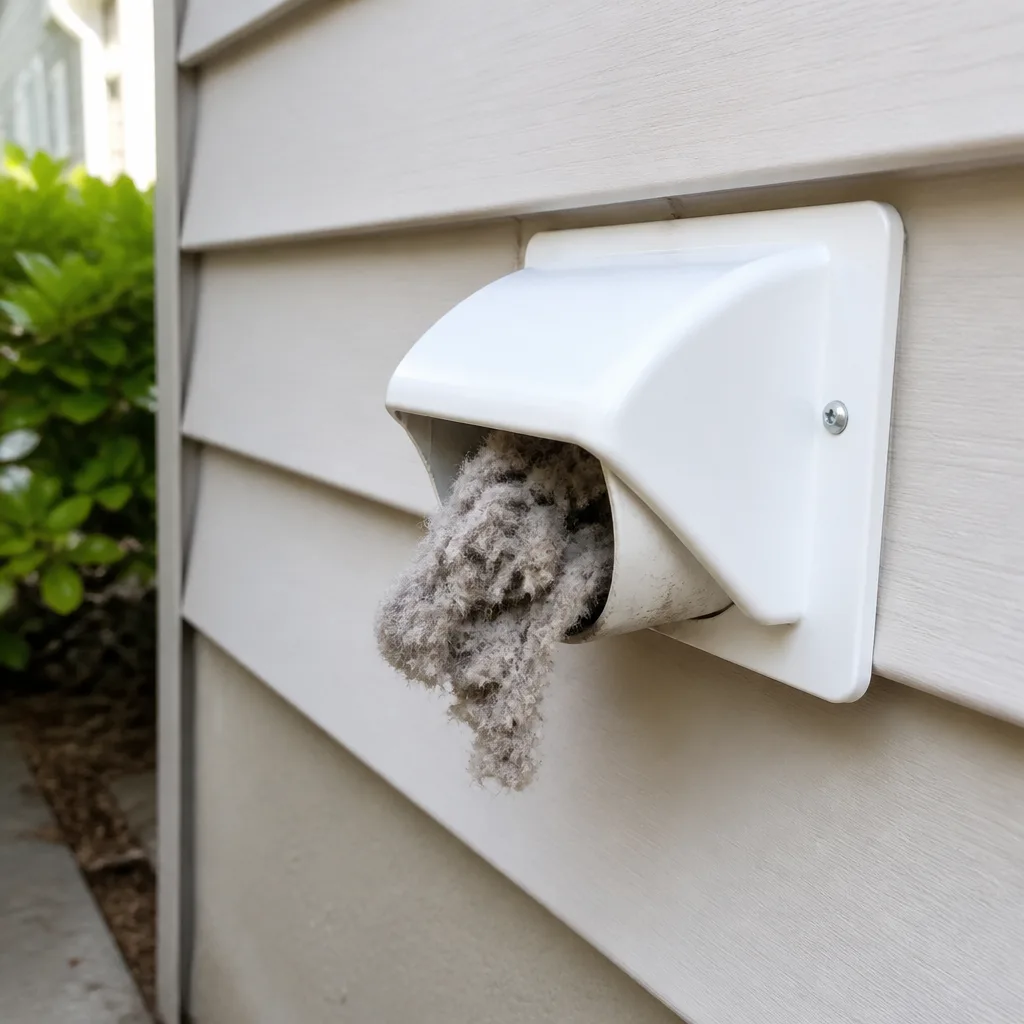 Dryer vent cleaning
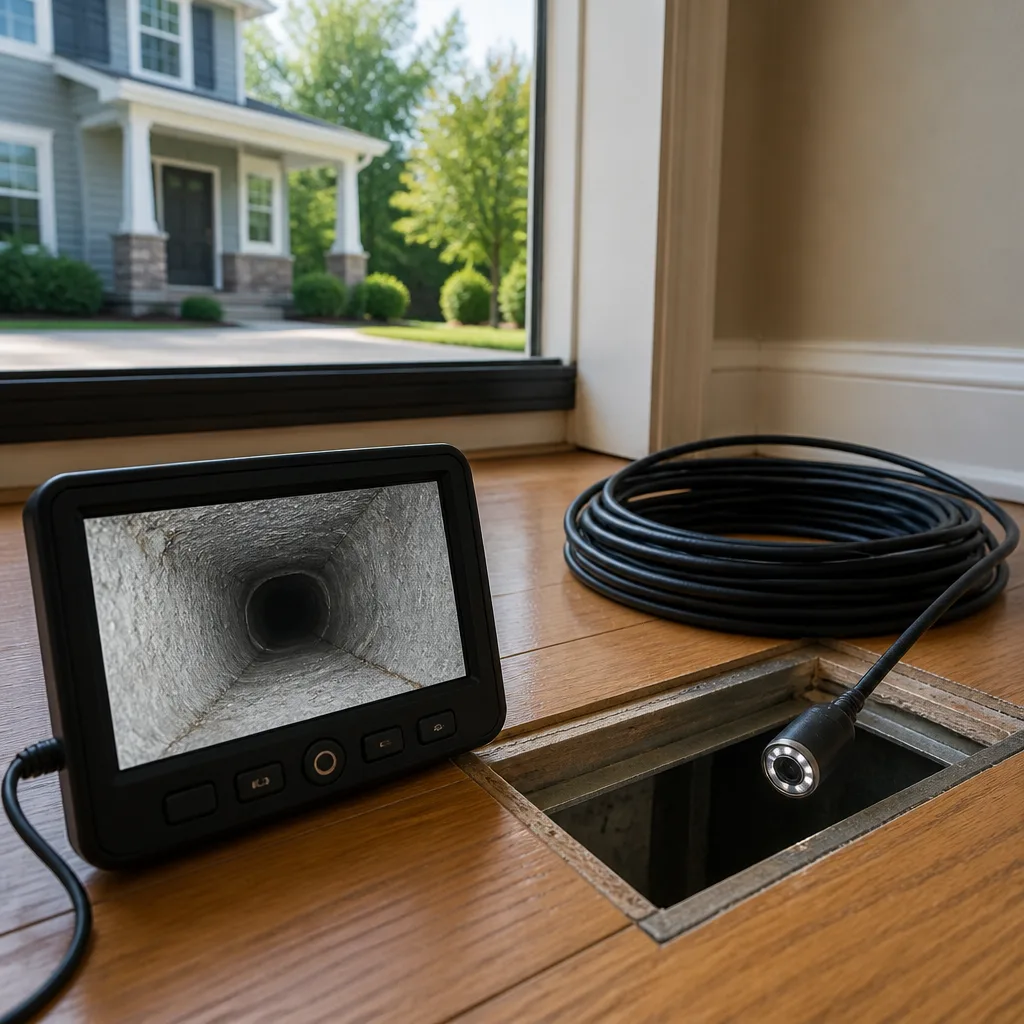 Camera inspection
 Sanitizing & deodorizing
Whole-system duct and dryer vent check with before-and-after photos - you see exactly what came out of your vents
That "$99 whole-house special" is a bait ad - the real number appears once they are in your hallway, or the "clean" is a shop-vac at the register. We photograph the inside of your ducts before and after instead.
Air Duct Cleaning Maintenance Schedule: What to Do and When
The every-3-to-5-years rule was written for a generic American home. It assumes a mild climate, no pets, no recent renovation, and ductwork that’s younger than the carpet. A 1,400-square-foot rental near the University of Florida with two dogs, original 1990s flex duct, and a recent bathroom remodel doesn’t fit that profile. In Gainesville, that home might need attention in under two years. What follows is a variable-based schedule: the triggers that actually move the needle, what to inspect between cleanings, how the dryer vent runs on a completely separate timeline, and how to document your system so the next visit starts with real data instead of a guess.
Quick Answer
Most Gainesville homes should have their air ducts professionally cleaned every 2 to 4 years, not a fixed 3 to 5. High humidity, pets, renovation dust, water intrusion, and older flex duct all shorten the interval, and any one of them can push the next cleaning forward by a year or more. Dryer vents operate on a separate schedule of roughly once a year, because lint accumulates regardless of climate and lint is a fire fuel.
Styles & brands we work with
- Whole-home duct cleaning
- Dryer vent cleaning
- Camera inspection
- Sanitizing & deodorizing
Table of Contents
- Why Gainesville’s Climate Rewrites the Standard Schedule
- Household Triggers That Override the Standard Timeline
- What to Inspect Between Cleanings (That Most People Never Check)
- The Dryer Vent Cleaning Schedule: A Separate Timeline Entirely
- How to Document Duct Condition After a Cleaning
- Building Your Own Maintenance Schedule
- What a Professional Cleaning Actually Involves
Why Gainesville’s Climate Rewrites the Standard Schedule
Humidity is the variable most cleaning schedules ignore, and in Gainesville it’s the dominant one. Air ducts don’t just collect dry dust the way they do in Phoenix or Denver. Here, dust mixes with moisture from the air and the airstream, and what starts as loose particulate becomes a tacky film that sticks to the inside walls of the duct. That film is harder to move with airflow alone, and it’s the surface where biological growth gets a foothold.
Gainesville runs hot and humid for most of the year. Your air conditioner is running long stretches, which means the evaporator coil produces condensation and the supply plenum stays damp. Any duct run with a poorly sealed joint, a sagging flex section, or a disconnected collar can pull in humid attic air. That combination – moisture plus organic dust plus a warm surface – is the exact environment where mildew and mold colonize the duct lining. In a drier climate, that same duct might stay clean and dry for five years. In Gainesville, two to three years is more realistic.
The seasonal pattern matters too. Late spring and early summer in Gainesville bring heavy afternoon rain, and that’s when water intrusion shows up in homes that have never had a visible leak. Attic humidity spikes, condensation forms on cool metal duct surfaces, and grime that was dry in February turns into a damp layer by June.
What does that mean in practice? Consider the moisture factor as its own trigger, not just a background note:
- Homes with ducts in unconditioned attic space see faster contamination than homes with ducts fully inside the conditioned envelope.
- Homes with any outdoor air intake or fresh-air ventilation pull in Gainesville’s humidity load every cycle.
- Homes with short cooling cycles (oversized unit, poor thermostat habits) leave more moisture standing in the coil and plenum.
We’ve seen this across Gainesville. Two houses on the same street, same age, same square footage, can have completely different duct interiors because one has a sealed attic duct system and the other has a damp, unsealed run feeding half the house. The schedule should reflect the system, not the neighborhood.
Household Triggers That Override the Standard Timeline
A fixed calendar is convenient. It’s also wrong for most homes. The right approach is to keep the calendar as a baseline and layer specific triggers on top. Any trigger resets your clock to zero – meaning the next cleaning starts counting from that event, not from your last scheduled date. Here are the ones that matter most.
Renovation and construction dust
Any interior renovation – drywall work, sanding, tile removal, cabinet replacement, flooring tear-out – sends fine particulate into the return system within hours. Drywall dust is especially aggressive: it’s fine enough to bypass cheap filters and coat the duct walls, and it can clog the evaporator coil. If your contractor didn’t seal returns with plastic sheeting before demolition started, treat your ducts as contaminated and schedule a cleaning after final paint, not before.
New pets, or more of them
Pet dander and hair are heavy contributors to duct buildup. A household with one short-haired cat and a household with two golden retrievers are not on the same schedule, and neither should be. Adding a pet is a trigger. So is a pet that develops a skin condition or sheds more seasonally.
Water intrusion events
A roof leak, an overflowing AC drain pan, a burst pipe in the wall cavity, or a supply line failure in the attic all count. Even if the visible damage is repaired, moisture and debris can remain inside the duct run. If water reached anything near the duct system, get the ducts inspected and cleaned. This is the single strongest trigger to move forward.
New occupants and moves
When you buy a home, you don’t know what the previous owner did with it – pets, smoking, renovation dust, water damage. A fresh clean at move-in establishes a baseline. If you rent to tenants or move into a long-term rental in Gainesville where the ductwork hasn’t been touched in years, a cleaning is a sensible first move.
Mold or musty odor
A persistent musty smell when the air handler comes on is a signal. In Gainesville’s humidity, that smell is often coming from the coil or the duct liner, not the room itself.
Each of these triggers is a reason to bypass your calendar and call for an inspection. We clean, we repair, we clear dryer vents – so a trigger event can be evaluated in one visit rather than three separate contractor calls.
What to Inspect Between Cleanings (That Most People Never Check)
You don’t need to climb into the attic or start dismantling ductwork to monitor your system. There are a handful of checks homeowners can do safely between professional visits, and they’re the ones people skip. These spot the early warning signs that would otherwise go unnoticed until the system is running badly.
Return grilles and register faces
Pull the return grille off (it’s usually a thumbscrew or two) and look at the inside face. A light dust film is normal. A thick, fuzzy mat, or any dark streaking around the edges, tells you the return is carrying more than a filter can catch. Do the same with supply registers – a dust trail immediately around the edges hints at a leak at the boot where the duct meets the register.
Filter fit and bypass gaps
This is the check almost nobody does. Remove the filter and look at the filter slot. If you can see light or a gap around the edges of the filter once it’s seated, air is bypassing the filter entirely and going straight into the coil and ducts. Gap around the slot, filter frame that’s a quarter-inch narrower than the opening, or a filter that’s bent to fit – all of those mean the filter isn’t doing its job. Seal the gap with foam weatherstripping or a proper filter frame. This single fix often extends the interval between cleanings.
Flex duct sags and kinks
If any of your duct runs are the flexible foil-on-wire type (very common in Gainesville-area homes), look for sections that sag heavily between hangers, kink at a bend, or rest directly on the attic floor. A sagging run collects condensation, and a kinked run restricts airflow, which lets dust settle. Where flex duct touches the truss or a sharp edge, check for a tear.
Condensate line and drain pan
Moisture is your enemy in this climate. Look at the drain pan under the air handler. Standing water, algae growth, or a pan that drains slowly are signs the system is staying wetter than it should. A clean, dry pan and a clear drain line is what you want.
Numbers on the thermostat
Compare airflow at each supply register by feel. A register that blows noticeably weaker than the rest suggests an obstruction or disconnected run. If your rooms have become uneven in cooling – one side of the house always warmer – that’s an airflow issue worth investigating before it becomes a bigger problem.
These are the checks that give you the information you need to make a call. They’re not a substitute for professional cleaning, but they tell you when to schedule one.
The Dryer Vent Cleaning Schedule: A Separate Timeline Entirely
The dryer vent is not part of the HVAC duct system and does not follow the same schedule. It runs on a completely separate timeline driven by lint accumulation, and lint accumulation is a fire concern, not just a performance issue. The U.S. Fire Administration has long noted that failure to clean dryer vents is a leading contributing factor in residential dryer fires. Treat this as a fire-safety service, not a housekeeping item.
The general schedule for dryer vent cleaning is once a year for a typical household. Shorter intervals apply to:
- Large households (five or more people) running multiple loads per day.
- Homes with long, winding, or vertically-run dryer vents.
- Homes with a vent that exits through a screened or louvered wall cap, which can trap lint at the exterior termination.
- Homes with a dryer that’s older than ten years or has a slower drying cycle than it used to.
In Gainesville, the annual dryer vent clean makes sense for a different reason than the HVAC schedule. It’s not about humidity (dryer vents are usually hot and dry). It’s about the fact that the vent is a closed, hidden cavity in the wall or attic, and the only way to know its condition is to put a proper tool down it – a rotary brush on a flexible rod fed from the outside termination or from the dryer connection, with a vacuum at the opposite end to capture the dislodged lint. That’s the same professional equipment class we use on air ducts. If your dryer vent has never been cleaned, or you don’t know when it last was, schedule a visit.
The most common sign you’re overdue: clothes take two cycles to dry when one used to do it, the outside vent flap doesn’t open fully when the dryer runs, or the dryer cabinet gets warm to the touch. Any of those are reasons to call.
How to Document Duct Condition After a Cleaning
A cleaning without documentation leaves you guessing about next time. The right approach gives you a baseline you can compare against in two years. This is where the trade gets separated: an operator who shows up with a shop vac, runs a brush in a couple of registers, and leaves doesn’t give you anything to work from. A professional crew working with commercial-grade equipment can show you what was found, what was removed, and what to expect next time.
Our approach is to photograph before and after for each trunk and branch we touch, and to show the images to the homeowner. That’s not marketing – it’s the record. It’s how we know which runs were the worst offenders, which returns pull more dust, and whether a repair or sealing job is needed.
Here’s how we recommend you build your baseline record:
- Save the before-and-after photos with a date and the room labels. If your technician doesn’t offer photos, ask for them. If they can’t produce them, that’s an answer in itself.
- Note the equipment used on the job. Rotobrush rotary brush systems and Nikro negative-air machines are professional grade. If your cleaning used only a shop vac and a hand brush, the work isn’t comparable.
- Record any repairs or replacements that were made during the job – a reconnected collar, a new section of flex, a sealed plenum joint. Those affect how fast the system re-accumulates dust.
- Write down your filter type, size, and change interval. Your filter is part of the maintenance record. A filter that’s undersized or that bypasses the slot is the most common reason ducts stay dusty.
- Note the date of the next recommended cleaning – and the specific trigger that would move it forward.
Store this with your HVAC maintenance records. When the next cleaning comes due, you hand the record to whoever shows up. They see the baseline, they know what’s been replaced and what hasn’t, and you don’t have to start from zero. That’s the difference between a maintenance schedule and a cleaning that just happens to get scheduled.
Building Your Own Maintenance Schedule
Here’s how to turn the variables into a working schedule for your specific Gainesville home. This isn’t a decision tree you do once; it’s a record you keep and adjust.
- Start with the baseline. If you don’t know when your ducts were last cleaned, assume they’re overdue and schedule an inspection. Then set your calendar from the cleaning date.
- Adjust for climate and duct location. Attic ducts in Gainesville’s humidity: 2 to 3 years. Fully conditioned envelope, sealed system, no pets: 4 to 5 years is reasonable.
- Add a trigger check to your calendar. Put a reminder six months after every cleaning to check return grilles, filter fit, and flex duct condition. If a trigger event happens (renovation, new pet, water intrusion), reset your cleaning date from that event.
- Keep the dryer vent on its own annual calendar. Don’t tie it to the duct cleaning date. A separate reminder is cleaner and less likely to slip.
- Log the cleaning with photos and equipment notes. Same record-keeping pattern as above – before-and-after images, repairs made, filter type, next due date.
- Reassess at every cleaning. If the last two cleanings both showed heavy contamination, that’s a signal the system needs a repair or an airflow diagnosis, not just more frequent cleaning.
This produces a schedule that fits your house, not a generic template. It also makes you the kind of customer a professional crew can work with efficiently – you hand them a record, they know what to look for, and the visit is about the work, not guesswork.
What a Professional Cleaning Actually Involves
A thorough air duct cleaning in Gainesville involves the whole system, not just the visible parts. Here’s what that looks like when it’s done with the right equipment.
The crew arrives and sets up first, not does the cleaning first. That means protecting the living space – drop cloths at entry points, careful placement of equipment, and no dust plume moving through the home. Our approach relies on Holloway Air Duct Cleaning‘s use of Abatement Technologies filtration equipment to contain and capture the dislodged material during the cleaning process, so the air in the living space isn’t the place where the dust ends up.
Then the main work: negative air pressure is established at the air handler to draw dust toward a central collection point, and a rotary brush system (Rotobrush) is run through each supply and return branch to break loose adhered debris from the duct walls. The negative air captures it. A hand brush and shop vac wouldn’t reach the walls the way a rotary brush does, and it wouldn’t have the suction to remove what the brush loosens. That’s the difference between cleaning and wiping.
On the technician side, we work with and around premium HVAC components and controls, including Honeywell and Aprilaire systems, and we treat Guardsman-treated surfaces with the care those products require. We’re happy to work with the system you have – we’re not selling you a replacement.
The repair side runs in parallel. If we find a disconnected run, a torn flex duct, a broken collar, or a plenum that’s open to the attic, that gets addressed – either on the same visit or scheduled as a follow-up with a written scope. We clean, we repair, we clear dryer vents, and we send the same professional crew for all three. Contact us to discuss what your schedule should look like – we’re glad to look at the whole picture with you.
Common Mistakes to Avoid
- Treating the 3-to-5-year rule as gospel. That figure assumes a drier climate and no pets. In Gainesville’s humidity, going five years without cleaning is a gamble on the duct liner staying dry, and it often isn’t.
- Tying the dryer vent to the duct schedule. Lint accumulation doesn’t care about your HVAC calendar. A one-year dryer vent cleaning belongs on its own reminder, even if your ducts are on a 3-year cycle.
- Skipping the filter bypass check. A quarter-inch gap around the filter slot means unfiltered air is going straight to the coil and ducts. This is the most overlooked dust source in a home, and no cleaning schedule survives it.
- Letting a renovation happen without protecting returns. If your contractor doesn’t seal the return grilles during drywall work, dust travels the entire duct system within days. Ask before demo starts.
- Assuming “cleaned” means the whole system. A crew that cleans the registers it can reach and skips the trunk and plenum has left most of the contamination in place. Ask what gets cleaned before you book.
- Ignoring the water intrusion. In Gainesville, a roof or plumbing leak that never touches the visible interior can still wet a duct liner. If water got near the ductwork, get it inspected.
- Never keeping records. Without before-and-after photos and a note of what was done, you can’t tell whether the next cleaning is due or overdue. Documentation is what turns a one-time service into a schedule.
See the difference
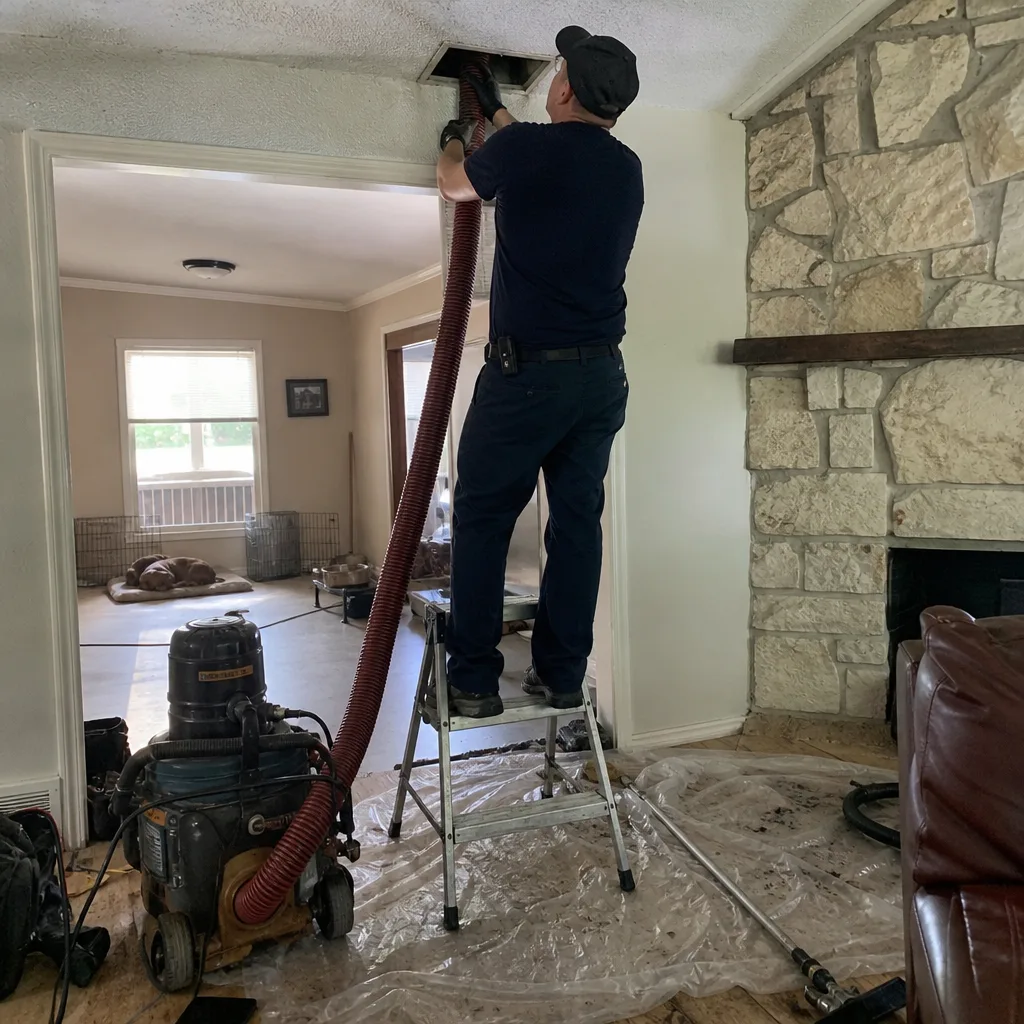 Before
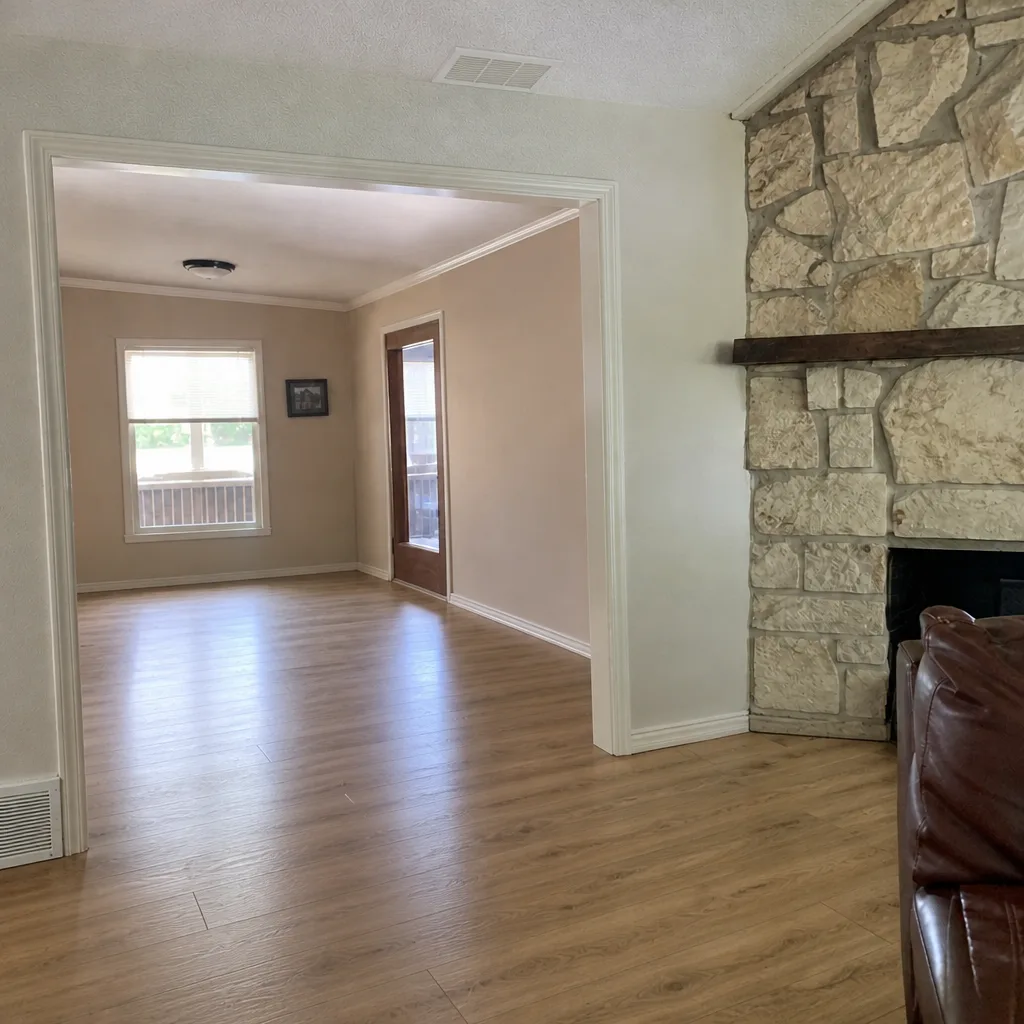 After
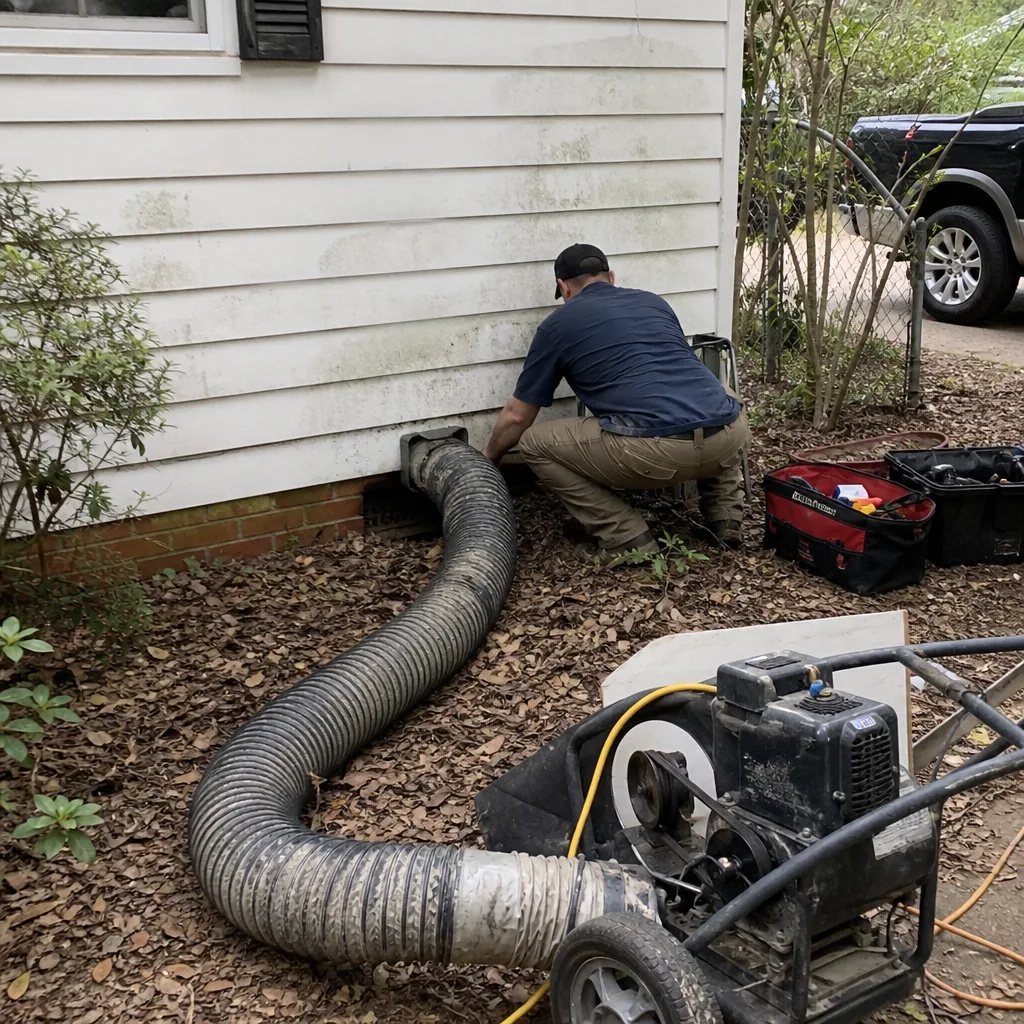 Before
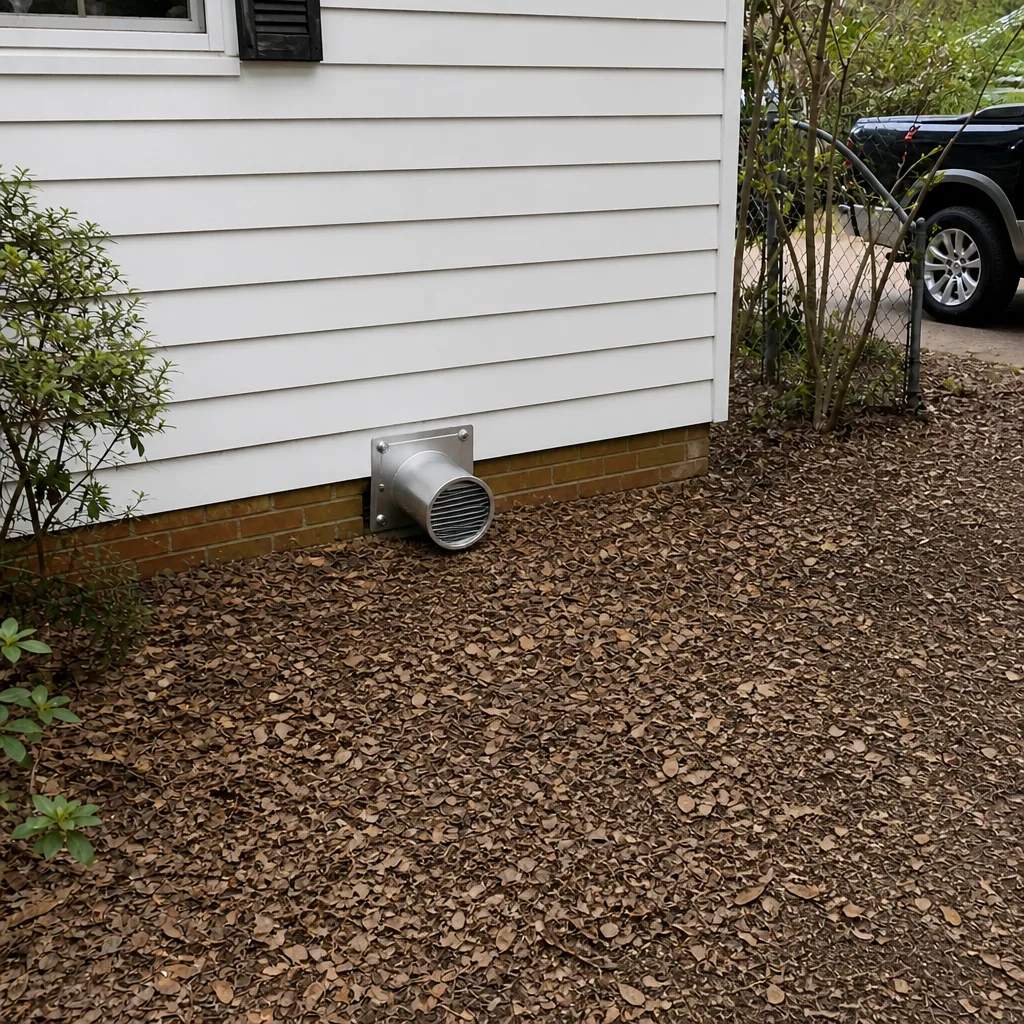 After
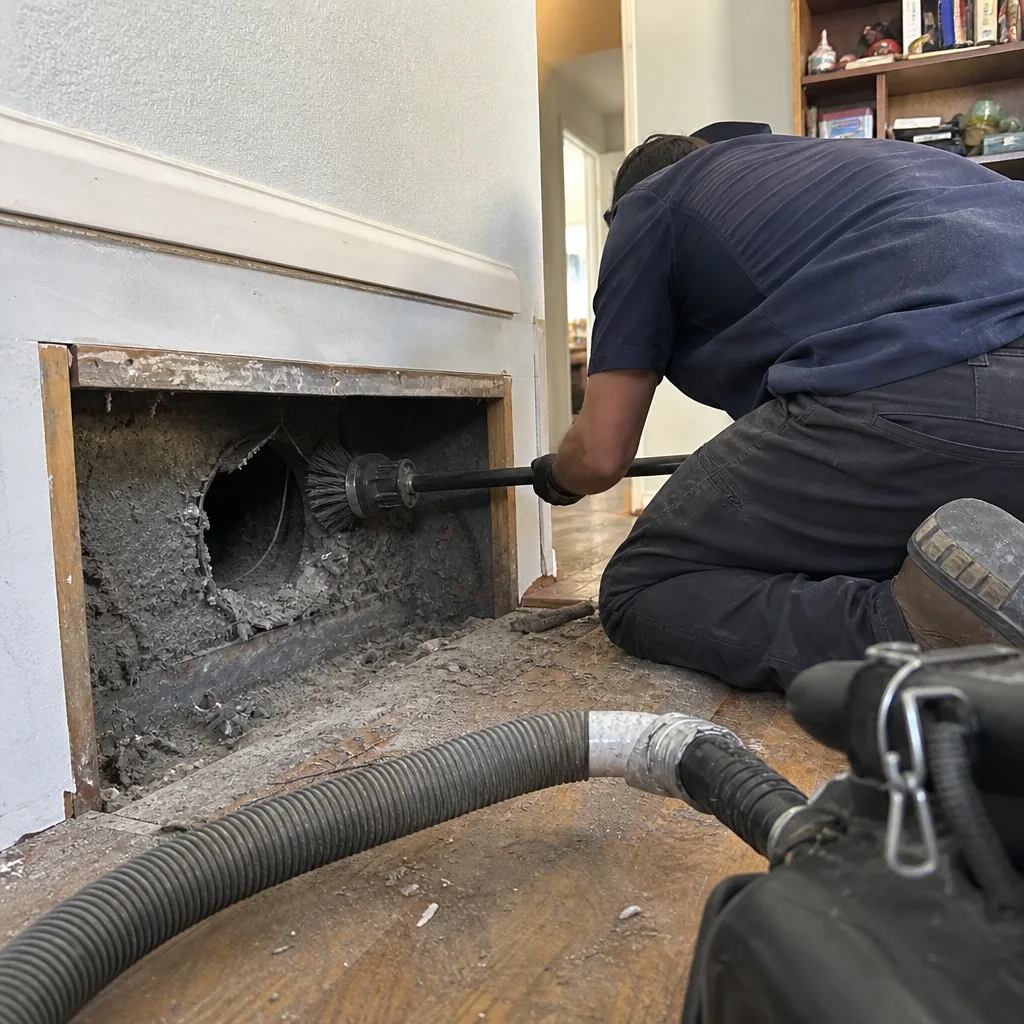 Before
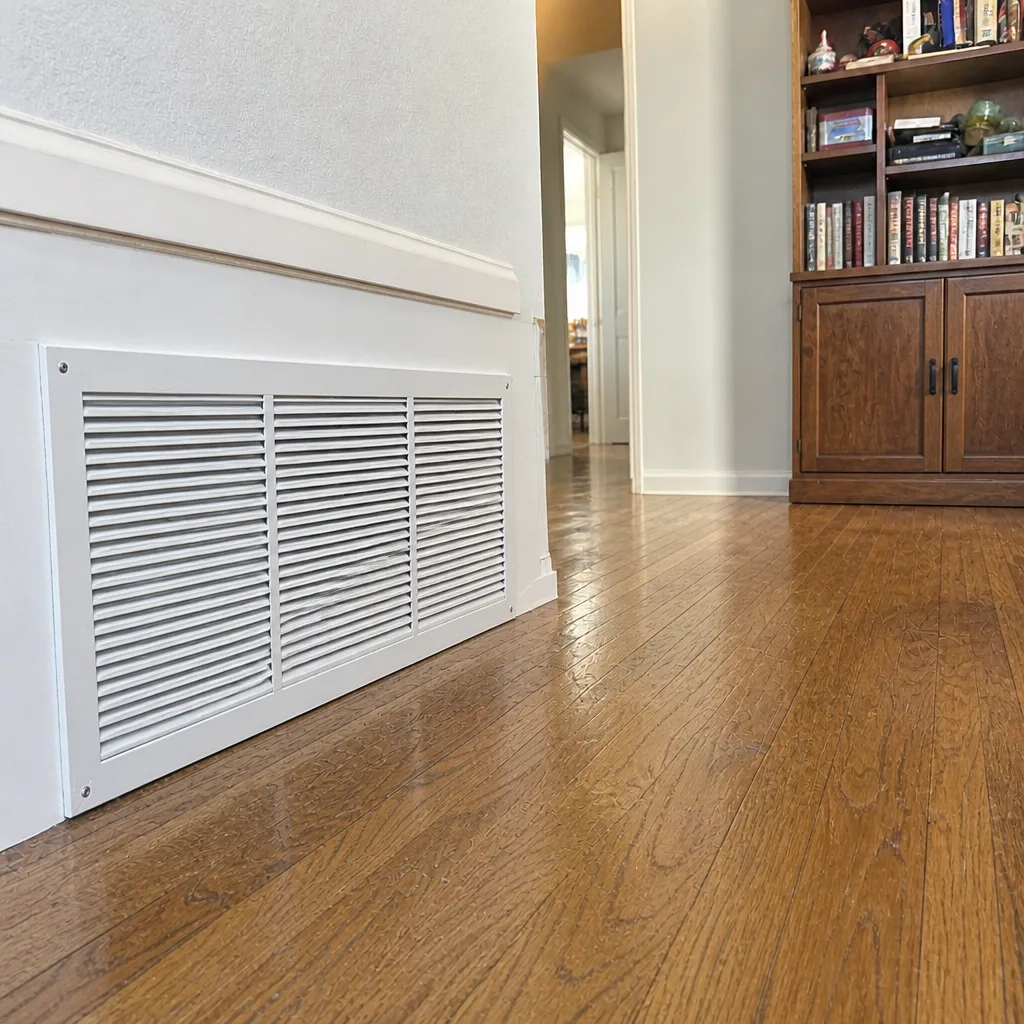 After
When to Call a Professional
Call for professional Gainesville duct service if you don’t know when the system was last cleaned, if you’re buying or moving into a home, or if a trigger event has happened – a renovation, a new pet, or any water intrusion near the ductwork. Call if you notice a musty smell when the air handler comes on, uneven airflow between rooms, or a dryer that’s taking longer to dry clothes. Call if the previous cleaning was done with nothing more than a shop vac and a hand brush – that’s a cleaning you can’t document. Holloway Air Duct Cleaning offers free estimates in Gainesville – call (855) 408-4151. Our technicians have up to 9 years of experience with the equipment the job requires, and the written estimate sets the price before any work starts.
Frequently Asked Questions
Every 2 to 4 years for most Gainesville homes. The shorter end applies to homes with pets, attic-located ducts, or any water intrusion event; the longer end applies to sealed, fully conditioned systems with no pets and no recent renovation. A fixed 3-to-5-year interval was designed for a drier climate and doesn’t reflect Gainesville’s humidity load. Call (855) 408-4151 for an exact schedule based on your system. Estimates are free. We answer 24/7.
Yes. The combination of condensation on cool duct surfaces and humid attic air turns loose dust into a tacky film that adheres to the duct walls. That film is harder to remove with airflow alone and provides a surface where mildew can colonize. The result is a shorter interval than in a dry climate, and a much stronger case for getting the duct system evaluated on a real schedule rather than a decade-old assumption.
Annually for a typical household. Large families, long vent runs, and dryers that take longer than they used to justify more frequent cleaning. Dryer vent lint is a fire fuel and the vent is a closed cavity you can’t inspect visually, so once a year is the safe baseline. Call (855) 408-4151 to book a dryer vent cleaning. Fast dispatch from 7am to 7pm, Sunday through Friday.
Your filter fit. If the filter isn’t seated in the slot with a tight seal all the way around, unfiltered air bypasses it and goes straight into the coil and ducts. That single gap can undo a cleaning in a fraction of the time it should take. Check the return grilles, the flex duct runs for sags and kinks, and the drain pan under the air handler on the same walk-through.
Ask for before-and-after photos of each trunk and branch that was cleaned, along with the equipment used. Rotobrush rotary brush systems and Nikro negative-air machines are professional grade and produce visible results you should be shown. If a crew can’t produce photos, or used only a shop vac and hand brush, you have no way to verify the work. Ask before you book, and ask for the record after.
A thorough job includes containing the dust with filtration equipment (our approach uses Abatement Technologies equipment for that), establishing negative air pressure to draw debris toward a collection point, and running a rotary brush through each supply and return branch to break adhered material off the duct walls. Then it involves a repair check for disconnected runs, torn flex, or open plenums. The visit ends with a record: photos, repairs made, filter notes, and a recommended date for the next cleaning.
The Bottom Line
The right schedule for a Gainesville home is not a universal number – it’s built from a baseline of every 2 to 4 years, adjusted downward for humidity, pets, attic-located ducts, renovation dust, and water intrusion. The dryer vent is a separate annual service and a fire-safety matter, not an add-on to the duct calendar. What ties it together is documentation: before-and-after photos, the equipment used, repairs made, and the date of the next cleaning, kept in one place so the next visit starts with real data. Build that, and you don’t need a generic rule to tell you when to call.
Contact Holloway Air Duct Cleaning to set up your schedule or get a baseline inspection. Call (855) 408-4151 for a free estimate. We answer 24/7. Fast dispatch from 7am to 7pm, Sunday through Friday.
Written by the team at Holloway Air Duct Cleaning.