
Last updated November 15, 2026
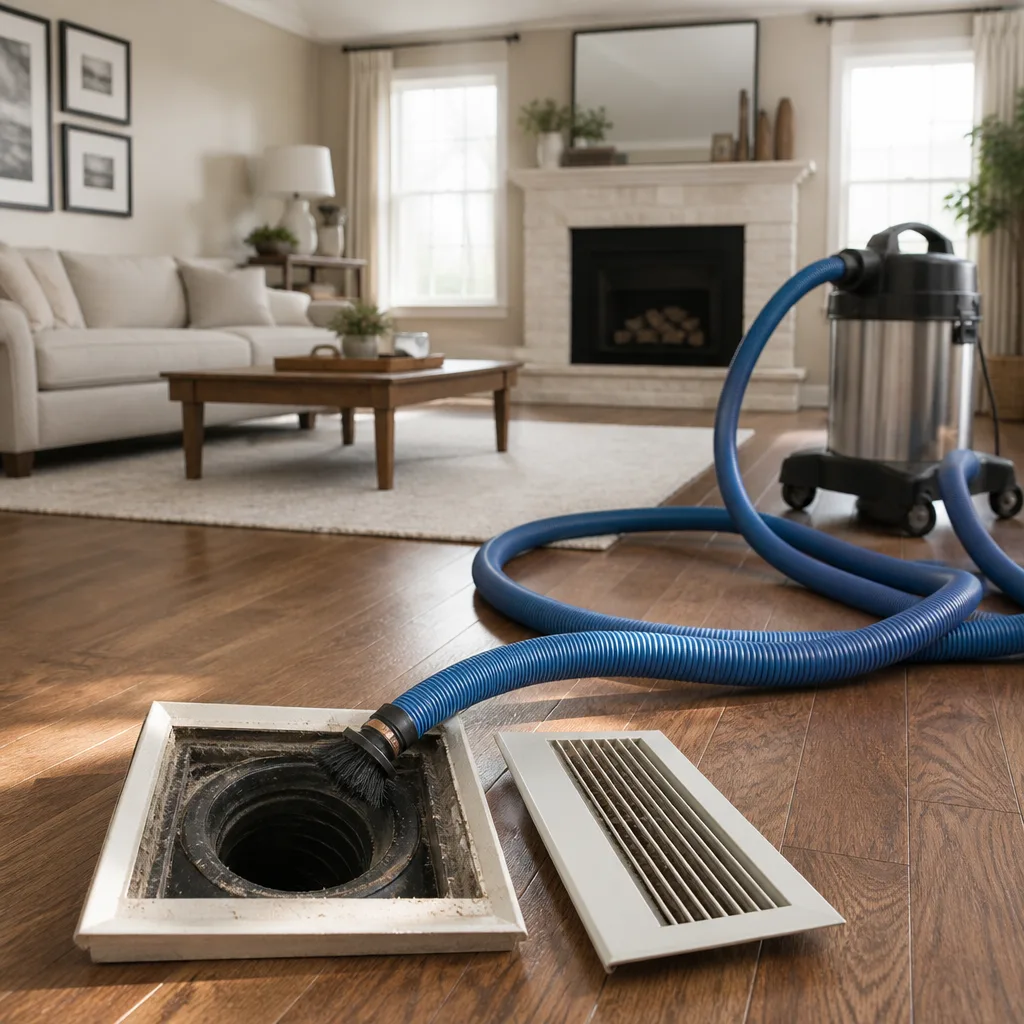 Whole-home duct cleaning
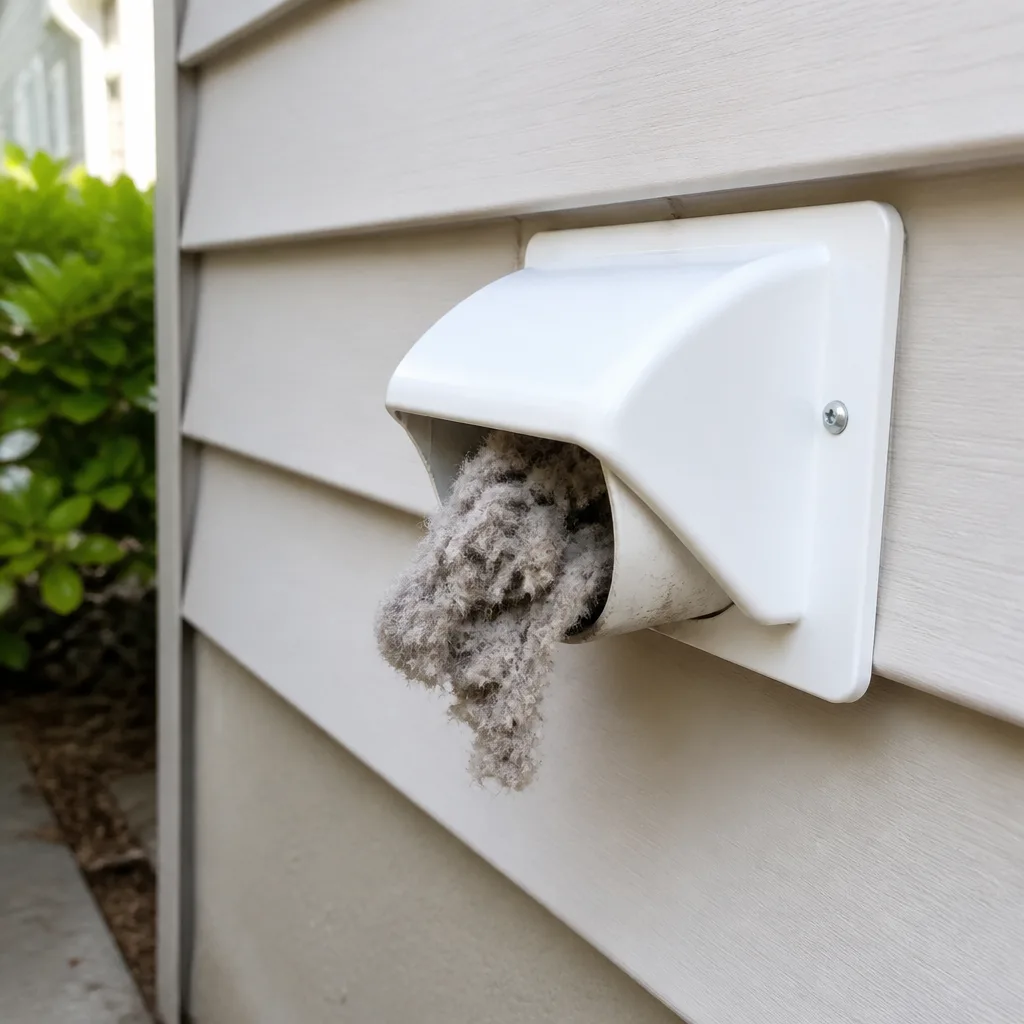 Dryer vent cleaning
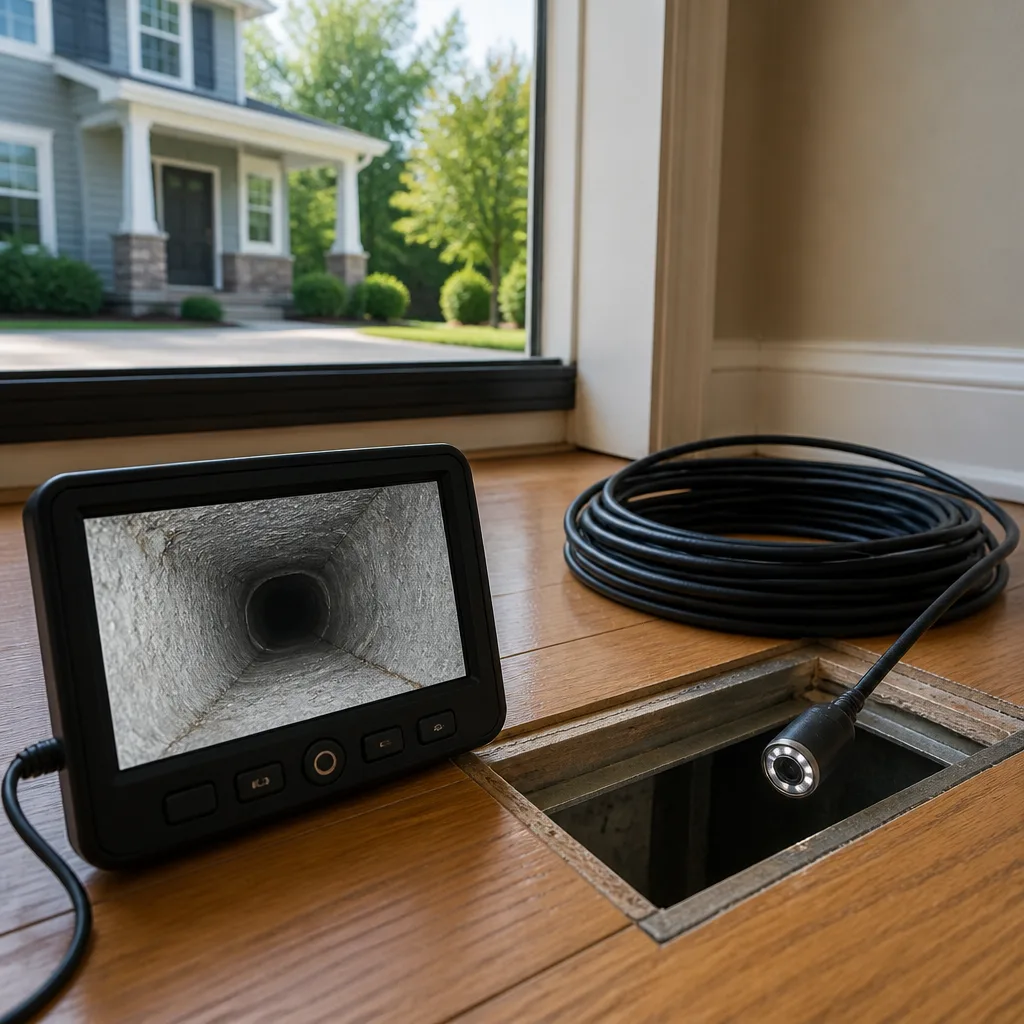 Camera inspection
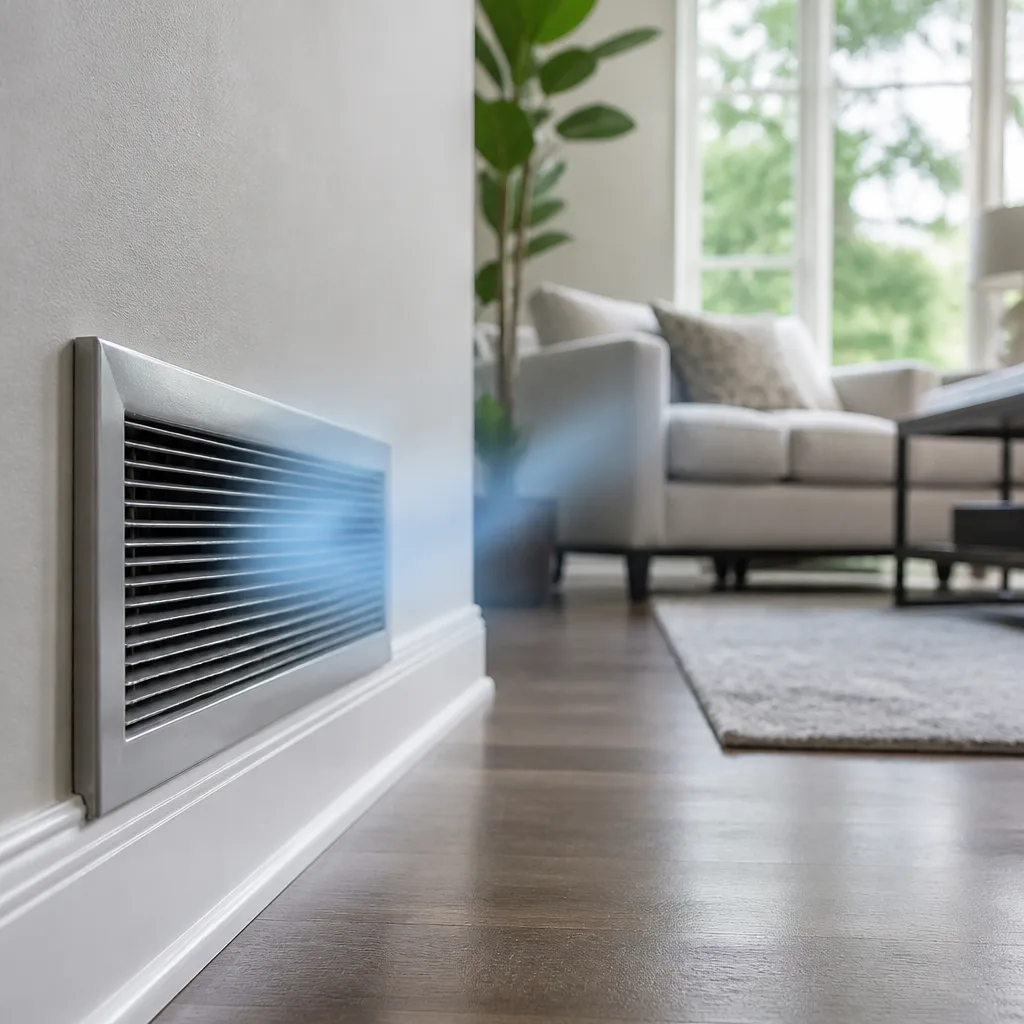 Sanitizing & deodorizing
Whole-system duct and dryer vent check with before-and-after photos - you see exactly what came out of your vents
That "$99 whole-house special" is a bait ad - the real number appears once they are in your hallway, or the "clean" is a shop-vac at the register. We photograph the inside of your ducts before and after instead.
Air Duct Cleaning Permits, Codes & Inspections in Gainesville, FL: What You Need to Know
The permit question isn’t really about cleaning. It’s about what happens when the technician finds something that needs fixing. Most homeowners in Gainesville start with a simple question – do I need a permit to get my ducts cleaned – and the honest answer is no. But the moment that work shifts from removing debris to sealing a joint, reconnecting a run, or cutting a new access panel into the return, you’ve crossed into mechanical construction, and Florida’s building code starts to apply. That line trips up more people than you’d expect. This guide draws it clearly, so you know what’s harmless maintenance and what needs a permit, a licensed contractor, and a paper trail.
Quick Answer
Cleaning ductwork in Gainesville, FL does not require a permit, because it’s maintenance rather than construction. But any work that alters the duct system itself – sealing leaks, repairing a disconnected run, replacing flex duct, or cutting new access – falls under Chapter 13 of the Florida Building Code (Mechanical) and typically requires a permit plus a licensed mechanical contractor. The distinction matters at insurance claim time and at resale, when a Gainesville home inspector asks who did the work and whether it was inspected.
Styles & brands we work with
- Whole-home duct cleaning
- Dryer vent cleaning
- Camera inspection
- Sanitizing & deodorizing
Table of Contents
- Why the Permit Question Comes Up at All
- What Triggers a Permit Under Florida Building Code Chapter 13?
- Duct Sealing Under Code vs. Duct Sealing in Marketing
- How to Verify a Contractor’s License in Alachua County
- What a Cleaning Job Can Reveal: Mold, Disconnected Runs, and Failed Barriers
- How Unpermitted Duct Work Affects Insurance and Home Sales in Gainesville
- What an Inspection Actually Looks Like
- The Step-by-Step Process for Handling Code Issues You Discover
Why the Permit Question Comes Up at All
Gainesville has a long cooling season and a hurricane-adjacent rainy one, which means ductwork here runs hard and lives in some of the most humid conditions in the state. Attics get hot enough that flex duct doesn’t last forever, and crawlspaces in older neighborhoods hold moisture that finds its way into duct insulation. That combination produces a lot of small failures – pinhole leaks at joints, sagging runs, insulation that’s separated from the inner liner – and those failures are usually discovered during a cleaning, not before it.
Here’s the part that surprises people. The cleaning company arrives to remove years of dust and dander, and halfway through the job the technician finds a return plenum that’s pulled loose from the air handler, or a main trunk that’s been sealed with tape that failed a decade ago. Suddenly the work has changed. It isn’t just cleaning anymore, and how that moment is handled separates a professional operation from a low-bid one.
In our experience, most homeowners have never thought about the distinction between maintenance and modification, and nobody has ever explained it to them. That’s what this guide is for. We’ll walk through the code language, the local licensing picture, and what to do when a cleaning turns up something that needs a permit. Along the way, we’ll point out where air duct cleaning ends and mechanical work begins, because that boundary is the whole story.
Anyone working in Gainesville needs to know it. It’s the difference between a job that’s done and a job that could complicate a future sale.
What Triggers a Permit Under Florida Building Code Chapter 13?
Chapter 13 of the Florida Building Code governs mechanical systems, and it’s the chapter that covers ductwork, air handlers, plenums, and ventilation. The code distinguishes between maintenance and alteration. Cleaning, adjusting dampers, replacing a filter, and similar routine work falls under maintenance. Anything that changes the physical configuration of the duct system – adding, removing, reconnecting, relocating, or replacing – falls under alteration or repair, and those activities generally require a permit from the local building department.
In Alachua County, that means the permit comes from the county or city building department depending on where the home sits, and it triggers an inspection. The inspection is the point. A permit without an inspection doesn’t tell you the work was done correctly; it just tells you someone paid a fee.
Here’s a practical breakdown of what usually does and doesn’t need a permit:
- Cleaning only – removing debris from existing ducts with no change to the system’s configuration. No permit.
- Replacing a flexible duct run because the liner has failed or the duct has collapsed. Permit typically required.
- Sealing leaks at accessible joints with mastic or approved tape, without cutting or rerouting. Varies by jurisdiction, often considered maintenance, but if the work involves opening the system for inspection or repair, treat it as permit territory.
- Adding a new duct run to serve an addition or a converted garage. Permit and inspection required.
- Modifying the return plenum or relocating the air handler. Permit required.
- Cutting a new access panel into the trunk or plenum for future service access. This one is genuinely gray – some jurisdictions treat it as a mechanical modification, others as maintenance – so ask the building department directly before you or a contractor cut anything.
What’s important here is not to guess. The correct move, for a homeowner and for a contractor, is to pick up the phone and ask the building department. Alachua County’s building division will tell you in a two-minute call whether what you’re describing requires a permit. Any contractor who resists making that call, or who says “we do this all the time without a permit,” is telling you something about how they operate.
For the record, we’re not permitted to modify a mechanical system. We clean, we repair ducts within the scope that doesn’t cross into mechanical alteration, and we clear dryer vents. When a job needs a permit and a licensed mechanical contractor, we say so – and it’s better for our customer that we do.
Duct Sealing Under Code vs. Duct Sealing in Marketing
“Duct sealing” is one of the most overloaded phrases in this industry. A cleaning company advertises “duct sealing included,” and a homeowner reasonably assumes their ducts are now sealed to code. They’re not. What the marketing usually means is that accessible joints have been wrapped with tape or brushed with mastic, which is a legitimate maintenance step that reduces leakage. What the code means by duct sealing is a defined, tested standard – duct systems installed to a specified leakage class, with verification.
The difference matters for two reasons. First, the marketing version isn’t inspected; the code version is. Second, if you’re trying to tighten up a Gainesville home to cut summer cooling bills, the marketing version might get you partway there, but the code version is what a contractor signs off on and what an inspector can verify. Those are different products with different price points and different paper trails.
In practical terms:
- Mastic and approved foil tape at accessible joints are standard maintenance and reduce leakage at those joints. They don’t make a system “code sealed.”
- Aeroseal-style injection sealing is a professional process that seals the entire system from the inside, and it’s typically performed by contractors who can document before-and-after leakage. It’s not the same as taping joints.
- Duct leakage testing is a measurement, not a repair. It tells you how much the system leaks, and it’s often required at inspection of newly installed systems.
When a cleaning company tells you they “sealed” your ducts, ask what exactly was done. If the answer involves tape and mastic at accessible joints, that’s fine – it’s what cleaning companies legitimately do as part of a Holloway Air Duct Cleaning visit. If you need a documented, code-compliant sealed system, that’s a conversation with a licensed mechanical contractor and the building department. We’re happy to tell you which one you’re asking for.
One more note on the equipment side. When we do clean and address accessible ductwork, we bring commercial-grade systems – a Rotobrush rotary brush to actually agitate and remove accumulated debris from the duct walls, a Nikro negative-air setup to pull dislodged material into a HEPA-filtered containment unit, and Abatement Technologies filtration to protect the living space while that’s happening. That’s the difference between “we ran a shop vac through it” and “we contained what we removed.” The machine matters. A rotary brush reaches surfaces a brush on a stick can’t; a negative-air setup keeps the dust in the machine rather than the hallway.
How to Verify a Contractor’s License in Alachua County
This is the single most useful step a Gainesville homeowner can take, and it takes less than five minutes. Florida licenses contractors through the Department of Business and Professional Regulation (DBPR), and the state maintains a public license verification database. You can look up any contractor by name or license number, and you’ll see the license type, status, expiration date, and whether there’s any disciplinary history attached.
Here’s the step-by-step:
- Ask the contractor for their license number before work is scheduled. A licensed mechanical contractor will provide it without hesitation. If they hesitate or say “we’re licensed through the state,” ask for the number specifically.
- Look it up on the DBPR website. The license type matters. A certified mechanical contractor can pull permits and perform duct alteration. A registered contractor’s scope is narrower.
- Verify the license status is current. Look at the expiration date and any disciplinary actions.
- For cleaning-only work, a license isn’t typically required, but insurance is. Ask for a certificate of insurance showing general liability coverage, and confirm it’s current.
- If a contractor tells you that duct sealing or duct repair doesn’t need a permit, ask them to put their license number on the estimate.
The distinction that catches people: cleaning-only services don’t require a contractor’s license in Florida, so a lot of cleaning companies operate without one – and that’s fine, as long as they aren’t doing licensed work. The moment a company starts cutting, reconnecting, or replacing ductwork, they need the right license and, usually, a permit. If a company offers cleaning and repair under the same roof, ask which service each technician is licensed for.
We’re transparent about where we sit: our technicians have up to 9 years of experience, and we clean, repair, and clear dryer vents. We refer licensed mechanical work to licensed mechanical contractors, and we’ll tell you plainly when a job crosses that line. That’s part of being useful.
What a Cleaning Job Can Reveal: Mold, Disconnected Runs, and Failed Barriers
The inside of a duct system in Gainesville isn’t a clean, dry place. Attics here routinely reach temperatures that stress sealants, and the humidity through our long cooling season means condensation forms wherever a duct run isn’t properly insulated. Over time, three problems show up again and again.
Mold growth. When a duct liner stays damp and growth becomes visible, the question isn’t just “clean it” – it’s whether the growth has crossed into a threshold where the system itself needs to be repaired or replaced, and whether that work touches code requirements. Visible growth on duct board or interior liner often means the liner’s lost its integrity, and cleaning alone won’t restore it. If a company cleans mold in a duct and tells you it’s fixed without addressing the moisture source, that’s not a fix – it’s a delay. This is meaningful work, and we handle it as part of a documented cleaning visit with before-and-after photos so you can see what was removed and what’s still there.
Disconnected ductwork. A flex run that’s separated from a boot or a trunk means a substantial share of the air you’re paying to cool is going into the attic. It’s common in Gainesville homes that have had previous HVAC work done, especially when the work was done quickly or the duct was installed in a tight space. Reconnecting a separated run within the original configuration is repair; rerouting, replacing, or adding duct is permit-level work.
Failed vapor barriers and insulation. In crawlspace or attic installations, the outer vapor barrier on a flexible duct can tear or sag, exposing the insulation to moisture. A failed barrier is one of the more serious findings because it undoes the system’s protection over time. Repairing a barrier on an accessible duct is within our scope; replacing a duct section is where the permit conversation enters.
What doesn’t show up on this list is a cleaning company’s job to diagnose. We’re not the inspector. We’re the eyes on the system, and part of the job is telling you honestly what we found. If we find something that needs a licensed mechanical contractor and a permit, we say so – and then, if you want, we point you toward a route to get it done properly.
How Unpermitted Duct Work Affects Insurance and Home Sales in Gainesville
This is where the permit question stops being theoretical. In Gainesville’s housing market, a home inspector will look at mechanical work, and an unpermitted alteration has a way of surfacing at the worst possible moment: during a sale, or after a claim.
Two scenarios to understand:
- An insurance claim for water or mold damage. If the adjuster finds evidence of duct alteration that wasn’t permitted and could have contributed to the damage – a disconnected run dumping condensation into an attic, a failed vapor barrier, a duct sealed with the wrong material – the claim can be reduced or denied on the grounds that the damage resulted from non-code work. Insurers aren’t obligated to pay for losses caused by unpermitted modifications.
- A home sale. A buyer’s inspector in Gainesville can identify a non-standard duct configuration or a plenum modification and flag it. The buyer’s agent will then ask for documentation. If there’s no permit, the seller has a choice: pull the work (removal and re-installation), or negotiate a credit. Both are more expensive than the permit would have been.
A permit isn’t a bureaucratic annoyance. It’s a record. It says a licensed contractor performed the work and an inspector confirmed it met code. That record is what makes a claim straightforward and a sale clean.
If you’re buying a home in Gainesville and the seller’s disclosure shows HVAC work but the county has no permit record, ask questions. It doesn’t always mean the work was bad, but the paperwork is either correct or it isn’t.
See the difference
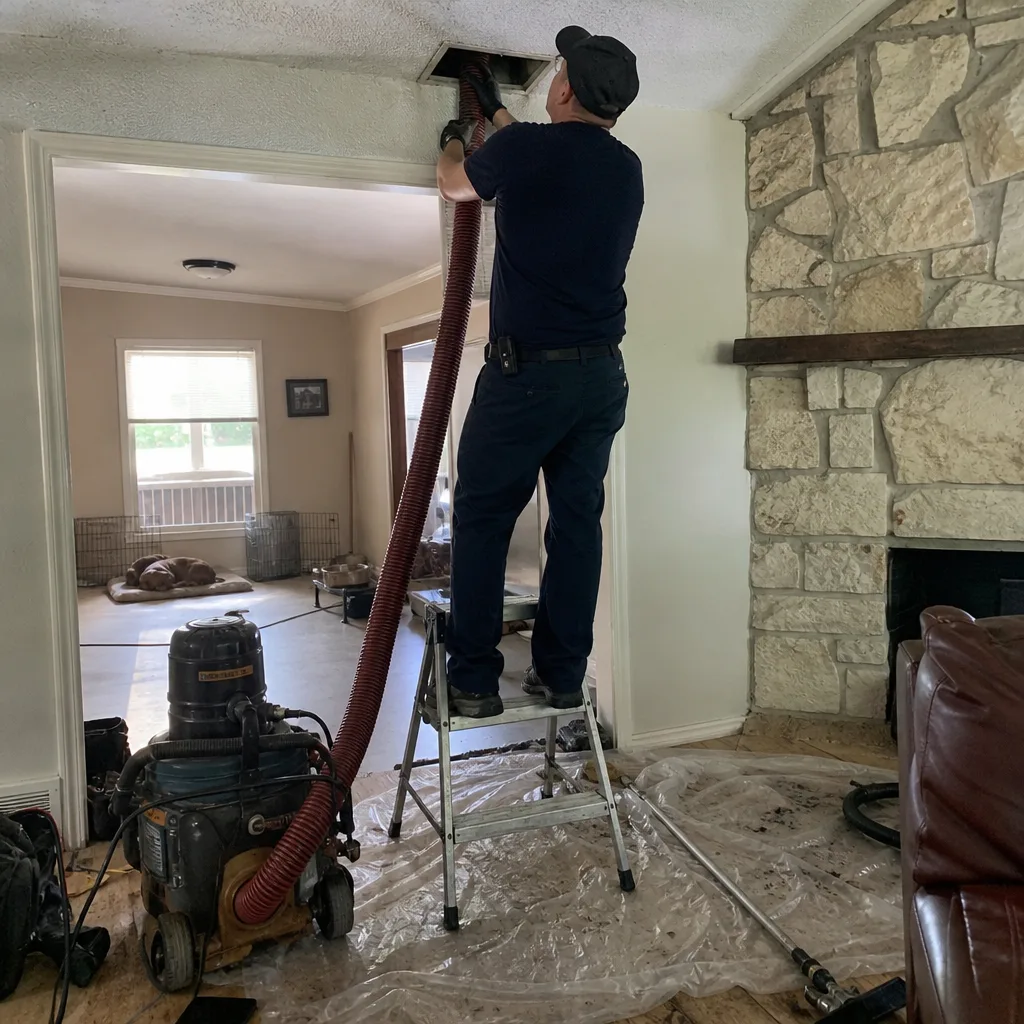 Before
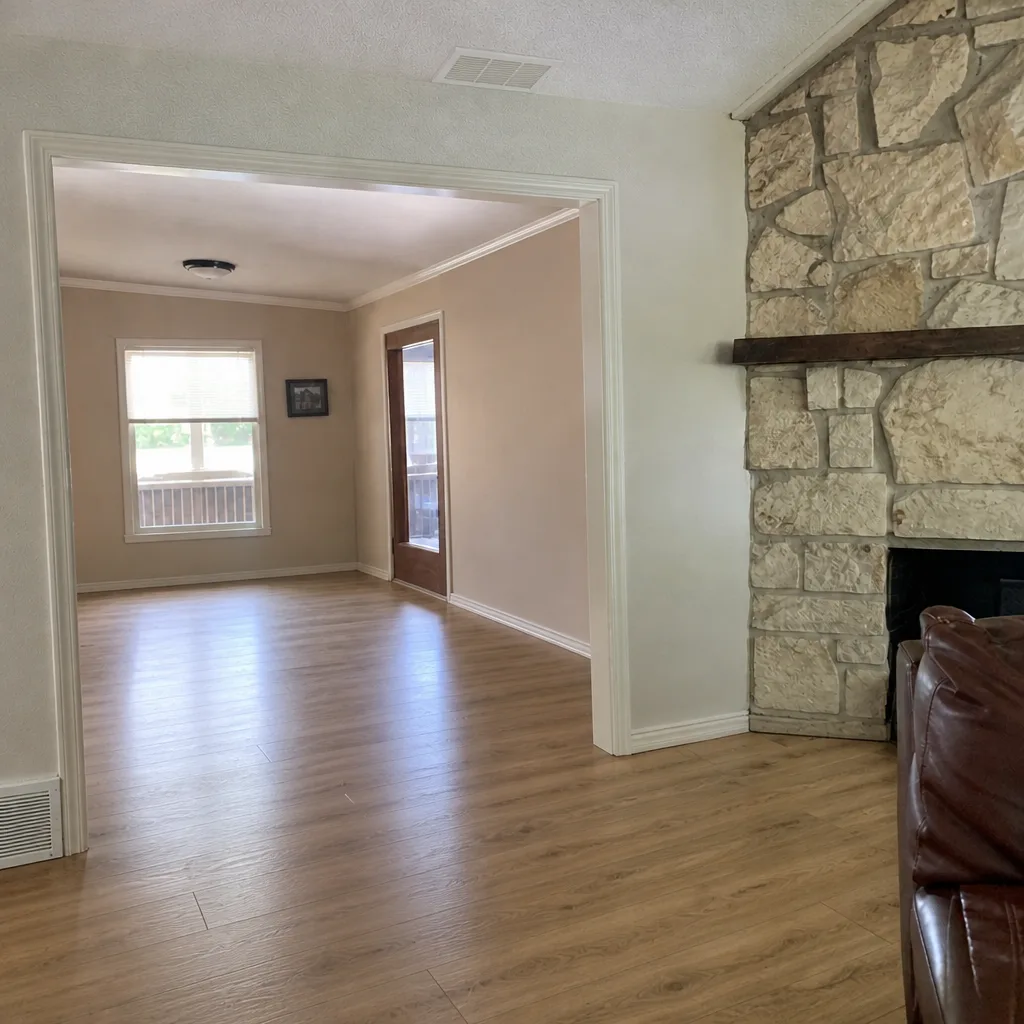 After
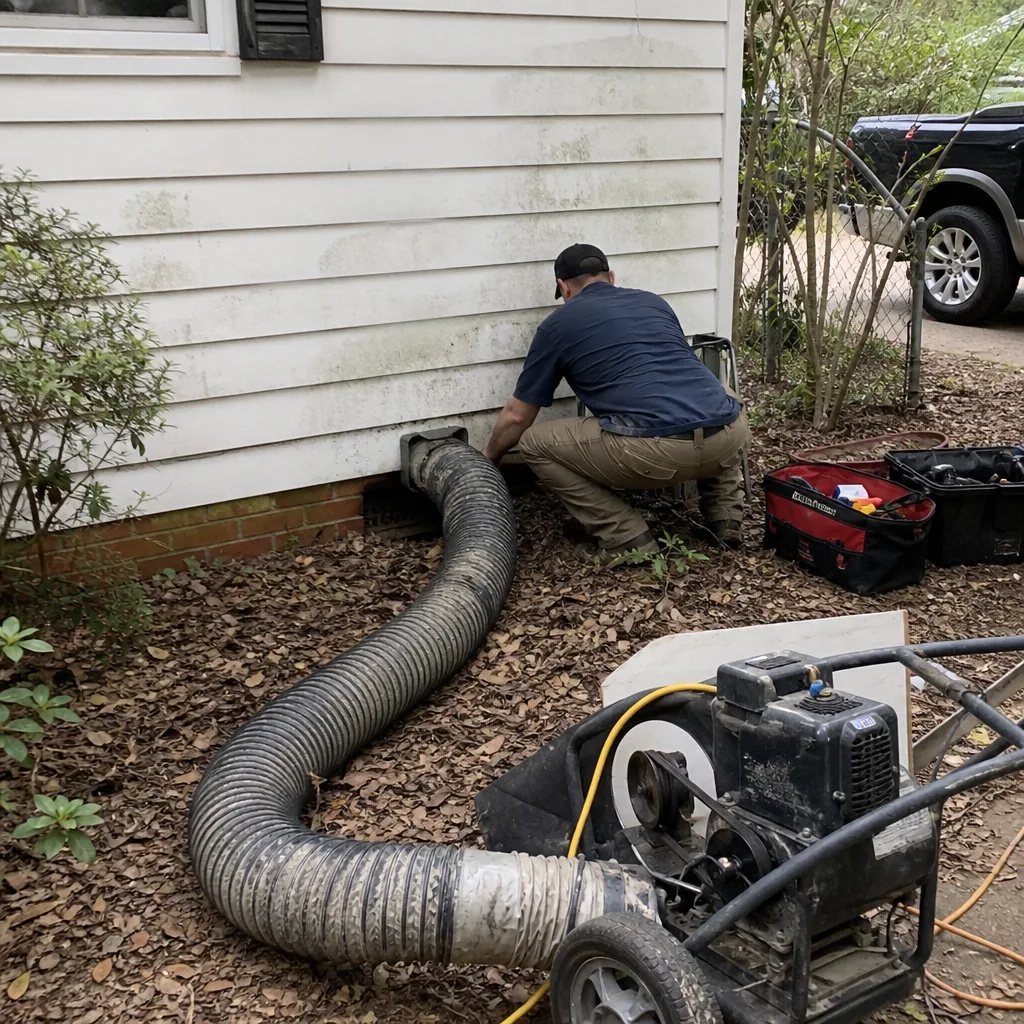 Before
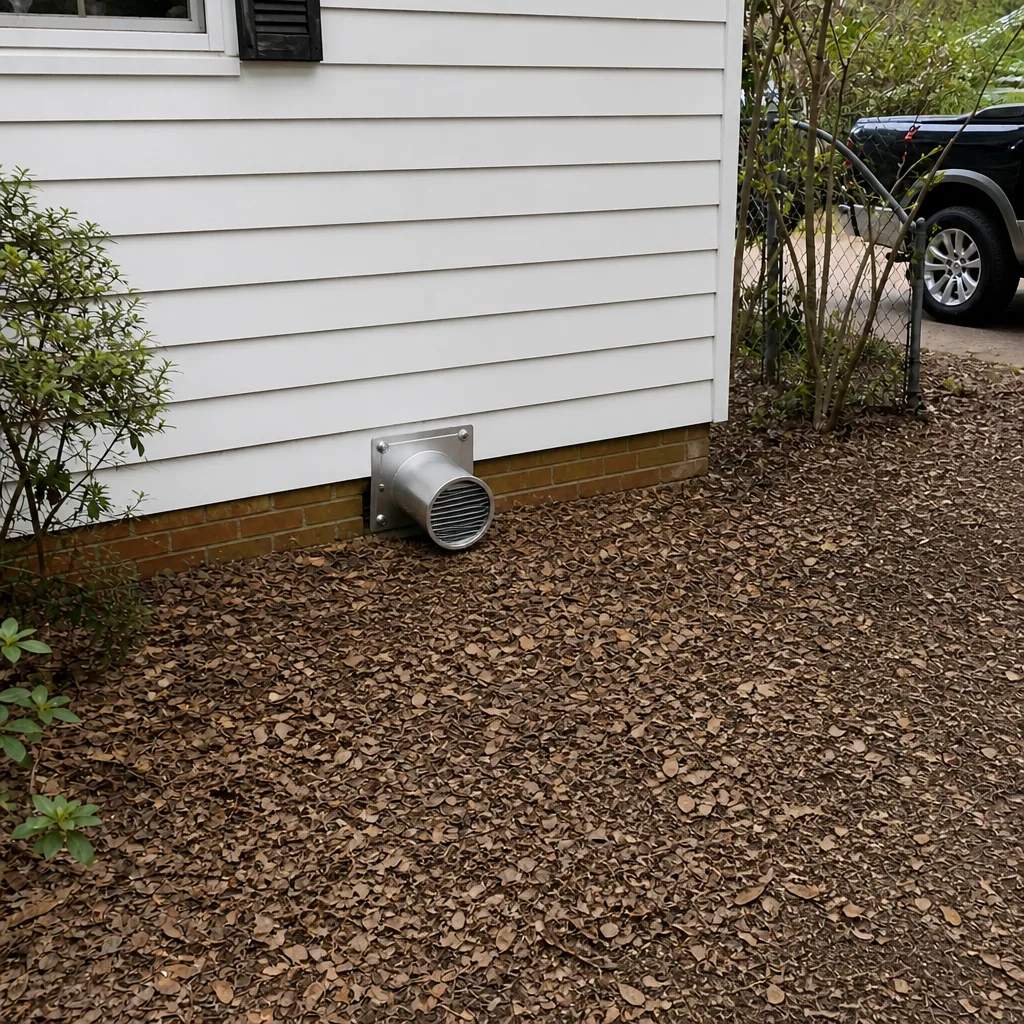 After
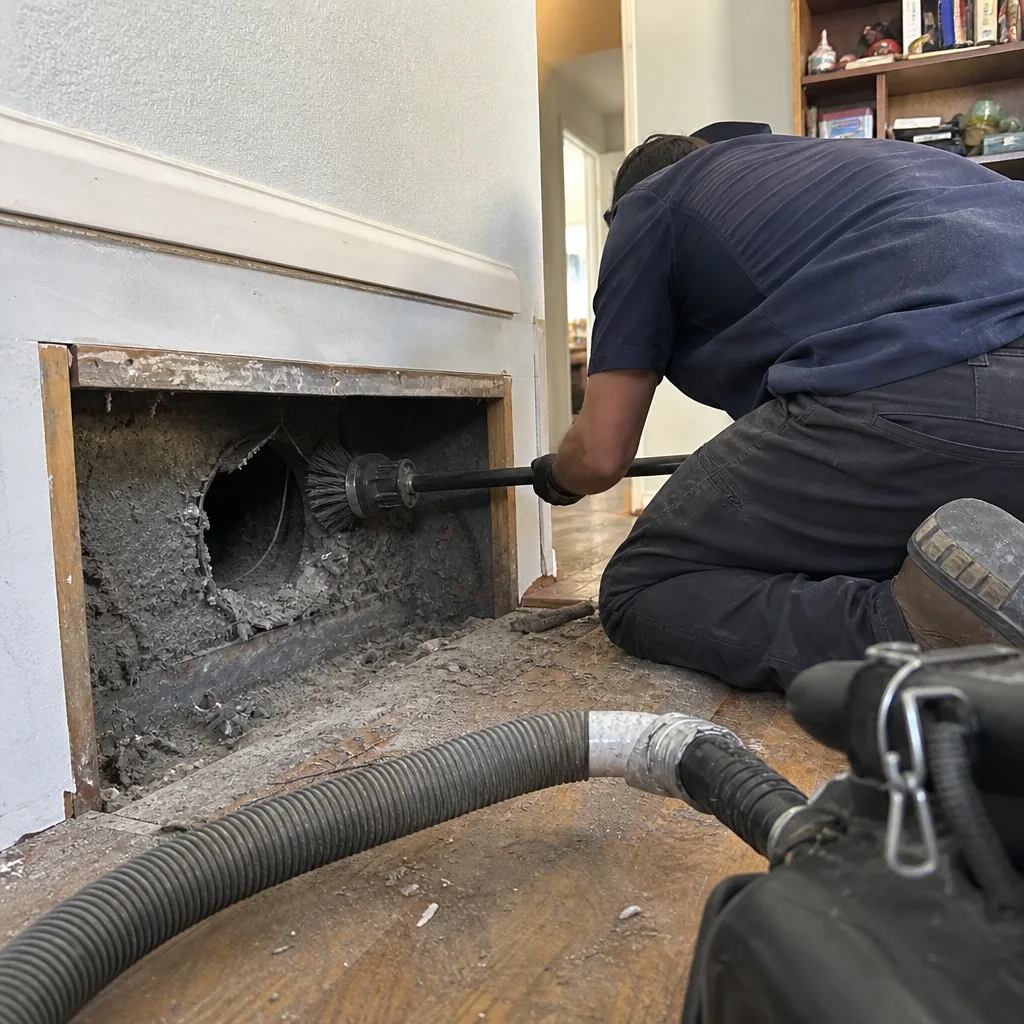 Before
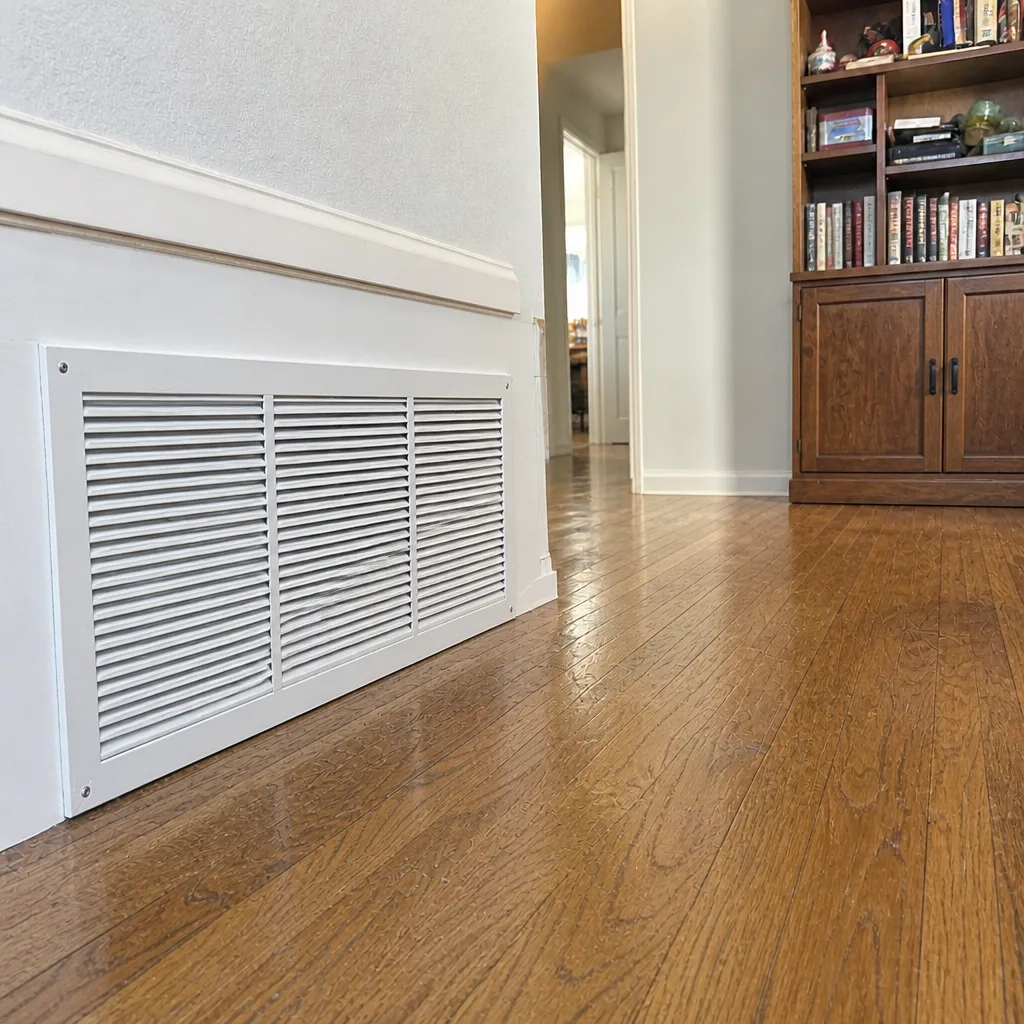 After
What an Inspection Actually Looks Like
If your duct repair did require a permit, what does the inspection involve? It’s usually short, but it isn’t a formality, and knowing what the inspector is looking for helps you avoid a failed inspection and a follow-up visit.
Here’s a typical sequence for a mechanical inspection of duct repair:
- Documentation check. The inspector confirms the permit matches the scope of work and the contractor’s license is current.
- Access and configuration. The inspector looks at how the work was configured – duct sizes, connections, support, and clearances – against the approved scope.
- Material check. Sealants, tape, and duct materials must be approved for the application. Flame spread and smoke development ratings matter here; the wrong tape fails for a reason.
- Insulation and vapor barrier integrity. Where duct is in an unconditioned space, the inspector checks that the barrier has been restored properly.
- Leakage testing, if required. Some scopes require a duct leakage test at a specified threshold. This is measured, not eyeballed.
- Final sign-off. If everything passes, the permit closes. If not, you get a correction notice and a re-inspection.
One caution before you or anyone else reaches into a system for a look. Ductwork itself isn’t a high-voltage hazard, but air handlers, blower compartments, and the wiring that controls them are. Don’t open electrical panels or blower access doors yourself. That’s a job for a licensed technician, and it’s part of why we recommend trained professionals for anything that goes beyond removing debris from the duct interior. If your concern is the electrical side of the system rather than the ducts, that’s a separate licensed trade.
In our experience, inspections go smoothly when the permit is pulled correctly and the contractor keeps records. They go poorly when the work was done before anyone thought about the code. We’d rather have that conversation up front than after an inspector gets involved.
The Step-by-Step Process for Handling Code Issues You Discover
So what do you actually do if a cleaning visit turns up a problem – a disconnected run, visible mold on duct board, a plenum that’s been modified without a permit? Here’s a sequence that keeps you out of trouble.
- 1
Get a written scope. Ask the company to describe in writing what they found and what the remedy is. Before-and-after photos of the duct interior should accompany that write-up. A photo of a failed joint and a note that says “needs licensed mechanical repair” is far more useful than a verbal “you need new ducts.”
- 2
Ask whether the repair is cleaning, maintenance, or mechanical alteration. That classification determines whether a permit is needed and whether the company doing the work is licensed for it.
- 3
Call the building department if it’s a gray area. Alachua County’s building division can tell you in a short call whether a specific repair requires a permit. Don’t rely on the contractor’s opinion alone.
- 4
Get the permit before the repair, not after. A permit pulled retroactively is more complicated than one pulled up front, and some inspectors will refuse to sign off on work they never saw.
- 5
Keep the records. Permit number, inspection sign-off, contractor’s license number, invoice, and before-and-after photos. That file is what protects you at insurance time and resale.
This is the part where a homeowner who’s dealt with bad contractors will rightly be skeptical. The industry has a reputation problem, and a big part of it is companies that use “discovered problems” as a sales lever. Our position is simple: we show you what’s inside the ducts, we document it, and we tell you whether the remedy is something we can handle or something that needs a licensed contractor and a permit. If it’s the second, we say so. That’s the job.
Common Mistakes to Avoid
- Assuming “no permit needed” means “no license needed.” Cleaning doesn’t require a Florida contractor’s license, but duct repair does. Ask a company doing cleaning and repair which side of that line each job falls on, and verify the license if repair is involved.
- Accepting a cleaning quote that includes “sealing” without asking what it means. Tape and mastic at accessible joints is one thing. A code-compliant sealed system is another. Get the specifics in writing before you agree to price.
- Letting a cleaning company cut into a plenum or trunk for “access.” A new access panel can be a mechanical modification in some jurisdictions. Ask the building department whether it requires a permit before anyone cuts.
- Skipping the permit to save the fee. In Alachua County, an unpermitted mechanical alteration can complicate an insurance claim and turn into a negotiation at home sale. The permit cost is smaller than the risk.
- Treating mold in ducts as a cleaning problem only. Visible growth usually means the moisture source hasn’t been addressed, and the liner may no longer be serviceable. Cleaning mold without fixing the cause delays the real repair.
- Hiring on price alone from a door-knocking crew. Gainesville sees plenty of out-of-town operators after storm events. A crew with no local license lookup, no insurance certificate, and no written scope is a risk you don’t need to take.
- Assuming a home inspector or appraiser will catch every unpermitted alteration. They catch a lot, but not everything. If you’re buying, check the county’s permit records yourself before the contract is signed.
When to Call a Professional
Call a professional when the work moves past dust removal. That means visible mold growth inside ducts or on duct board, a duct run that’s separated from its boot or trunk, insulation or vapor barrier that’s failed, a plenum that looks like it’s been cut or modified, or a cleaning that turned up debris a shop vac can’t reach. It also means any time a contractor tells you the job needs a permit – that’s licensed mechanical work, and you want a licensed contractor doing it.
And call us when you want an honest read on what’s actually inside your system. Holloway Air Duct Cleaning offers free estimates in Gainesville – call (855) 408-4151. We bring a Rotobrush rotary brush and a Nikro negative-air vacuum to every job, and we document what we find with before-and-after photos. If your dryer vent is the concern rather than your supply ducts, that’s a separate service and a fire-safety one – dryer vent cleaning isn’t optional.
Frequently Asked Questions
No. Cleaning ductwork is maintenance, not construction, so it doesn’t require a permit in Gainesville or anywhere else in Florida. A permit only enters the picture when work alters the duct system itself – sealing, reconnecting, replacing duct runs, or modifying a plenum. If you’re unsure which category your job falls into, ask the building department; the answer takes a short call to get.
Yes, generally. Duct repair that changes the configuration of the system typically requires a licensed mechanical contractor and a permit from the local building department. Cleaning-only services don’t carry the same license requirement, so the key question to ask any company is what exactly they’re doing and whether they’re licensed for it. Verify any license number through Florida’s DBPR database before work starts. Call (855) 408-4151 for an estimate on the cleaning and repair side – estimates are free.
They’re different products. A cleaning company’s “sealing” usually means mastic or approved tape applied at accessible joints, which is legitimate maintenance. Code-compliant duct sealing refers to a system installed and tested to a leakage standard, verified by inspection. If you’re paying for sealing to reduce energy loss, ask exactly what’s being applied and whether it’s inspected work.
It can. An inspector looking at a home’s mechanical system may flag a duct configuration that doesn’t match county records, and the buyer’s agent will ask for permit documentation. Without it, you’re negotiating a credit or paying for remediation. If you’re buying, check the county’s permit records against the seller’s disclosure before signing.
Get a written scope and before-and-after photos, then classify the fix. A disconnected run that’s reconnected within its original configuration is repair. Replacing a duct section or rerouting a run needs a permit and a licensed contractor. Call the building department if it’s unclear, pull the permit before the work, and keep every record. For a duct cleaning visit that includes documentation, call (855) 408-4151.
Ask for before-and-after photos of your own ducts and a written description of what equipment was used. Professional work uses commercial-grade rotary brush and negative-air vacuum systems – a Rotobrush or equivalent, with HEPA-filtered containment – not a shop vac and a brush on a wand. If a company can’t produce photos or name the machine that ran through your ducts, that’s the answer to your question. Call (855) 408-4151 for an estimate that includes documentation.
The Bottom Line
Cleaning your ducts in Gainesville doesn’t require a permit. Repairing them, sealing them to a defined standard, or altering their configuration does, and the difference is documented in Chapter 13 of the Florida Building Code and enforced at the local building department. If you take one thing from this guide, make it this: what separates a professional operation from a problem is whether anyone can tell you which side of that line a job falls on, and whether there’s paper trail to back it up. Verify licenses, ask for the written scope, keep the photos, and pull the permit when it’s needed. When you want an honest read on your ducts – and documentation of what we found – Holloway Air Duct Cleaning is the number to call.
Contact
Call (855) 408-4151 for a free estimate on air duct cleaning, duct repair, and dryer vent cleaning in Gainesville. We answer 24/7. Fast dispatch from 7am to 7pm, Sunday through Friday. One flat price per system agreed before work starts, before-and-after photos of your own ducts, and 24/7 phone coverage. And when a job crosses into licensed mechanical territory, we’ll tell you plainly – that’s part of being useful.
Written by the team at Holloway Air Duct Cleaning.