
Last updated November 15, 2026
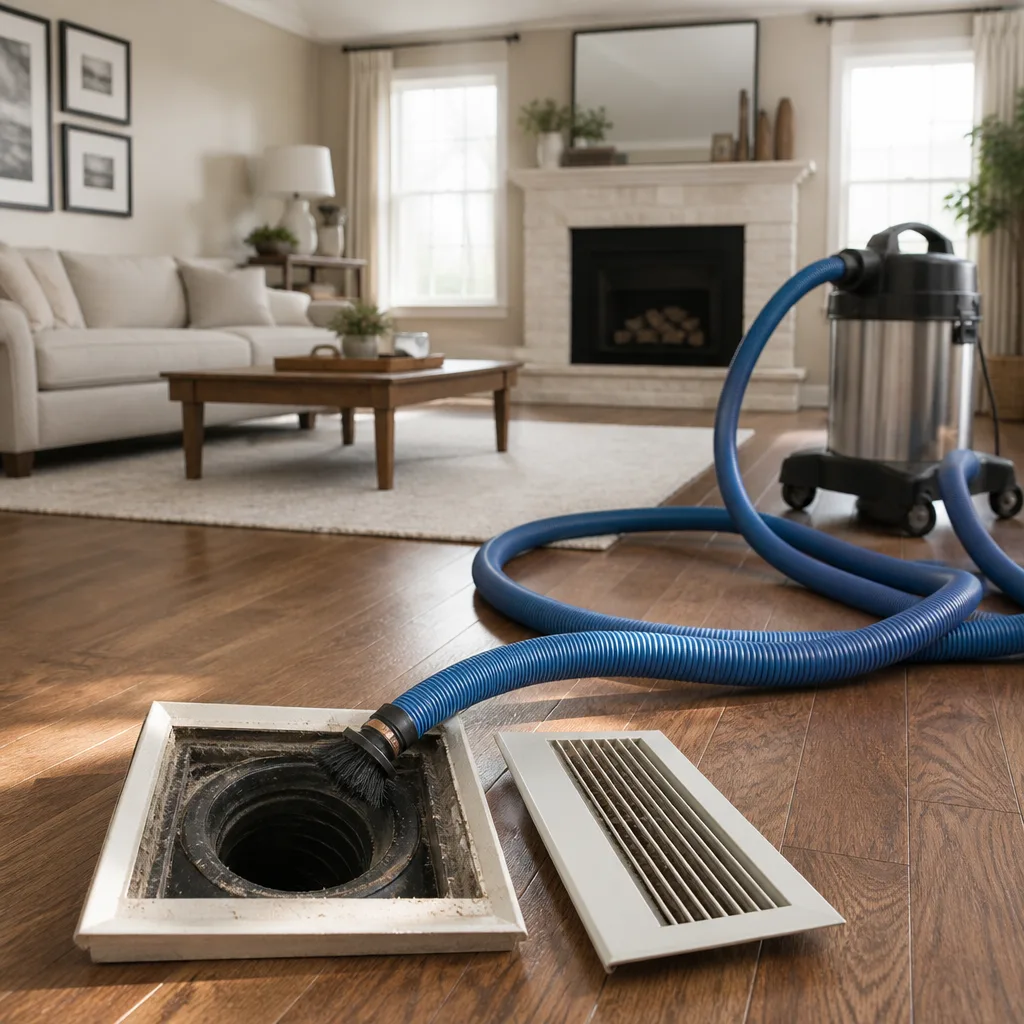 Whole-home duct cleaning
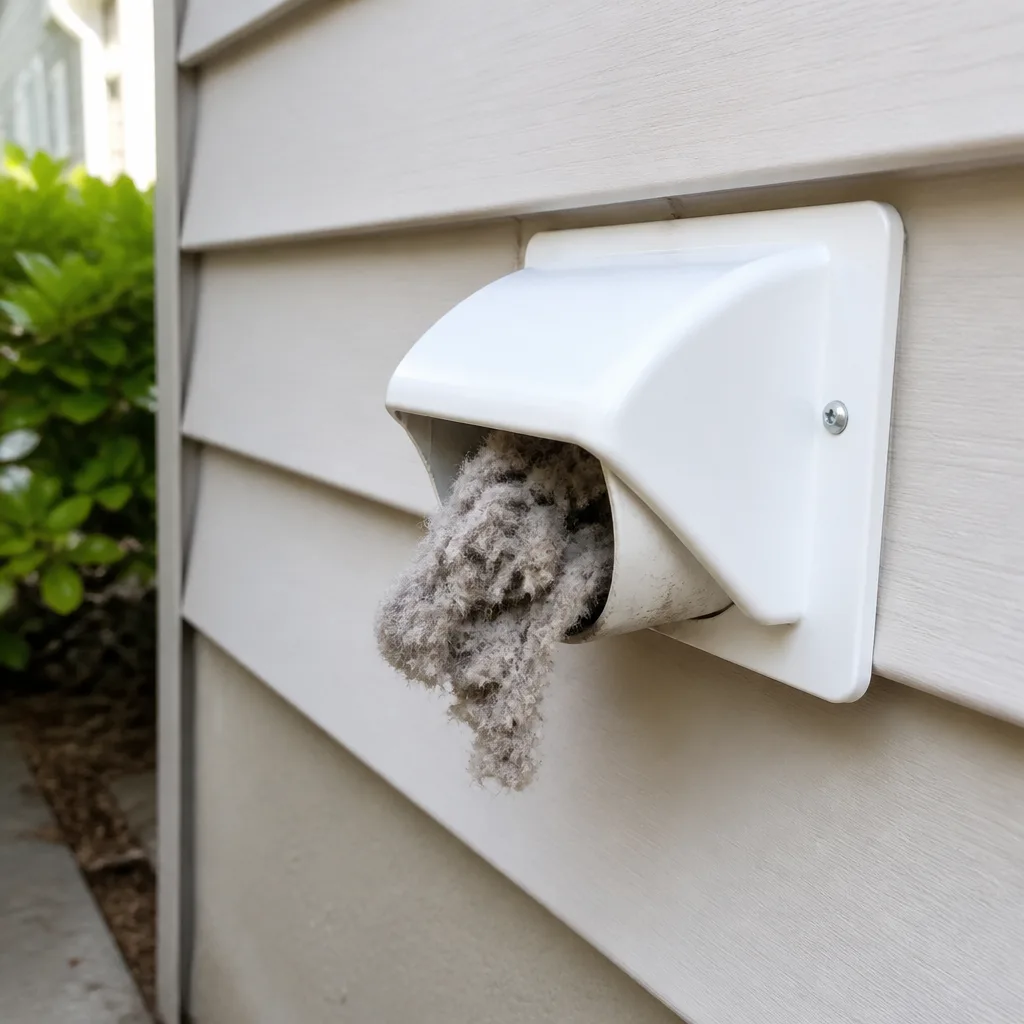 Dryer vent cleaning
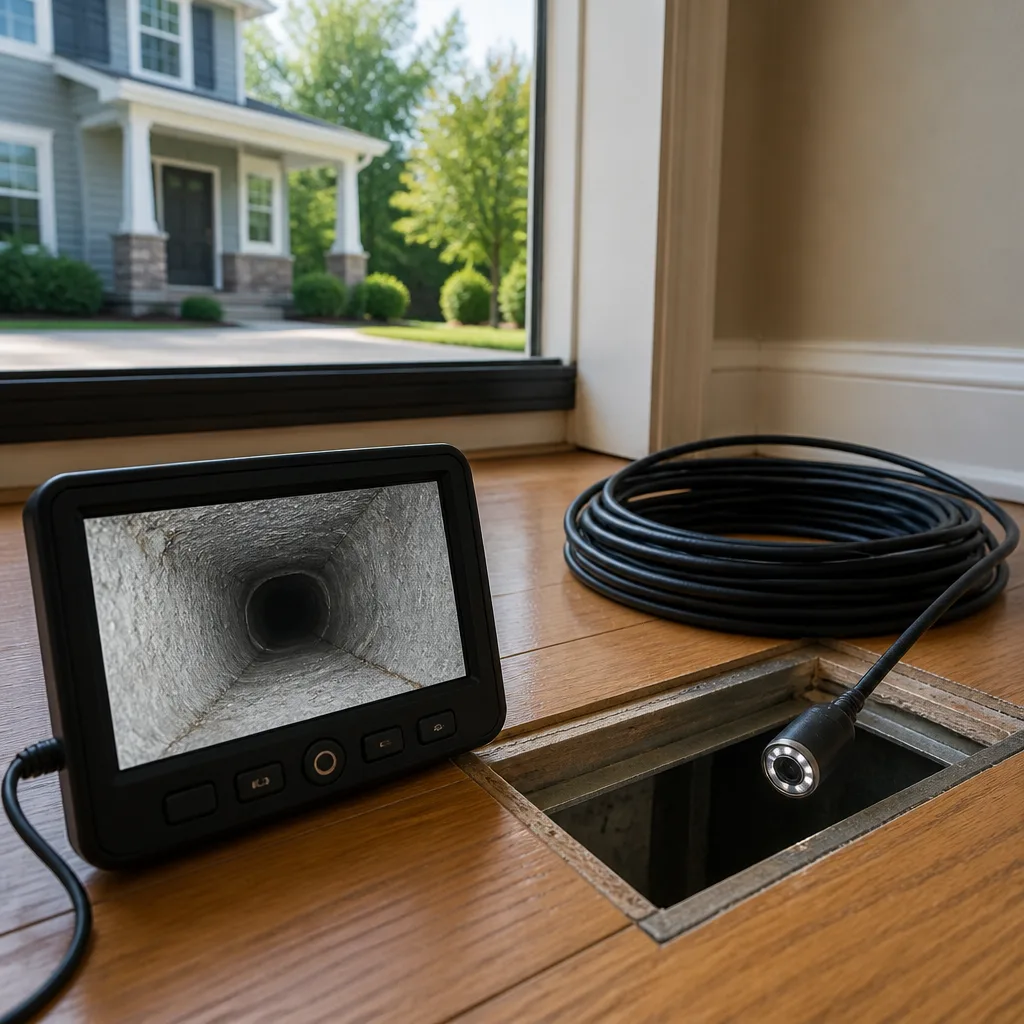 Camera inspection
 Sanitizing & deodorizing
Whole-system duct and dryer vent check with before-and-after photos - you see exactly what came out of your vents
That "$99 whole-house special" is a bait ad - the real number appears once they are in your hallway, or the "clean" is a shop-vac at the register. We photograph the inside of your ducts before and after instead.
Seasonal Air Duct Cleaning Care for Gainesville: Year-Round Homeowner’s Guide
Most duct care advice you’ll find online was written for a place with four real seasons: a freezing winter that shuts the system down, a short spring, a hot summer, a crisp fall. Gainesville doesn’t work that way. Here, the air conditioner runs for most of the calendar, the “off” season is a narrow window of a few mild weeks, and the humidity never fully lets go. That changes almost everything about when to clean, when to inspect, and what to watch for. This guide lays out a maintenance calendar built for Gainesville’s actual climate, not a template borrowed from a colder city, so you can tell what your ducts need and when.
Quick Answer
The best time to schedule a full air duct cleaning in Gainesville is late October through mid-November, when the cooling system is mostly idle and the humidity has eased but the heating season hasn’t started. Post-pollen inspection makes sense once the spring tree pollen settles in late April, and the summer is the time to watch for condensation and storm-related duct problems rather than clean. Dryer vent clearing and a heating-mode check round out the year before the short heating season begins.
Styles & brands we work with
- Whole-home duct cleaning
- Dryer vent cleaning
- Camera inspection
- Sanitizing & deodorizing
Table of Contents
- Why Gainesville’s Climate Rewrites the Seasonal Rulebook
- Why Late October to Mid-November Is the Cleaning Window
- Spring Pollen: What Live Oak and Pine Do to Your Ducts
- Summer Condensation and Flex Duct in the Attic
- Storm Season and Duct Pressure Events
- What “Winterizing” Actually Means Here
- Signs Your Ducts Need Attention Now, Not Later
- What a Proper Cleaning Job Involves
Why Gainesville’s Climate Rewrites the Seasonal Rulebook
If you moved to Gainesville from up north, you probably know a fall routine that had you closing up the house in October before the cold set in. Here the cooling season is the long one, and the brief stretch where the air conditioner is quiet is the practical time to reset anything that touches your ducts. Advice written for Chicago or Denver assumes months of forced heat and a deep freeze that dries everything out. Gainesville gives you neither. What it gives you is a long, humid cooling run, a mild winter where the system stays mostly off, and an early, heavy pollen load.
That mismatch matters because duct cleaning and duct inspection aren’t equally useful in every month. Cleaning a system mid-summer, right after you’ve spent months pulling humid air through it, means the freshly cleaned ducts go back to work under the same load immediately. Cleaning it in the narrow window when the system is mostly idle lets you start the next season with a clean system that isn’t being stressed the moment the technician leaves. The same reasoning applies to repairs: a flex duct run that’s starting to sag in the attic is far easier to fix while the air conditioner isn’t fighting you.
One more local factor: Gainesville’s housing stock ranges from older homes with metal ductwork to newer builds with flex runs through hot attics and crawlspaces. Neither is bad, but each has different weak points in this climate. Knowing which you have helps you know what season is hardest on your ducts and what to check.
Why Late October to Mid-November Is the Cleaning Window
The window between Gainesville’s cooling season and the next one is short, and it’s the only practical time to do certain duct work without immediately overloading a just-cleaned system. Here’s what makes that handful of weeks the right one:
- The system is off. The air conditioner has mostly stopped cycling, so cleaning and repair work isn’t competing with a system running full tilt.
- The humidity has dropped. Fall mornings are drier, which means less moisture in the return air and less chance of new condensation forming on metal surfaces after cleaning.
- Heating season hasn’t started. You can inspect the heating side, clear the dryer vent, and fix a problem before the first cool spell pushes the furnace back into use.
- You’re not chasing repairs. Scheduling in this window means you can plan around a leaky connector or a sagging run instead of discovering it the week you need the heat.
In our experience, the calls that stack up in late spring and early summer are almost always for problems that a fall inspection would have caught. A duct cleaning done in the fall window lets the system run its heaviest months on clean ductwork instead of the other way around. And because the cooling system is idle, a technician can inspect the attic and crawlspace without a hot, running machine nearby.
If you can only remember one date from this guide, make it this: the last week of October through the second week of November. For a city this hot, it’s the rare moment when the whole HVAC system is comfortably paused and the ducts can be treated properly.
Spring Pollen: What Live Oak and Pine Do to Your Ducts
Gainesville’s spring pollen load is heavy and early. Live oaks and pines release their pollen from roughly February through April, and that fine yellow-green dust settles on every outdoor surface, coats the intake to your system, and gets pulled into the return ducts whenever the air conditioner runs. Even with a good filter, some of it reaches the duct surfaces and the filter box. The practical response is preventive: keep filters changed on schedule during those months, and plan a post-pollen inspection once the tree pollen settles in late April.
What should that inspection check?
- The return-side surfaces. Pollen tends to collect where return air first slows down, at the return box and the first few feet of the return run.
- The filter and filter slot. A filter that’s been loaded for a month of pollen is doing more harm than good, and a poorly sealed slot lets dust bypass the filter entirely.
- The supply registers. A light film of dust at the registers hints at what’s moving through the ducts behind them.
You don’t necessarily need a full cleaning every spring. What you do need is a look, because a season’s worth of pollen that settles into humid ductwork becomes a food source for the very problems you’re trying to avoid once the summer humidity sets in. That’s why post-pollen inspection makes sense as a check, and why the deeper air duct cleaning belongs in the fall window when the system can be left clean going into the heavy season.
Summer Condensation and Flex Duct in the Attic
The long cooling season in Gainesville means one thing above all for ductwork: moisture. Cold air moving through ducts set in a hot, humid attic or crawlspace creates condensation on the exterior of the duct runs and, in bad cases, on interior surfaces. Flex duct is especially vulnerable. Its outer jacket can develop small tears, its inner liner can collapse or sag, and once cool air meets warm humid air at a poor connection, moisture collects and mold can begin to establish. The timeline matters: mold growth doesn’t happen overnight, but a leaking or sweating flex run left through a full summer is a real risk.
Here are the inspection trigger points worth watching during the cooling months:
- Visible condensation or dampness on duct jackets or at connections in the attic.
- Sagging or kinked flex runs that restrict airflow and create cold spots where condensation forms.
- A musty smell when the system first starts, which can point to moisture on interior duct surfaces.
- Rising electric bills without a clear cause, often a sign of a leaking or disconnected run pushing conditioned air into the attic.
This is where the right equipment matters. A thorough inspection followed by a proper cleaning with professional-grade tooling, and a repair of any damaged run, is what actually resolves a moisture problem. Holloway Air Duct Cleaning handles duct repair as well as cleaning, so a sagging or disconnected flex run gets fixed as part of the same visit rather than left for a separate contractor. When we set up a job, we bring commercial-grade equipment and containment so the attic and living spaces stay protected while work is underway.
Storm Season and Duct Pressure Events
Gainesville’s storm season runs June through September, and it brings duct problems that are easy to overlook. The obvious concern is water intrusion during heavy rain, but there’s a subtler one: pressure differential events. When a strong storm rolls through and pressure changes rapidly, it can force air, dust, and debris in through any weak point in the duct system, especially at poorly sealed connections, return plenums, and outdoor intake points. Insulation can also be displaced, leaving sections of flex duct exposed to attic heat.
After a storm season, it’s worth having a few things checked:
- Displaced or damaged insulation around duct runs in the attic, which reduces efficiency and can expose ductwork to condensation.
- Loose connections at the air handler and supply boots, where pressure changes tend to work fasteners and seals loose.
- Debris at the return, and any sign that outdoor air has been pulled in through an unsealed gap.
- Water staining near the air handler or in the attic that suggests a leak reaching the duct system.
We clean, we repair, we clear dryer vents, and storm-related duct work often touches all three. If your system took a hit during the storms, a free estimate is the simplest way to find out whether you’re looking at a cleaning, a repair, or both.
What “Winterizing” Actually Means Here
In a cold climate, winterizing means draining lines, covering outdoor units, and preparing for months of hard freeze. Gainesville’s heating season is short, so winterizing here is a smaller, more targeted job. It’s mainly two things: clearing the dryer vent and checking the heating side before the system switches over.
Dryer vent clearance comes first. A clogged dryer vent is a fire-safety problem, not a chore. Lint builds up through the year of regular laundry, and the shorter, cooler days often mean more indoor drying loads. Having the dryer vent cleared before the heating season starts removes one of the leading causes of residential fires from your checklist. It’s a dedicated service, not an add-on, and it deserves its own visit. You can read more about it on our dryer vent cleaning page.
Heating mode startup comes second. When the furnace or heat pump first switches over, that’s when a neglected issue shows up: a loose return, a duct run that’s been quietly disconnected since spring, or a filter that’s overdue. A startup check gives you a chance to catch it before the first cold night, rather than after. The other winter task is simpler: change the filter, and make sure the return grille isn’t blocked by furniture or rugs.
That’s the whole winterizing list for a Gainesville duct system. It’s modest, but skipping it is how small problems become spring emergencies.
Signs Your Ducts Need Attention Now, Not Later
Ideally you’d never be surprised by a duct problem, because the seasonal calendar would catch it first. In practice, life gets busy. Here are the signs that mean it’s worth scheduling something sooner than the next fall window:
- Visible dust at the registers within days of cleaning them. Dust settling that fast suggests it’s being pushed from the ducts themselves.
- A musty or stale smell when the system starts, which usually points to moisture or organic buildup somewhere in the system.
- Uneven cooling room to room. A restricted or leaking run is a common cause, and it’s a performance issue as much as a comfort one.
- A visible tear or disconnect in attic flex duct. Don’t wait on this one; it’s pushing conditioned air into the attic and pulling in unfiltered air.
- Recent water damage or storm intrusion near the air handler or ductwork.
- A dryer that takes noticeably longer to dry a load, which points to a restricted vent.
If you’re seeing more than one of these, a proper inspection with commercial-grade equipment will tell you what’s actually going on rather than guessing. We’d rather show you what’s inside your ducts before recommending work than sell you a cleaning on the strength of a quick look.
What a Proper Cleaning Job Involves
A professional duct cleaning isn’t a quick pass with a shop vac. It’s a contained, staged process built around the equipment. Rotary brush systems agitate and loosen debris from the duct walls, and a negative-air vacuum pulls that debris out and holds it so it doesn’t end up in your living spaces. The brands matter because the tool has to match the job: the professional-grade systems do what a consumer-grade vacuum simply can’t. Here’s how a job typically runs:
- Inspection. A technician checks the duct layout, the air handler, the returns, and any trouble spots in the attic or crawlspace.
- Containment setup. Air filtration equipment is placed to protect the home and capture dislodged material during the work.
- Cleaning. Rotary brush tooling works each run while negative-air extraction pulls debris out under containment.
- Repair, if needed. Any disconnected, sagging, or torn flex run is addressed so the system is sealed and efficient going forward.
- Before-and-after. You get photos of what the ducts looked like before and after so you can see the difference.
Holloway Air Duct Cleaning uses Rotobrush and Nikro equipment along with Abatement Technologies filtration, and we work comfortably around higher-end HVAC components including Honeywell and Aprilaire systems. The point of naming that equipment is that it’s the difference between a real cleaning and a dressed-up vacuum pass. Our technicians have up to 9 years of experience, and we set one flat price per system before work starts, so the written estimate is the price. To see the broader picture of what we do, start with Holloway Air Duct Cleaning.
Common Mistakes to Avoid
- Cleaning in the heat of the summer. Doing the work while the air conditioner is running full tilt means the newly cleaned system is stressed immediately. Aim for the fall window instead.
- Assuming any cleaning is the same. A shop vac and a stiff brush are not a professional cleaning. Ask what equipment will be used, and expect commercial-grade rotary brush and negative-air systems.
- Skipping the post-pollen check. Gainesville’s February-to-April pollen load is heavy; a spring check catches what’s collected before the humid summer turns it into a bigger problem.
- Treating dryer vent cleaning as optional. It’s a fire-safety service, and it deserves its own dedicated visit, not a quick pull with a brush.
- Ignoring a sagging attic flex run. Through a Gainesville summer, a damaged flex duct collects condensation and can develop mold. Fix it early rather than after the season.
- Not asking for before-and-after photos. If you can’t see what was cleaned, you can’t know it was done. Ask for photos as part of the job.
- Waiting for one big annual cleaning instead of a schedule. A seasonal rhythm, not a single visit, is what keeps a system in shape in this climate.
See the difference
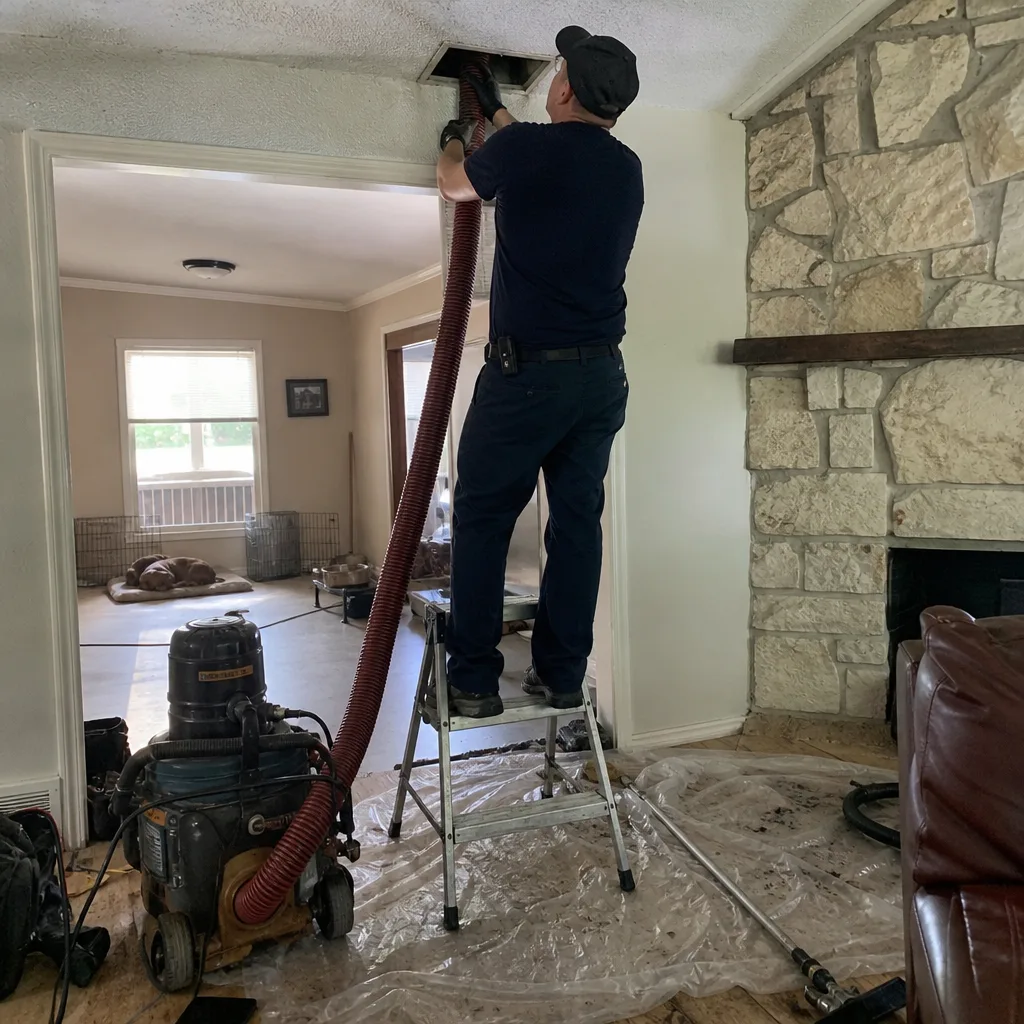 Before
 After
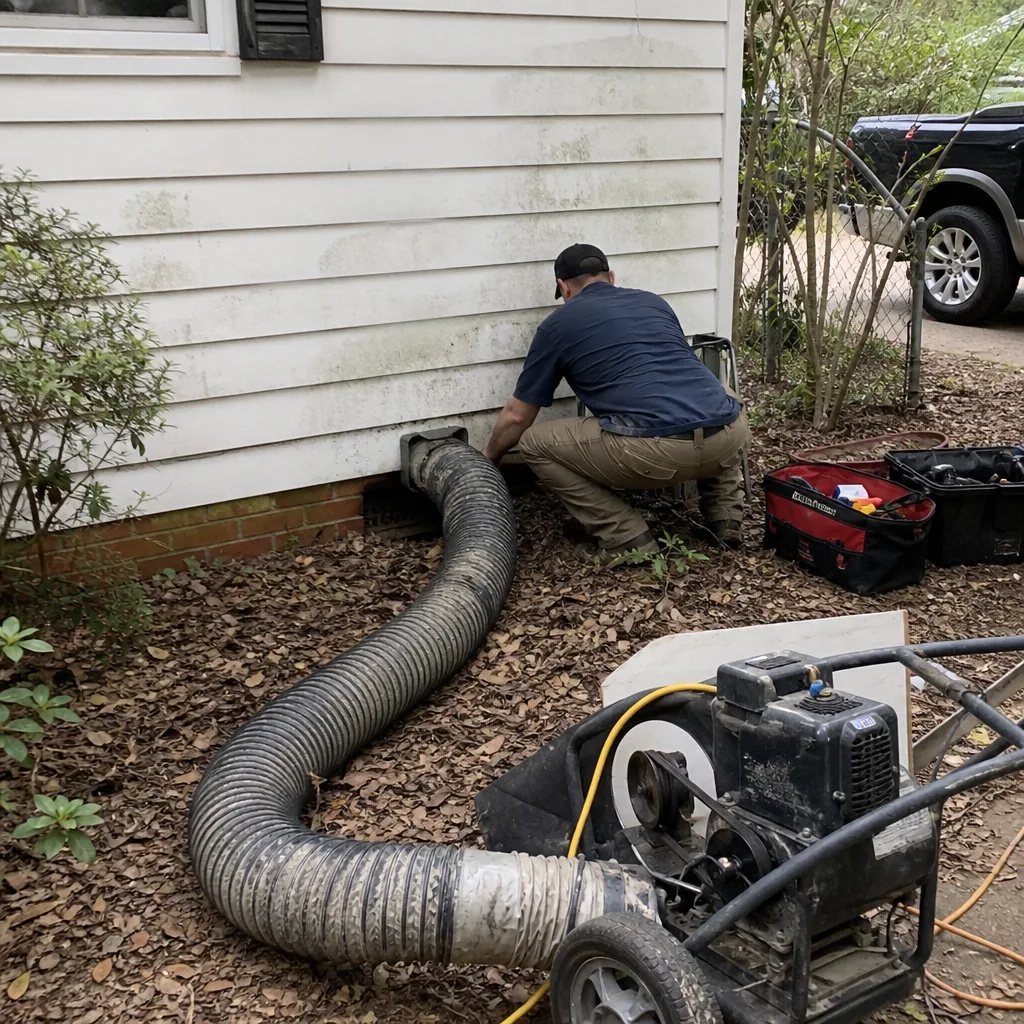 Before
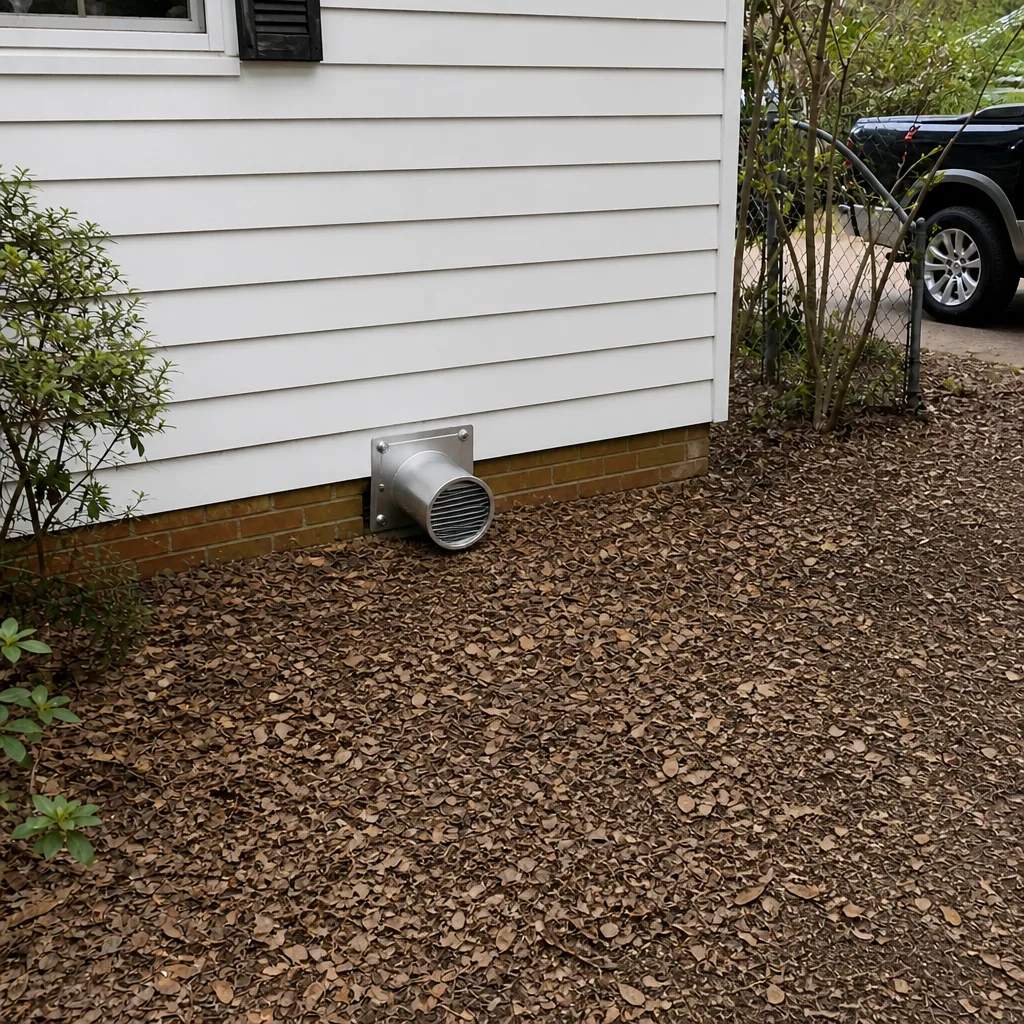 After
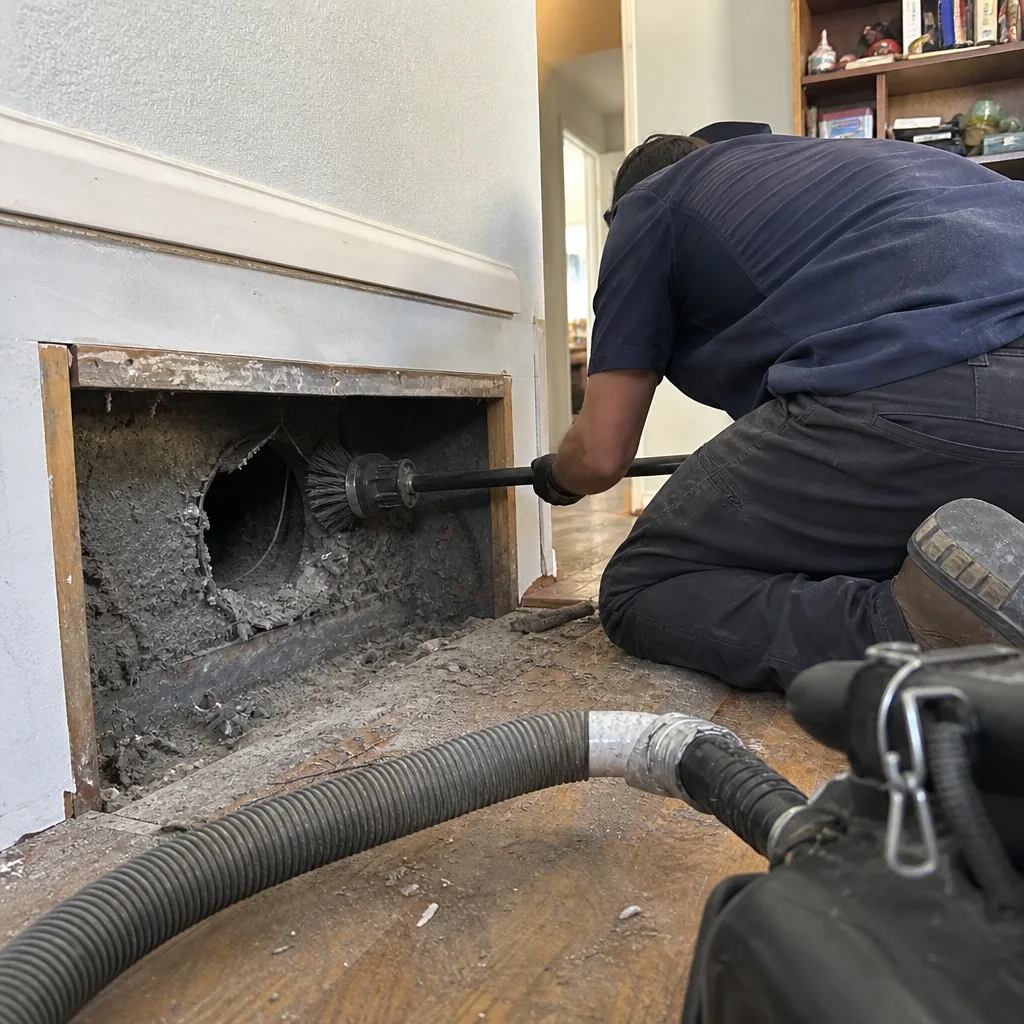 Before
 After
When to Call a Professional
Some duct care is worth a call, and some is a problem you shouldn’t touch yourself. High-tension components, electrical connections at the air handler, and any work in a hot attic with active duct runs are jobs for a trained professional, not a homeowner. If you’re seeing mold, a disconnected duct, a persistent musty smell, or you can’t remember the last time the dryer vent was cleared, that’s a good time to call. If the system just isn’t moving air the way it used to, that’s a good time too. Holloway Air Duct Cleaning offers free estimates in Gainesville, call (855) 408-4151, and we’ll tell you what the job needs before anyone touches anything. We answer 24/7. Fast dispatch from 7am to 7pm, Sunday through Friday.
Frequently Asked Questions
For most Gainesville homes, a full cleaning every few years is reasonable, with the ideal timing being the fall window in late October to mid-November. Homes with pets, recent renovation dust, or a history of moisture problems may benefit from a check sooner. The seasonal calendar matters more than a fixed number, because cleaning when the system is idle gives you the best result.
Late October through mid-November is the best window. The air conditioner is mostly idle, the humidity has eased, and the heating season hasn’t started, so freshly cleaned ducts aren’t immediately stressed. If you miss that window, the next-best time is right after the spring pollen settles, before the heavy cooling season begins.
Yes. Live oak and pine pollen from February through April is heavy in this city, and it collects on filters, return boxes, and duct surfaces. Keeping filters changed and scheduling a post-pollen inspection in late April is the practical response. A full cleaning, though, is better saved for the fall when the whole system can be reset.
Cleaning addresses accumulated dust, debris, and pollen on duct surfaces; repair addresses a physical problem like a disconnected, torn, or sagging run. Signs of a repair need include uneven cooling and visible attic duct damage. A proper inspection tells you which you’re facing, and often a single visit handles both.
Pricing depends on the size and layout of your system, so there’s no honest single number to give here. What matters is that you get a written estimate before work starts, with one flat price per system, and no per-vent pricing added on afterward. For an exact quote on your home, call (855) 408-4151. Estimates are free. We answer 24/7. Fast dispatch from 7am to 7pm, Sunday through Friday.
Because dryer vents are a leading cause of residential fires, and clearing them is a dedicated job, not a quick add-on to a duct cleaning. Lint builds through the year and restricts airflow, and the right cleaning confirms the vent is clear end to end. It’s the fire-safety task on the seasonal list that most homeowners put off.
The Bottom Line
Gainesville’s climate doesn’t reward a generic duct maintenance routine. It has a long cooling season, a short window when the system is idle, a heavy spring pollen load, and a summer that makes moisture the main thing to watch. Treat late October to mid-November as your cleaning window, use the late-April post-pollen check to catch what the trees left behind, watch your attic flex runs through the humid months, and clear the dryer vent before the heating season starts. Match the routine to the climate you live in, and your ducts will do their job without becoming a project. Holloway Air Duct Cleaning covers cleaning, repair, and dryer vent work for Gainesville homeowners, and a free estimate is the fastest way to know where your system stands. Call (855) 408-4151. We answer 24/7. Fast dispatch from 7am to 7pm, Sunday through Friday.
Written by the team at Holloway Air Duct Cleaning.