
Last updated November 15, 2026
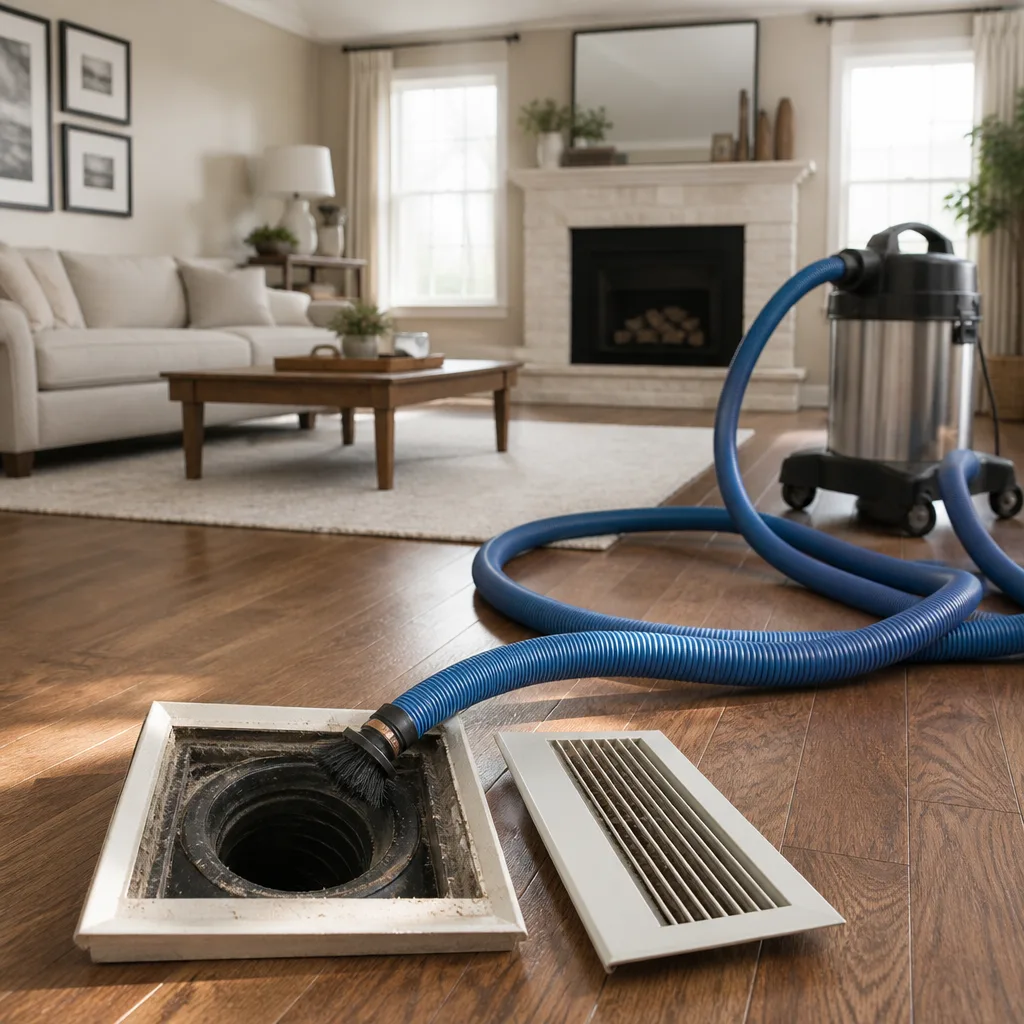 Whole-home duct cleaning
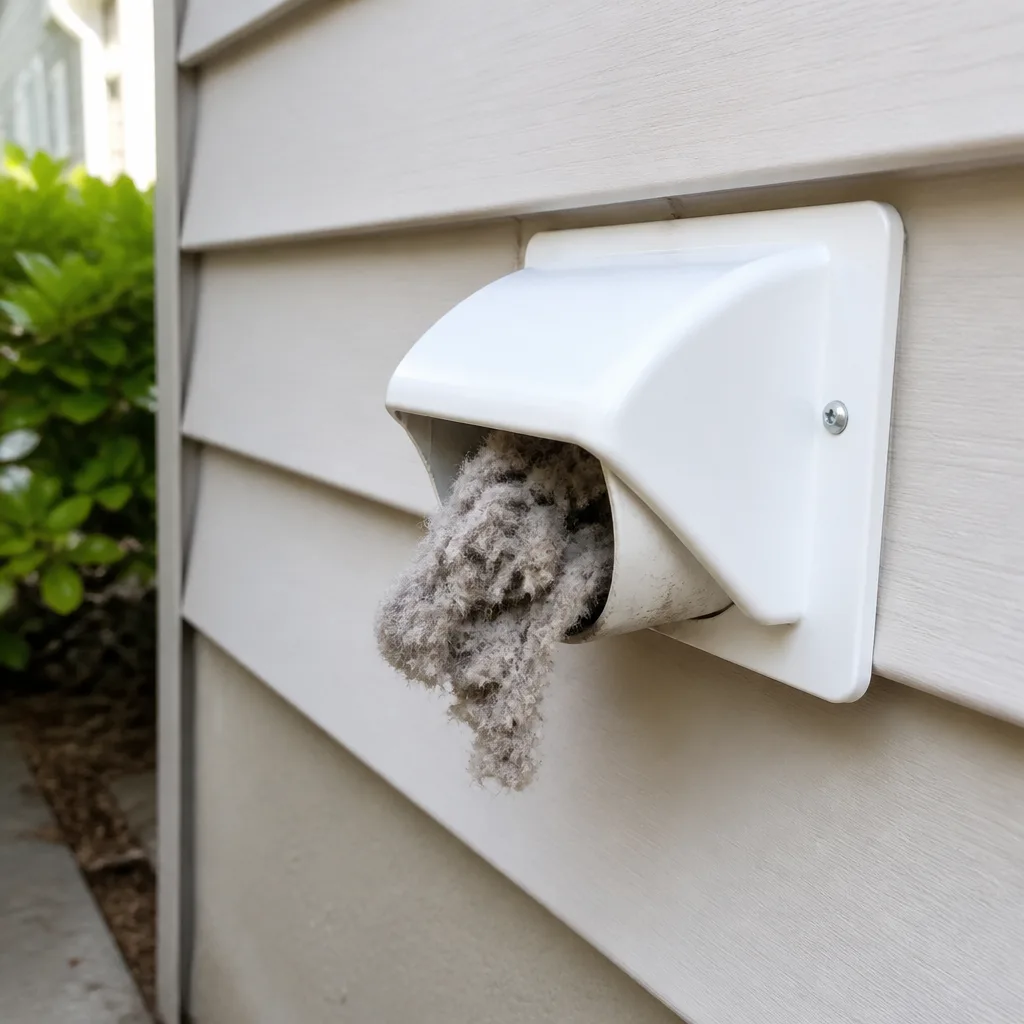 Dryer vent cleaning
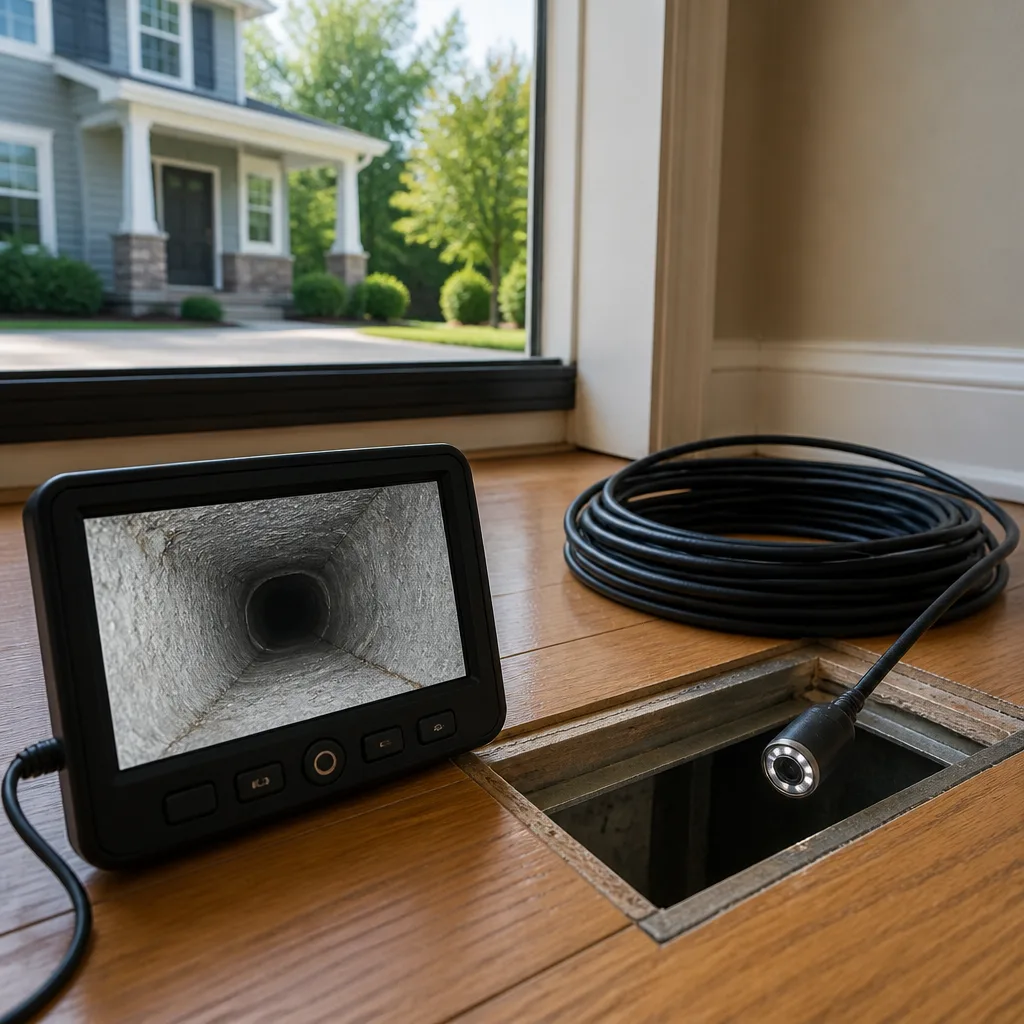 Camera inspection
 Sanitizing & deodorizing
Whole-system duct and dryer vent check with before-and-after photos - you see exactly what came out of your vents
That "$99 whole-house special" is a bait ad - the real number appears once they are in your hallway, or the "clean" is a shop-vac at the register. We photograph the inside of your ducts before and after instead.
Air Duct Cleaning Emergency Preparedness Guide for Gainesville Homes
When a tropical system passes through Gainesville, the instinct is to get the AC running again as fast as possible to pull the humidity out of the house. That instinct is exactly what pushes debris from a damaged duct straight into the rooms you live in. We’re not talking about a little dust. We’re talking about insulation fibers, attic material, and whatever the storm pushed through a compromised connection getting distributed to every supply register in the system. This guide walks you through what to check before you flip that thermostat back on, how long you have before a wet duct becomes a mold problem, what debris intrusion actually looks like, how fire and smoke change the equation, and how to document duct damage so your insurer sees what you see. Every bit of it applies to Gainesville homes specifically.
Quick Answer
After a storm, flood, or fire event in Gainesville, do not restart your HVAC system until you’ve confirmed the ducts and air handler are dry and structurally intact. If attic penetration, flooding, or pressure changes affected the system, shut the thermostat off, inspect accessible ducts and the air handler, and call for a professional inspection before running anything. Acting inside the 48 to 72 hour window after moisture intrusion is what separates a cleaning job from a duct replacement.
Styles & brands we work with
- Whole-home duct cleaning
- Dryer vent cleaning
- Camera inspection
- Sanitizing & deodorizing
Table of Contents
- Post-Storm Duct Inspection: What to Check Before Restarting
- The 48 to 72 Hour Mold Window in Gainesville’s Humidity
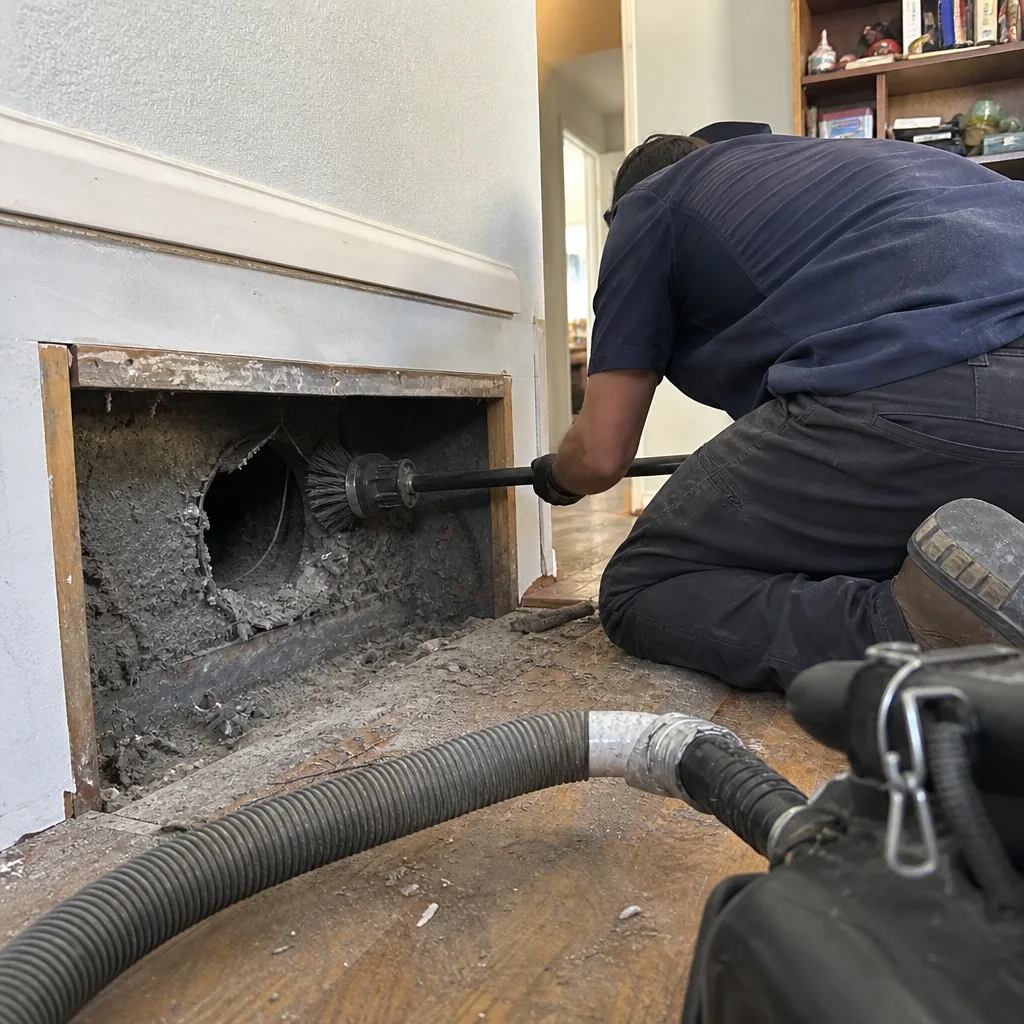
- What Storm Debris Intrusion Looks Like Inside a Duct System
- Fire and Smoke Events: When Cleaning Is Enough and When It Isn’t
- How to Document Duct Damage for Your Insurance Claim
- Flood Water, Humidity, and the Two Different Problems They Create
- Building a Storm-Season Duct Preparedness Plan for Your Home
Post-Storm Duct Inspection: What to Check Before Restarting
The first hour after a storm passes is when most duct damage gets made worse, not by the weather but by the homeowner. Running the air handler draws air from wherever it can, and if a flex duct has torn or a connection has separated in the attic, the system pulls attic air and insulation particles directly into the supply side. That’s how a manageable repair becomes a whole-system cleaning. Here’s the order we recommend for Gainesville homes after any event that caused attic penetration, flooding, or significant pressure changes.
- Leave the thermostat in the off position. Don’t run the fan in the “on” position either. On older systems the fan runs continuously even when cooling doesn’t, and that’s enough to move debris through the whole house.
- Look at the air handler and the return plenum. If water has pooled near the unit, or the plenum insulation is wet to the touch, stop before going further. Wet insulation is not salvageable. It needs to come out and be replaced, not dried in place.
- Walk the accessible attic runs. In Gainesville homes, the attic is where most duct damage shows up first. Check flexible duct for tears, crushed sections, disconnected collars, and straps that have come loose. Look at any section that runs near a roof deck penetration or a gable vent.
- Check every supply register for visible debris. Shine a light into the boot and the first foot of duct. If you see pink or yellow fiberglass fibers, attic insulation, or grit that doesn’t look like ordinary household dust, the system has pulled attic air. Don’t run it until it’s been cleaned.
- Look for water staining on the ceiling below any duct run. A stain that shows up in the days after a storm often traces back to a duct that filled with water or a plenum that condensed heavily while the system was offline.
- Smell the returns. A musty or earthy odor coming from the return grille after a storm is one of the earliest signals that moisture got into the system. Odor is often the second thing a homeowner notices, after the visible damage. It’s usually a more reliable indicator than sight.
If any of those checks turn up a problem, the next call is to a professional, not to the thermostat. If your system is intact and dry, this is still the right time to schedule a full air duct cleaning before the first cool snap of fall, when the system will start cycling again in earnest.
The 48 to 72 Hour Mold Window in Gainesville’s Humidity
Moisture in a duct system is a clock. In Gainesville’s climate, where relative humidity routinely hangs above 70 percent through the warm months, that clock runs faster than most homeowners expect. The window between a wet duct and visible mold growth is roughly 48 to 72 hours. After that, the makeup of the problem changes and the remediation requirements change with it.
Flexible duct is the vulnerable component. Its inner liner is typically a thin plastic film over a fiberglass core, and once that liner gets wet, it traps moisture against the insulation underneath. It doesn’t dry out on its own the way a hard metal duct can, because there’s no airflow through the liner when the system is off, and the insulation holds the moisture in. In an attic heated by the Gainesville sun, the combination of warmth and trapped moisture is close to an incubator.
What that means for a homeowner is a decision point. Before 48 hours, the duct is wet and needs to be dried, cleaned, and inspected. After 72 hours, the same duct may be colonized, and cleaning porous flex duct that has active growth inside the liner is often not a clean fix. The liner is a porous surface and cannot be reliably cleaned once it has been compromised. Replacement is the honest answer in that case.
The window is not the same for every system. A few variables speed it up or slow it down:
- How long the system ran while wet, which distributes moisture across the whole duct run instead of concentrating it.
- Whether the attic saw direct roof penetration, which introduces bulk water rather than condensation.
- Whether the home was closed up and sealed during the outage, which raises indoor humidity and slows drying.
- Whether the air handler sits in a closet inside the conditioned envelope, where a sump-like puddle can sit unnoticed for days.
If any of that applies, don’t wait for a smell to develop. Get the system inspected inside the 48 hour window, and if you’re not sure whether the ducts got wet at all, treat that as a yes and have them inspected. When water reaches the airflow, you’re dealing with a mold problem, not a cleaning problem, and the equipment that comes out matters. Our technicians use Abatement Technologies filtration to contain what’s dislodged during the process, and we use Nikro negative-air equipment to pull debris out of the path it would otherwise travel. Containment during a post-storm cleaning is not optional in Gainesville. It’s how the rest of the house stays clean while the ducts don’t.
What Storm Debris Intrusion Looks Like Inside a Duct System
Debris intrusion from a storm looks different from ordinary household accumulation, and the difference matters for cleanup. Normal duct buildup is a mix of dust, lint, pet hair, and skin cells, all of it fine and gray-brown, all of it settled over months or years. Storm intrusion is coarser, more varied, and it usually appears in a pattern that maps to the damage.
Inside the system, here’s what we look for after a storm:
- Fiberglass fibers, pink or yellow, in the supply trunks and boots. These came from attic insulation, not from the duct itself. Their presence is almost always a sign that a duct connection separated or the duct got punctured.
- Attic dust, which is finer and lighter than interior dust and tends to be distributed evenly across every register rather than concentrated near the air handler. Uniform distribution means the whole system pulled attic air, not one damaged section.
- Roof grit, granules from shingles, and small bits of building material. These show up when roof penetration occurred and the intruding debris was heavier. They collect at the low points of the run.
- Visible moisture or damp debris in the first few feet of duct past any boot. Damp debris cannot be blown out with a shop vac. It has to be removed with the right equipment.
- Crushed or collapsed duct runs behind kneewalls. These restrict airflow and cause the system to pull air from wherever it can, which is often the attic.
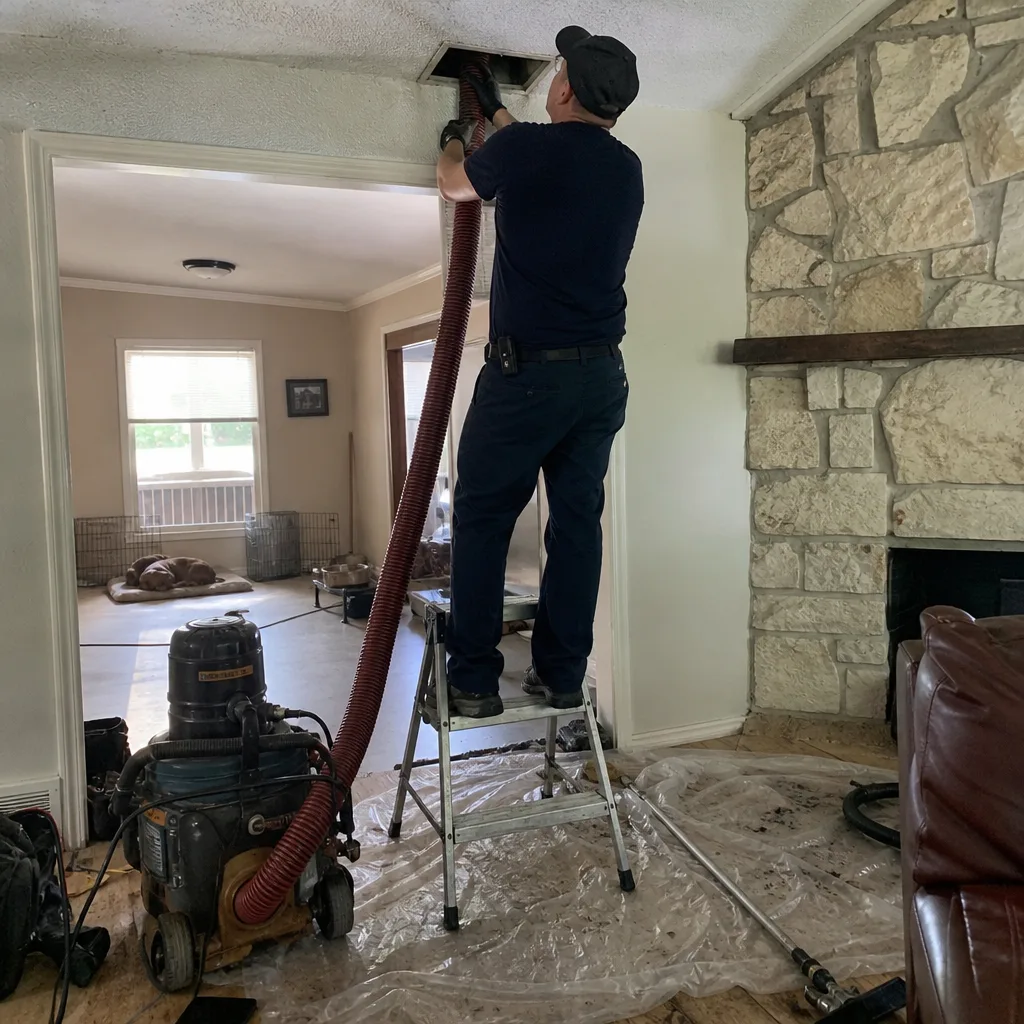
The urgency difference is this: normal accumulation is a maintenance issue and can wait. Storm intrusion is a contamination issue and cannot. Running the system with insulation fibers inside the supply side distributes those fibers into every room in the house, and they don’t settle out quickly because the air handler keeps pushing them into the air you breathe. The cleanup method is also different. A quick vacuum and brush pass won’t clear heavy storm debris in the first foot of every supply boot. That takes source removal with commercial-grade rotary brush equipment, which is why the professionals we work with run the Rotobrush system on every job and pair it with negative-air vacuum extraction. If you have a system that’s been compromised by a storm, the right choice is to schedule air duct cleaning before you turn it back on.
Fire and Smoke Events: When Cleaning Is Enough and When It Isn’t
Fire and smoke events are a different category of duct problem from storm intrusion, and they’re the one where homeowners most often assume a cleaning is enough when it isn’t. The deciding variable is where the fire was and how much of the duct system was exposed to smoke before the system was shut down.
What makes smoke difficult to remove from ducts isn’t the smoke itself, which is a gas and clears with airflow. It’s the soot, which is particulate, sticks to surfaces, and carries an odor that will recirculate through the whole system every time the fan comes on. Soot from a house fire deposits differently depending on the source: wood smoke leaves a fine dry soot, and synthetic material fires leave a sticky residue that bonds to duct surfaces. Odor clearance after a house fire often requires cleaning the whole duct run, not just the section closest to the fire.
Duct cleaning is enough when all three of these are true:
- The fire was contained to one room or area and the HVAC system was shut down quickly, minimizing smoke travel through the whole system.
- The duct lining is metal or non-porous, and there’s visible soot but not charred or melted lining.
- The air handler was outside the smoke plume and the filter caught a significant portion of the soot.
Replacement of the affected sections, and sometimes the whole duct run, is the answer when:
- The duct is flex with a plastic liner and the liner shows visible soot bonding, discoloration, or any sign of heat damage.
- Duct board or duct lining is present and has absorbed smoke and soot. Porous duct lining cannot be reliably cleaned once it’s been contaminated by soot, and forced cleaning can break the material down further.
- The air handler itself shows soot intrusion into the blower compartment or the coil, which means the smoke traveled through the equipment, not just the duct.
If you’re unsure which category your home falls into, an inspection is the answer, not a guess. Soot doesn’t get easier to remove with time, and the longer it sits, the more the odor sets into the duct material. In our experience the homeowners who end up replacing the least are the ones who call for inspection within the first week after a fire. If you’re in this situation, a call to Holloway Air Duct Cleaning for an assessment is the place to start. And note that dryer vent cleaning is a separate fire-safety service, not a replacement for smoke damage remediation. If the fire was in the laundry area, that duct is part of the picture too.
How to Document Duct Damage for Your Insurance Claim
Insurance claims for duct damage are won and lost on documentation, and duct damage is unusually hard to photograph because so much of it is inside walls and in the attic. What an adjuster needs is proof of the mechanism and proof of the extent, not just a picture of a wet ceiling. Here’s the documentation to gather before any cleanup begins.
- Photograph the exterior source first. Roof damage, gable vent damage, and any visible penetration that allowed water or debris into the attic. Get a wide shot and a close shot. Adjusters want to see the relationship between the exterior damage and the interior damage.
- Photograph the attic duct runs in place, before anything is moved. Every torn section, every disconnected collar, every section of wet insulation. Include a shot that shows the damaged section in relation to the air handler, so the adjuster can see how the system is laid out.
- Photograph the water staining and the ceiling below the affected ducts. Include a shot of the wet ceiling material itself, not just the stain. The stain is evidence; the wet material is the loss.
- Take moisture readings if you can. A cheap pin-type moisture meter will show you wet flex duct insulation and wet drywall in a way a photo cannot. Photograph the meter in frame against the material being measured.
- Photograph any visible debris at the registers, with the register opened. Insulation fibers, attic dust, and shingle grit show the adjuster that the system pulled contamination in, not just that the duct got wet.
- Keep the filter. A storm-damaged filter that shows insulation fibers or grit is physical evidence that attic air entered the supply side, and it costs nothing to keep in a ziplock bag.
- Don’t discard anything before the adjuster sees it. Torn flex duct that’s been removed is difficult to prove was damaged rather than worn out. Get it photographed and documented before it goes in the truck.
A written inspection report from a professional strengthens a claim when the damage is inside the system and not visible from the living space. An inspection report documents the condition of the ducts, the extent of contamination, and the recommended remediation, which turns a homeowner’s description into a third-party technical account. Insurers respond to specificity. A report that says “eighty percent of the supply runs show water damage and require replacement” is worth more than a photo of one wet boot.
Two other details worth doing for a Gainesville claim. First, keep every receipt for emergency mitigation, including a filter change, a dry-out, or an inspection. Second, note the date and time of the initial inspection, because the 48 to 72 hour mold window matters to the adjuster as much as it does to you.
Flood Water, Humidity, and the Two Different Problems They Create
Flooding and high humidity are two different threats to a duct system, and they need different responses. Treating them the same is one of the most common mistakes we see after a Gainesville storm, because the visible effects are similar (damp air from the registers, musty smell, fogged windows) but the underlying problem is not.
Flooding is bulk water. It happens fast, it deposits sediment, and it enters the system through the air handler, through low return grilles, and through any duct run that passes through a flooded crawl space or a low closet. Water that reaches the air handler itself means the blower, the coil, and the cabinet all have to be assessed before anything else. Even a small amount of standing water in the air handler cabinet can damage the blower motor and the control board. Ducts that filled with water and are now holding water need to be replaced, not dried, unless they’re metal and can be cleaned and dried out completely.
High humidity is a slower, quieter problem. After a storm, the house is closed up, the AC is off, and the indoor humidity climbs. That raises the dew point inside the ducts, and moisture condenses on any cold surface. When the system comes back on, the moisture cycle reverses and the ducts look dry. They aren’t. Condensation inside flex duct insulation is the most common cause of post-storm mold growth in Gainesville, and it’s the one homeowners are least likely to catch. The smell shows up days later, when the visible evidence has already dried out.
The response to both problems starts the same way: don’t run the system until it’s inspected. From there the responses split. Flooding requires assessment of the air handler and replacement of any waterlogged flex duct. Humidity requires drying the system out and confirming that no moisture is trapped in the insulation before the system runs again. If you have premium equipment in the home, including a Honeywell or Aprilaire control or humidifier, note that those components may also have taken on moisture and should be checked as part of the assessment. We work with both brands routinely, and their controls hold up well to humidity but are not designed to sit in a soaked cabinet.
If either problem applies to your home and you’ve never addressed what’s in the duct system, the place to start is a full inspection. That’s what our air duct cleaning service is built for. It’s not a quick pass with a brush and a shop vac. It’s source removal with the right equipment and an honest report on what we find.
Building a Storm-Season Duct Preparedness Plan for Your Home
The best time to handle a post-storm duct problem is before the storm arrives. A little planning before the season gets you a much better outcome after it, and nothing in this plan requires special tools or technical ability. Most of it is knowing what you have, knowing where it is, and having the right number to call.
- Map your duct layout on paper. Draw a simple diagram of where the air handler is, where the returns are, and which supply registers connect to which runs. If you’re in an attic-duct home, note where the runs pass near the roof deck. When a storm hits, this diagram is what helps you and an adjuster understand what got hit.
- Photograph your ducts and HVAC equipment now. A picture of the system in good, dry condition is far more useful in an insurance claim than a picture of the damage alone. Get wide shots of the attic, the air handler, all the equipment labels, and any premium components including a Honeywell or Aprilaire control if you have one.
- Know where your HVAC shutoff is. Most homes have a disconnect at the exterior condenser and a breaker at the panel. Both should be labeled. When a storm is coming and you’re going to be away from the house, or you lose power and the system comes back on with a power surge, knowing how to kill the power to the HVAC is the single most useful piece of knowledge in this guide.
- Keep the filter access clear. After a storm, the first filter change tells you a lot about what got into the system. If the filter is loaded with fibers or grit that don’t look like household dust, that’s your first signal that attic air entered the return.
- Have the phone number handy for a professional inspection. Not for the day of the storm, for the day after. The window is short and the good inspectors get booked quickly. Have the number before you need it.
- Schedule a preventive cleaning before the season. A system that starts the storm season clean shows intrusion more clearly and is easier to clean if intrusion happens. It also means the mold window starts from a cleaner baseline if any moisture gets in.
- Consider Guardsman or a similar protective product if you have premium equipment. Storm displacement can move ductwork and put stress on component connections. Protecting the high-end systems in your home is cheaper than replacing them, and the homes we see with the fewest post-storm complications are the ones that protect their equipment.
None of this is dramatic. The Gainesville homes that come through a storm season with the least duct damage are the ones where the homeowner knew their system, had a paper record of it, and called for an inspection inside 48 hours when something looked wrong. That last step is the one that matters most.
Common Mistakes to Avoid
- Turning the AC back on before inspecting the ducts. This is the single biggest mistake after a storm, and it’s the one that turns a small repair into a whole-house cleaning. The system pulls air from anywhere it can find it, including a torn attic duct, and distributes what it catches.
- Assuming a musty smell is just “storm smell.” In Gainesville’s humidity, a musty odor from the registers is often the first sign of moisture in the duct insulation, and it usually shows up 72 hours or more after the storm, when the mold window has already closed.
- Wiping down registers and calling it done. The visible register is the last few inches of a duct system that’s 30 to 50 feet long. Cleaning the grille does nothing for the contamination in the trunk line and the boots.
- Running a shop vac into a duct and thinking it’s cleaned. A consumer vac doesn’t have the airflow or the containment to remove embedded debris from duct surfaces, and on flexible duct it can tear the liner. The right equipment matters more after a storm than at any other time.
- Taking the insurance photos after the cleanup crew has been through. The evidence an adjuster needs is at the source, in the attic, before anything gets moved. Once the wet flex duct goes in the truck, the adjuster sees a clean attic and a homeowner’s description, which is a much weaker claim.
- Assuming a fire requires a full duct replacement, or assuming it never does. Both assumptions are expensive. The right answer depends on the soot source, the duct material, and whether the lining is porous, and that’s a decision for an inspection, not a phone guess.
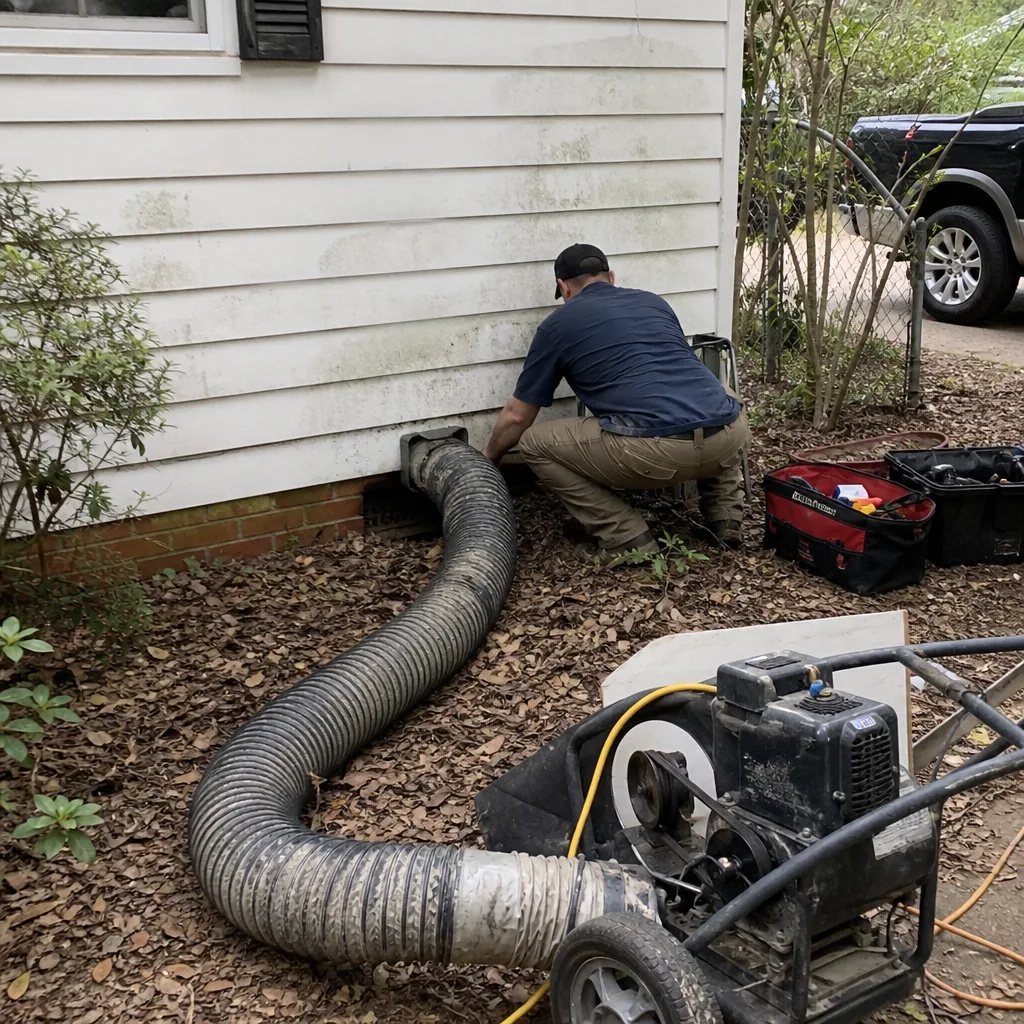
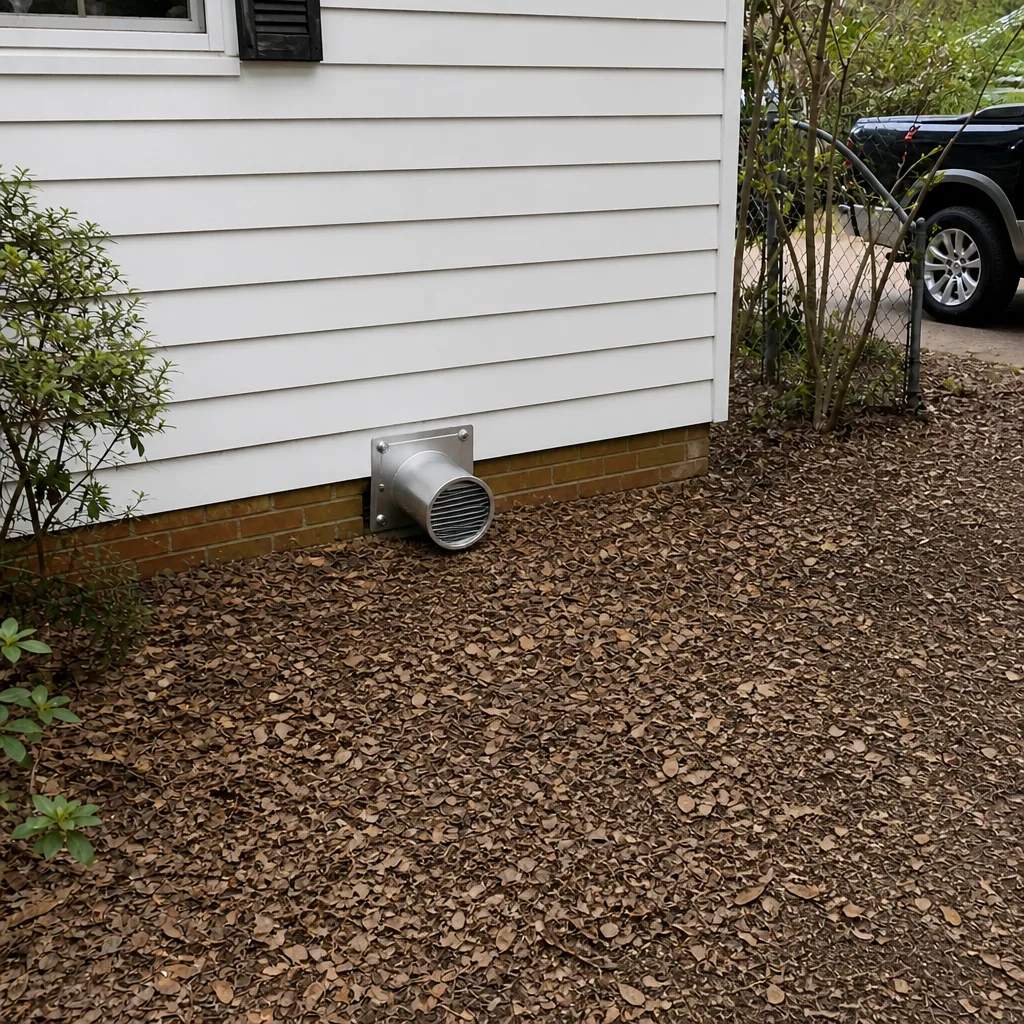
- Skipping the dryer vent during storm season prep. A dryer vent that’s already partially blocked before the storm is a fire risk every time the dryer runs. Storm season is a good time to clear it, and it’s a fire-safety service, not a maintenance afterthought. Our dryer vent cleaning team handles it as its own job, not as an add-on to a duct cleaning.
See the difference
 Before
 After
 Before
 After
 Before
 After
When to Call a Professional
Call for a professional inspection after any storm, flood, or fire event that could have affected the duct system, and call the same day if you can. The 48 to 72 hour mold window is real, and the sooner it’s inspected, the more of the duct system is salvageable. Call before you restart the HVAC system after any event that caused attic penetration or flooding. Call if the air handler itself got wet. Call if you see insulation fibers or grit at a register, if a musty smell has developed, if you’ve had a fire of any size in the home, or if you’re filing a claim and need a written inspection report to support it. Also call if you’re not sure whether any of that applies to your home. Uncertainty after a storm usually means a problem that hasn’t shown itself yet, and a free estimate is the fastest way to know. Holloway Air Duct Cleaning offers free estimates in Gainesville. Call (855) 408-4151. We answer 24/7. Fast dispatch from 7am to 7pm, Sunday through Friday.
Frequently Asked Questions
Yes, if the storm caused any attic penetration, roof damage, or loss of power that kept the system off for hours. Duct damage from storms often happens inside the attic rather than in the living space, and a duct that separated or was crushed looks fine from the register until the system runs and pulls attic air in. An inspection is the only way to know, and if the ducts are clean and intact, the inspection confirms it and you move on.
You have roughly 48 to 72 hours after moisture enters the duct system before mold growth becomes likely. That window is shorter in Gainesville’s summer humidity than in drier climates because warm, humid air inside flex duct insulation creates the conditions mold needs. The clock starts when the moisture enters, not when you notice the smell, and the smell typically shows up after the window has closed. Call for inspection early. Call (855) 408-4151 for a free estimate.
Many policies cover duct cleaning when the damage comes from a covered event like wind-driven rain, roof penetration, or a covered fire, but coverage depends on your specific policy and deductible. What helps a claim more than anything is documentation gathered before cleanup starts, including photos of the exterior source of damage, the attic duct runs in place, moisture readings, and a written inspection report. Ask your adjuster before assuming either way, and get the inspection report in hand before cleanup begins.
Cleaning can remove smoke and soot from metal duct with a non-porous lining, but it cannot reliably remove soot from porous duct lining, duct board, or flexible duct with a compromised plastic liner. Those materials need to be replaced, not cleaned. Soot particle size matters too: fine dry soot from wood smoke cleans differently than the sticky residue from a synthetic material fire, and the assessment has to happen first. A professional inspection tells you which category you’re in before you spend money on cleaning that won’t solve the problem. Call (855) 408-4151 for a free estimate.
Photograph the exterior source of the damage first, then the attic duct runs in place before anything is moved, then the water staining and wet ceiling material, then the debris visible at opened registers, and finally the filter in place with a moisture meter reading if you have one. Keep the old filter. Don’t discard torn flex duct until the adjuster has seen it and you have photos with the meter in frame. The sequence matters because the evidence is at the source, and it’s gone once the cleanup crew leaves.
Yes. We handle three services: air duct cleaning, dryer vent cleaning, and air duct repair. The dryer vent work is a separate, dedicated fire-safety service, not a bundled add-on, because a compromised dryer vent is a fire hazard independent of anything that happened to the air ducts. If the storm affected the laundry area, that’s worth having inspected along with the ducts. Call (855) 408-4151 for a free estimate. We answer 24/7. Fast dispatch from 7am to 7pm, Sunday through Friday.
The Bottom Line
Post-storm duct damage in Gainesville almost always looks smaller than it is. The visible ceiling stain is usually the last thing that shows up, not the first, and the real damage is in the attic where the ducts run and the insulation gets wet. The order of operations that saves the most money is simple: shut the system off, inspect the air handler and accessible ducts, document everything before cleanup begins, and call for a professional inspection inside the 48 hour window. Restarting the HVAC before that inspection is the move that turns a $300 cleaning into a full duct replacement. The variables that decide which one you’re facing are all in this guide, and the call that decides it is one number away. If you’re in Gainesville and a storm just came through, or you’re preparing for the next one, call (855) 408-4151 for a free estimate.
Written by the team at Holloway Air Duct Cleaning.