
Last updated November 15, 2026
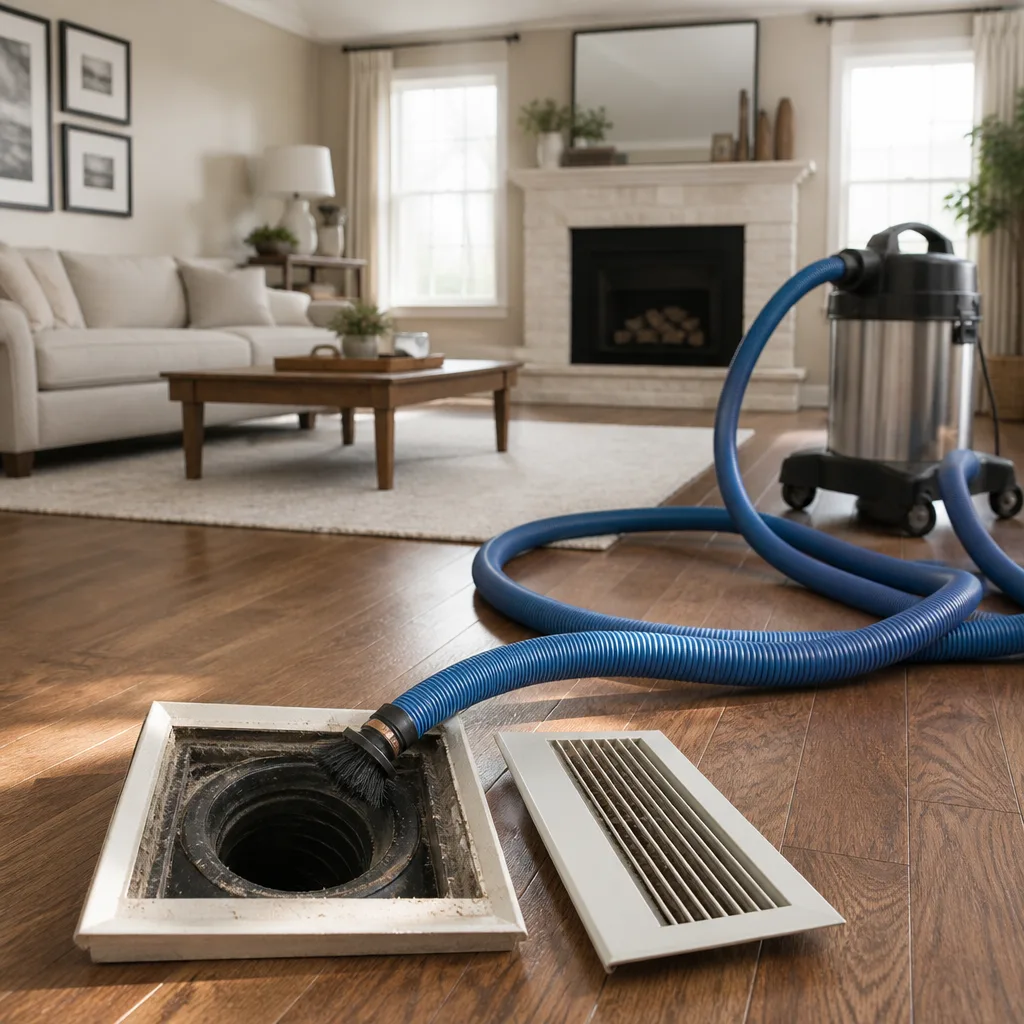 Whole-home duct cleaning
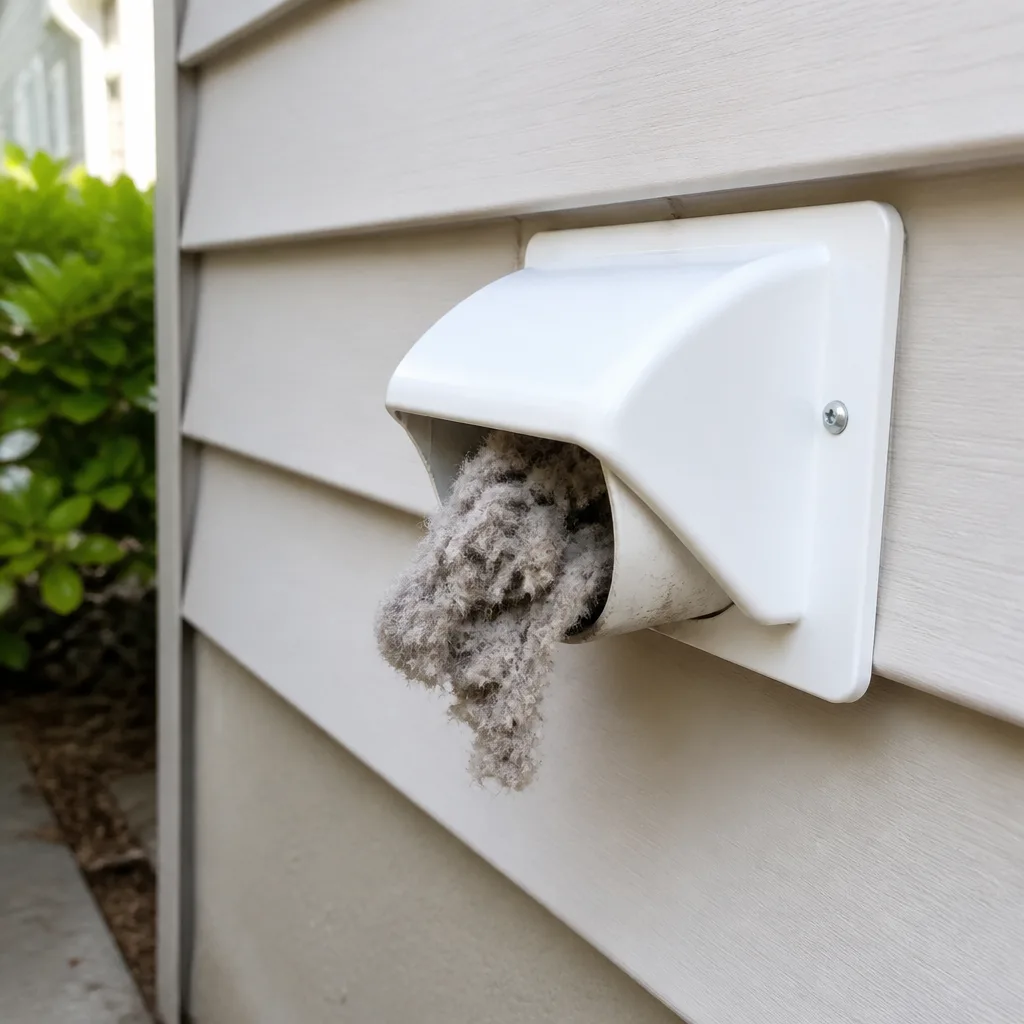 Dryer vent cleaning
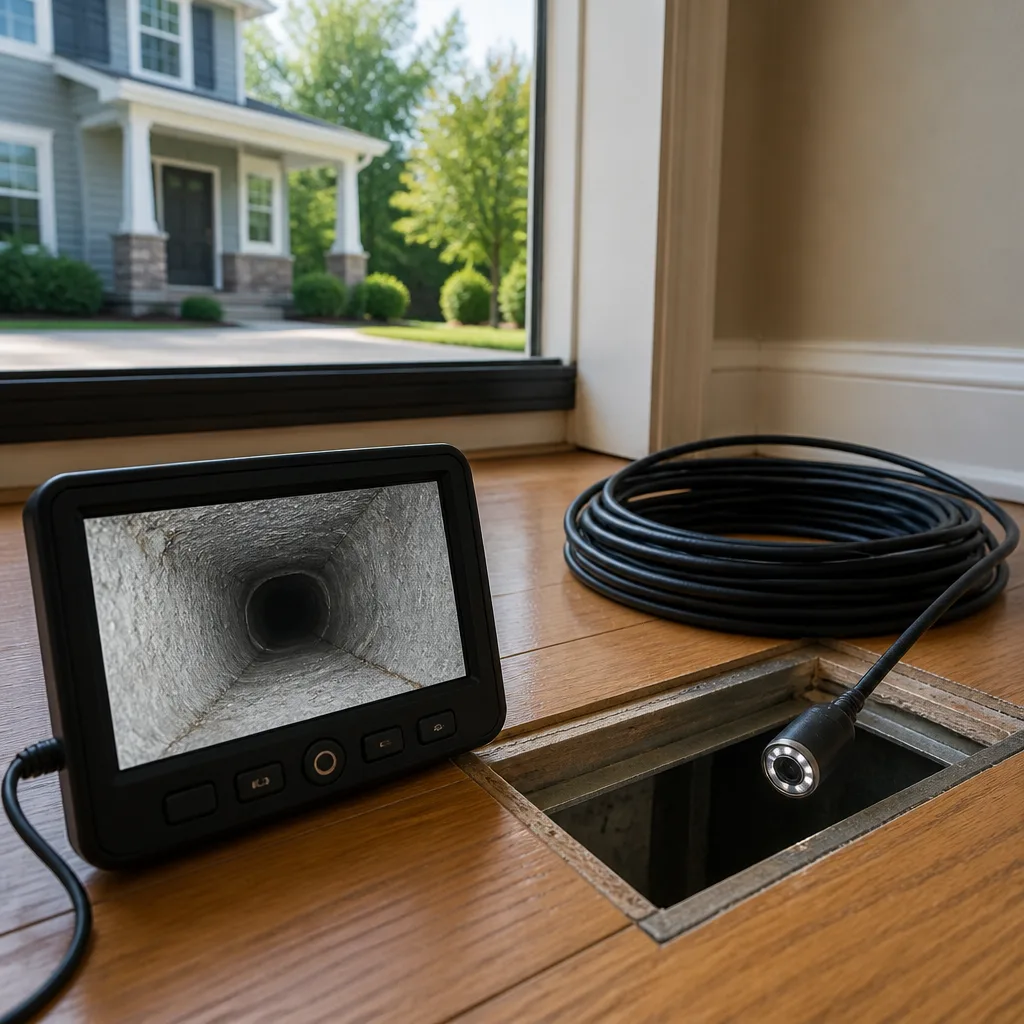 Camera inspection
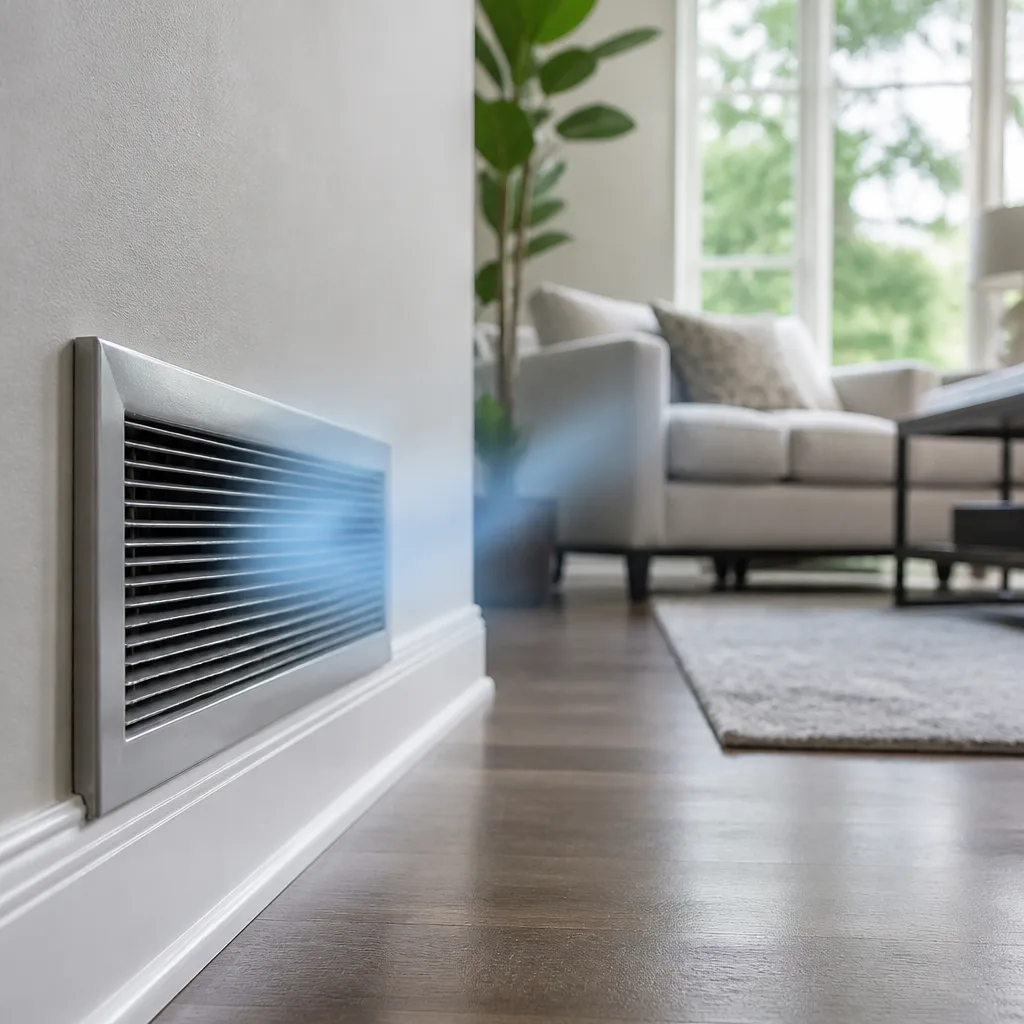 Sanitizing & deodorizing
Whole-system duct and dryer vent check with before-and-after photos - you see exactly what came out of your vents
That "$99 whole-house special" is a bait ad - the real number appears once they are in your hallway, or the "clean" is a shop-vac at the register. We photograph the inside of your ducts before and after instead.
The Complete Guide to Air Duct Cleaning in Gainesville
Most Gainesville homeowners who call us about dusty vents assume they have a dirt problem. Usually they don’t. They have a system problem, and the dust is only the symptom showing up at the register. The ducts in this town take a particular beating: pollen from live oaks and other trees loads the return side every spring, and relative humidity sits above 70% for well over half the year, which keeps debris damp and gives mold spores a reason to settle in. Clean those ducts halfway and you’ll be calling someone again in a year. This guide covers every part of the system, what our subtropical climate does to it, and what a complete job actually looks like.
Quick Answer
Air duct cleaning in Gainesville means pulling the entire duct system under negative pressure and mechanically scrubbing every run, including the flex sections and return plenums most crews skip, until the debris is removed rather than just loosened. It’s more than vacuuming registers. A proper job starts with access points, ends with documented airflow readings and before-and-after photos of your own ducts, and costs as a whole-system flat price agreed before work starts. If ducts are torn, collapsed, or holding mold, repair has to come first or cleaning solves nothing.
Styles & brands we work with
- Whole-home duct cleaning
- Dryer vent cleaning
- Camera inspection
- Sanitizing & deodorizing
Table of Contents
- Why Gainesville’s Humidity Changes What’s in Your Ducts
- What’s Actually Inside Your Duct System
- System Clean vs. Surface Clean: What Gets Missed
- What Equipment a Real Duct Cleaning Job Requires
- How a Complete Duct Cleaning Job Unfolds, Step by Step
- How to Verify the Work Was Actually Done
- When Cleaning Isn’t Enough: Leaks, Collapsed Flex, and Mold
- What Duct Cleaning Costs in Gainesville
Why Gainesville’s Humidity Changes What’s in Your Ducts
Gainesville’s average relative humidity stays above 70% for more than half the year. That single fact does more to shape your duct system’s condition than how often you change your filter. In a dry climate, debris inside ducts stays powdery and mostly blows through. Here, it stays slightly damp. Damp debris clings to duct walls, traps more particles, and gives organic material a place to sit.
Layer the local plant life on top. Gainesville’s live oaks drop pollen and fine organic litter that gets pulled in through returns, and the longer humid season means more mold spores circulating in outdoor air. Once those spores land on damp dust inside a duct, they have what they need to colonize. That’s why the stuff inside a Gainesville duct system often looks less like dry lint and more like a dark, tacky film, especially on the return side and near the air handler.
This changes the cleaning math. Debris that’s adhered to duct walls won’t come off with suction alone. It needs mechanical agitation, a rotary brush that contacts the duct surface, followed immediately by strong vacuum to carry the loosened material out of the system. And that’s why air duct cleaning in Gainesville has to be judged on equipment and technique, not on how fast a crew can get in and out.
The good news: our winters don’t bring the freeze damage that wrecks duct systems up north. The bad news: the humidity season runs long enough that buildup has more months to accumulate each year.
What’s Actually Inside Your Duct System
When homeowners picture duct cleaning, they picture the grilles. The registers are maybe 10% of the system. Here’s the full map of what a complete job has to address:
- Return grilles and return plenums. The return side carries the most debris because it pulls air straight off your floors and living spaces. Return plenums, the larger boxes feeding the air handler, are often the dirtiest part of the system and the most frequently skipped.
- Main trunk lines. The large ducts running from the air handler. These collect debris along the bottom surfaces.
- Branch runs and flex duct. The smaller ducts to individual rooms. Flex duct is corrugated, and its ridges trap debris in every groove. Flex sections are also the easiest place to cut corners.
- The air handler and evaporator coil area. Not cleaning the coil cabinet area while cleaning ducts is like washing a car and skipping the hood.
- Registers and diffusers. The grilles themselves collect dust and need removal and cleaning, not a wipe.
- Duct joints, seams, and connections. These are where leaks usually show up, and where a technician can spot trouble before it becomes a bigger repair.
In Gainesville homes, the air handler closet and attic flex runs are where we see the most trouble. Attic-mounted flex duct sees extreme heat and humidity swings, and the corrugated lining is a magnet for damp organic debris. Any job that skips the flex sections and return plenums has skipped the parts that matter most.
System Clean vs. Surface Clean: What Gets Missed
A surface clean is exactly what it sounds like: someone runs a vacuum hose over the accessible registers, maybe a brush down the first few feet of a couple of runs, then hands you a bill. It looks like progress because the grilles are clean. It changes almost nothing about your air.
A system clean treats the ductwork as one connected assembly. Here’s the practical difference:
- Access points. A system clean requires cutting proper access holes into the trunk and branch runs, then sealing them afterward. A surface clean avoids access entirely and works only through existing registers.
- Flex runs. Corrugated flex duct requires a rotary brush sized to the run. Skipping it leaves the ridge line packed with debris.
- Return plenums. These are almost always skipped by surface-only crews because they’re not a simple straight path.
- Negative pressure. A real system clean keeps the entire duct network under vacuum from a single high-power unit, so debris moves toward the collection point instead of into your living room.
- Containment. Filters and filtration equipment at access points capture fine dust before it escapes into the home, essential when the built-up material is fine and airborne.
- Verification. Airflow readings, photos, and filter inspection at the end. A surface clean has no way to prove anything changed.
Our technicians have up to 9 years of experience and have seen the difference between the two approaches in Gainesville homes repeatedly. The surface clean is why so many homeowners tell us they had “duct cleaning” done and saw no change in dust or air quality.
What Equipment a Real Duct Cleaning Job Requires
You don’t need to be a duct-cleaning technician to judge equipment, but you should know what the right tools are. Because if a company shows up with a shop vacuum and a hand brush, the job is already limited by physics. You can’t move a system’s worth of adhered debris without the right machine.
Here’s the equipment stack that a complete job depends on:
- A rotary brush system built for ducts. We use the Rotobrush system, which is engineered to scrub duct walls as it moves through the run. Manual brushes don’t have the contact pressure or the reach to clean a full branch run.
- A high-power negative-air vacuum. Our Nikro vacuum equipment generates the suction required to pull loosened debris out of the system and hold the entire duct network under negative pressure while we work. This is what separates cleaning from agitating.
- Air filtration and containment equipment. Abatement Technologies filtration captures airborne contaminants at access points and near the work area, which is important in a Gainesville home during a job that loosens damp, fine debris. It’s the difference between cleaning the ducts and cleaning the ducts while also dusting the living room.
- Access tools and proper sealing materials. Cutting access where needed and sealing it back correctly so the system stays balanced.
- Airflow and inspection instruments. To document what the system was doing before and after the job.
Ask any company what equipment they use before you book. If they can’t tell you specifically, that’s your answer. We can tell you exactly what we bring, because it’s the foundation of every job we run.
How a Complete Duct Cleaning Job Unfolds, Step by Step
A full duct cleaning in a Gainesville home typically runs several hours, longer if duct repair is involved. Here’s how you should expect the work to unfold, in order:
- System inspection and airflow baseline. We measure airflow at the registers and inspect the duct system, including the air handler area, to identify problem zones, damaged ductwork, and anything that might not survive cleaning without repair. Photos are captured.
- Containment setup. Air filtration equipment is placed near access points and the work area to capture fine particles as they’re dislodged.
- Access points cut. Access holes are cut into trunk and branch runs as needed to reach the full length of every duct.
- Negative pressure applied. The Nikro vacuum is connected and the duct system is pulled under negative pressure, which keeps dislodged debris moving toward collection rather than release.
- Rotary brush cleaning. Each run is cleaned with the Rotobrush, brushing the full length of the duct including flex runs and return plenums. Debris is drawn out and captured.
- Registers and diffusers removed and cleaned. Grilles are cleaned separately and reinstalled.
- Air handler and coil cabinet checked and cleaned. Areas reachable without disassembly are cleaned and inspected for further issues.
- Access points sealed. All cuts are sealed so the system remains sealed and balanced after cleaning.
- Airflow verification. Airflow is measured again and compared to baseline. Filter condition is checked. Before-and-after photos of your ducts are taken and provided.
What you should notice on a complete job: photos of your own ducts before and after, a documented airflow measurement, clear explanation of anything found that needed repair, and a filter condition check. If any of those are missing, ask why.
How to Verify the Work Was Actually Done
This is the part of the market that makes homeowners skeptical. Duct cleaning is a job you can’t watch for most of its duration, because most of it happens inside ductwork and behind access points. So verification has to be built into the process. Here’s how you can judge a completed job:
- Before-and-after photos of your ducts. We take photos of the interior of the ducts before and after cleaning. These are your ducts, not stock photos. Ask to see them on any job.
- Airflow readings. A measured airflow reading before and after the job. Cleaning a partially restricted system can improve airflow. If a company doesn’t own the instrument to measure, ask why not.
- Access points sealed and matching. The job should look finished. Cut access points sealed correctly, not taped over or left open.
- Register removal. Registers should have come off, been cleaned, and gone back. If they’re in place but still dusty, the job didn’t include them.
- Filter condition at job end. Filter checked and reported. A loaded filter after cleaning is a normal finding on some systems, but it should be looked at.
- Contained work area. Fine dust should not be on your furniture or floors where filtration was used properly.
- A written description of what was found and cleaned. Not just an invoice. A brief summary of what was actually cleaned.
The industry’s bad reputation comes from companies that show up, vacuum a register, and leave. You can’t verify a job if the company never documents it. We treat documentation as part of the job.
When Cleaning Isn’t Enough: Leaks, Collapsed Flex, and Mold
Not every duct system is ready to be cleaned. Sometimes the correct sequence is repair first, cleaning second. Cleaning a system with collapsed flex duct, disconnected joints, or active mold growth doesn’t fix the problem, it just resets the clock.
Here’s when cleaning has to wait, or needs repair included:
- Duct leakage and disconnected joints. If duct runs have pulled apart at joints or connections, the system is losing conditioned air into the attic or crawlspace. Cleaning without addressing leakage wastes the work, because the system keeps pulling unconditioned, contaminated air in through the gaps.
- Collapsed or crushed flex duct. Flex duct can sag and crush where it’s routed over tight spaces. A collapsed run can’t be cleaned back to open airflow, it needs replacing.
- Mold growth inside the ducts. This is where a damp Gainesville climate leaves its mark. Duct interiors with visible mold growth need remediation before or as part of cleaning, not just scrubbing. That means addressing the moisture source first, or the mold returns.
- Torn duct insulation or damaged vapor barrier. Damaged insulation inside the duct system means fibers loose in the airflow. Cleaning alone won’t fix that.
- Water intrusion near the air handler. Any sign of standing water or ongoing moisture in the air handler area needs correction.
That’s why our air duct repair service exists alongside cleaning. A technician who can identify a collapsed flex run and a technician who can rebuild the connection are doing related work, and keeping both under one company means the problem gets fixed in the right order rather than split between contractors who blame each other. On a real system problem, repair often comes first, then cleaning.
What Duct Cleaning Costs in Gainesville
Honest answer: duct cleaning is priced per job, based on the size and configuration of your system, the number of runs, and whether repair is involved. There’s no honest per-vent price that applies to every home, and we’d be cautious of any company that quotes one before seeing the system.
What a fair estimate should cover:
- Number of supply runs and return runs
- Trunk line length and accessibility
- Whether flex run replacement or duct repair is needed
- Access requirements (number of access points needed)
- Any air handler area cleaning or coil cabinet work
Ask for a written estimate that names what will be cleaned and what won’t. Ask whether repair is priced separately. Ask what “complete” means on their invoice. A company that can’t answer those questions is not doing a complete job.
The critical question is whether the price is a flat, whole-system price agreed before work starts, or a price that grows once the technician is inside the system. We quote the whole system, agree it in writing before we begin, and don’t price per vent. If a system turns out to need repair, we say so and price it separately, not as a surprise add-on.
Common Mistakes to Avoid
- Hiring on price alone. A low bid on duct cleaning usually means a surface clean with a shop vacuum. The equipment needed to do the job properly costs more, and it shows up in the honest price.
- Skipping return plenums and flex sections. These are the dirtiest parts of most Gainesville systems. If the quote doesn’t mention them, the job likely doesn’t include them.
- Ignoring airflow readings. If a company doesn’t measure airflow before and after, you have no proof of anything. Ask for readings.
- Cleaning before repairing. Cleaning a system with leaks or collapsed flex duct is a shortcut that doesn’t hold. Repair or seal leaks first.
- Treating dryer vent cleaning as optional. We handle dryer vent cleaning as a distinct fire-safety job. Lint buildup is a leading cause of residential fires, and it’s a different job from duct cleaning rather than a quick add-on.
- Never seeing the inside of your own ducts. If the company can’t show you photos of your ducts before and after, you can’t verify the work. Demand the documentation.
- Assuming a filter change fixes the problem. Filters capture incoming particles. They don’t clean debris already adhered to duct walls, and in Gainesville’s humidity, adhered debris is the common case.
See the difference
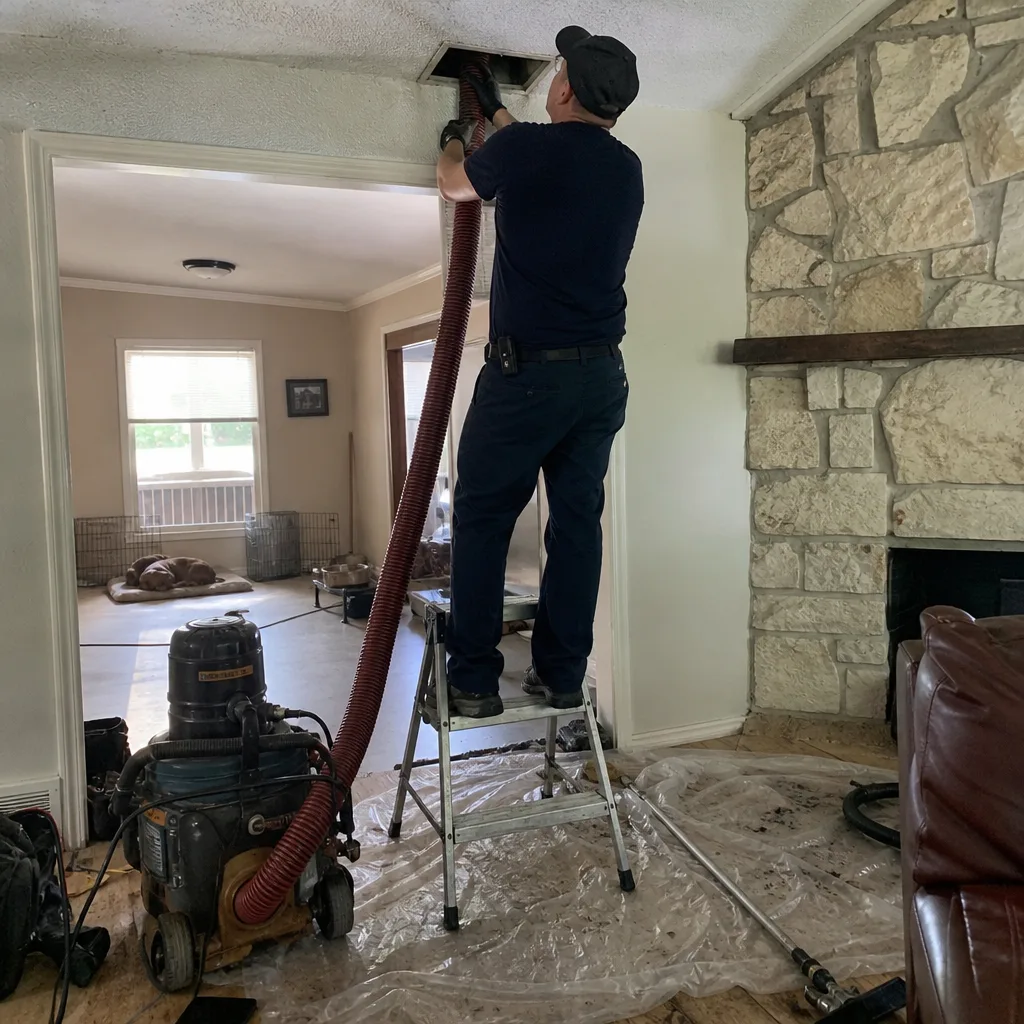 Before
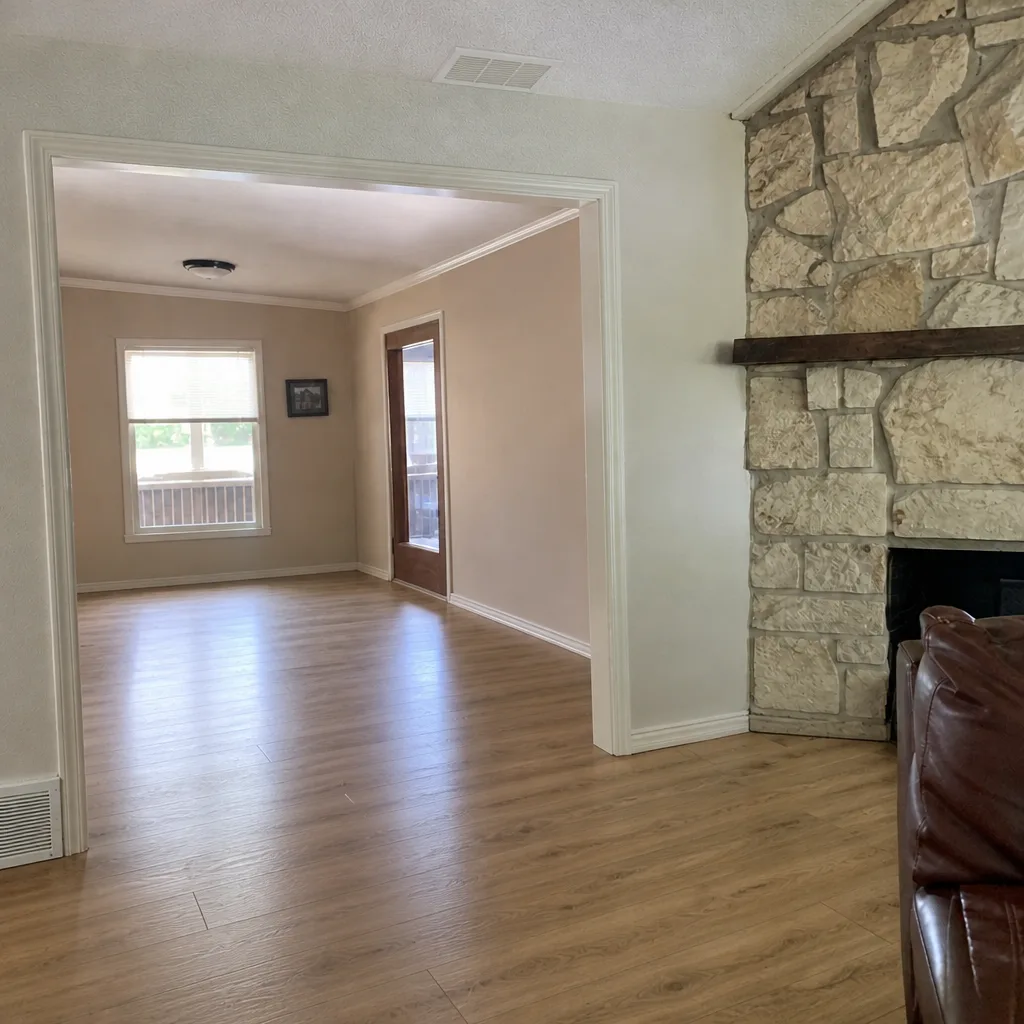 After
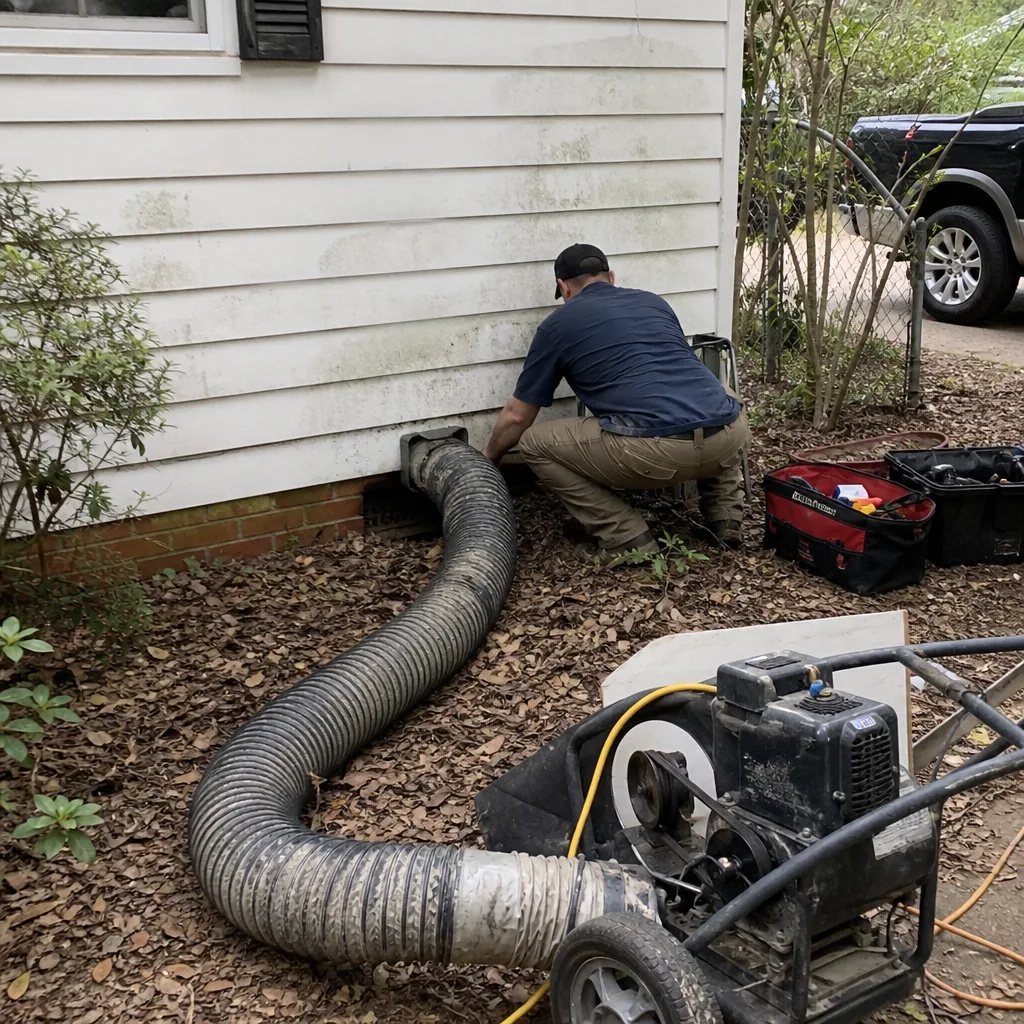 Before
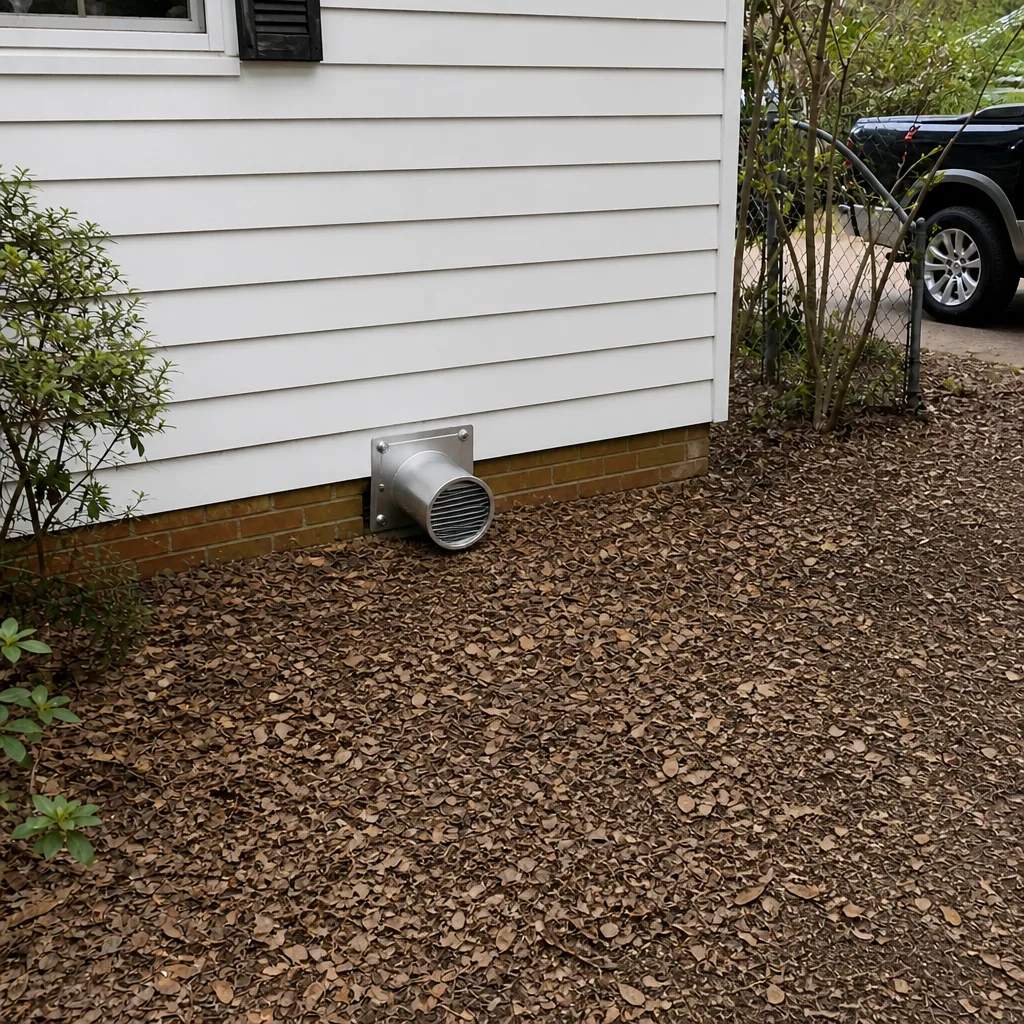 After
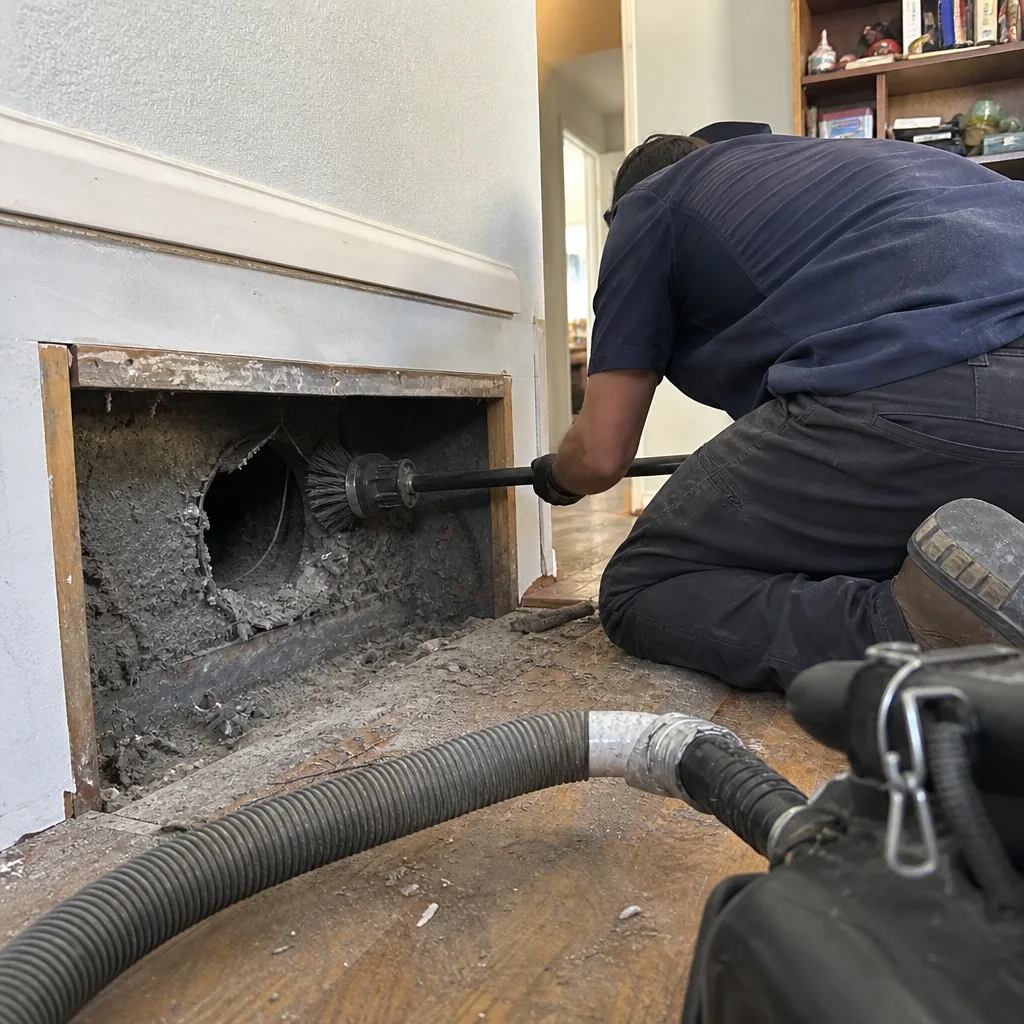 Before
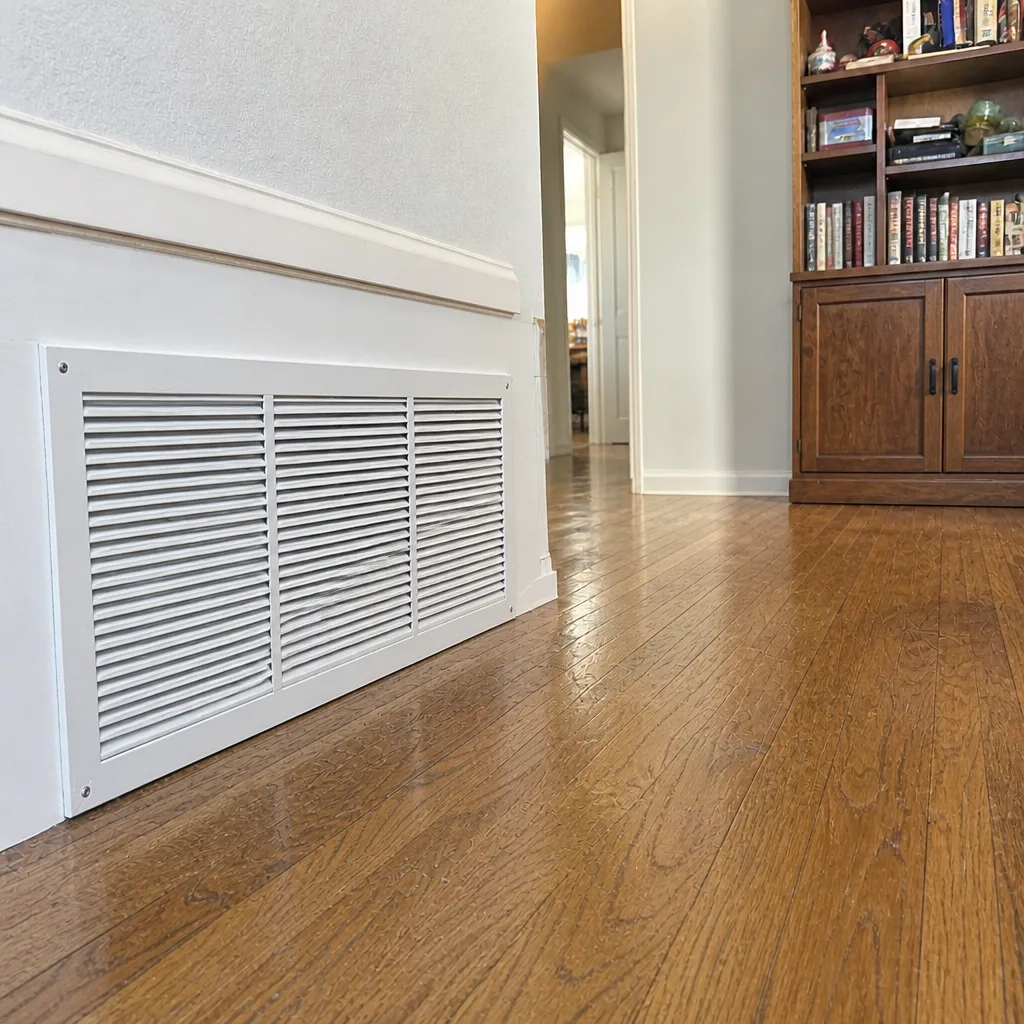 After
When to Call a Professional
Call a professional if you notice visible dust blowing from registers after a filter change, a musty smell when the system runs, visible mold near duct openings, or uneven airflow between rooms. Call if your air handler area has any sign of moisture or if you hear a whistle or rattle suggesting a disconnected or collapsed duct run. Call if you’ve never had your duct system inspected and you want to know what’s actually inside it. Call if your dryer has been running hotter or taking longer, since lint buildup inside the vent is a fire risk. Call if you’ve had construction or renovation done, since drywall dust and debris travel straight into returns. Holloway Air Duct Cleaning offers free estimates in Gainesville. Call (855) 408-4151. We answer 24/7. Fast dispatch from 7am to 7pm, Sunday through Friday.
Frequently Asked Questions
Duct cleaning in Gainesville is priced per job as a whole-system flat price, not per vent, and the written estimate sets the final price. The estimate accounts for the number of supply and return runs, trunk accessibility, and whether repair or flex replacement is needed. Call (855) 408-4151 for an exact quote, estimates are free.
Cheap quotes are almost always for a surface clean: vacuum at the registers with a shop vacuum, skipping return plenums and flex runs. A complete job requires a rotary brush system and a high-power negative-air vacuum, which is a bigger investment in equipment and time. Call (855) 408-4151 for a real quote on a complete job.
You should get before-and-after photos of your own ducts, airflow readings, and a clear report of what was cleaned. Access points should be sealed and register grilles removed, cleaned, and reinstalled. Call (855) 408-4151 and ask what documentation we provide.
Most homes benefit from inspection every few years, and cleaning when inspection shows significant buildup. In Gainesville’s climate, the long humid season and heavy tree pollen load push buildup faster than in drier regions, so homes near heavy tree cover or with pets may need more attention. Call (855) 408-4151 to talk through your situation.
Yes. Relative humidity above 70% for much of the year keeps debris inside ducts damp, which lets organic material and mold spores settle and adhere to duct walls. Damp buildup is harder to remove than dry dust and needs mechanical brushing, not just suction. Call (855) 408-4151 for an inspection.
Yes. We handle air duct cleaning and air duct repair under one company, so a collapsed flex run or disconnected joint can be repaired and then cleaned in the right order. Call (855) 408-4151 to discuss your system.
We work with homeowners throughout Gainesville and the surrounding area. Call (855) 408-4151 for an estimate and to confirm service for your address. We answer 24/7, and dispatch runs 7am to 7pm, Sunday through Friday.
The Bottom Line
Duct cleaning works, but only when it’s done as a complete system job. Gainesville’s climate raises the stakes: humidity above 70% most of the year and heavy pollen load mean debris inside ducts is often damp, adhered, and mold-friendly, which requires a rotary brush system and negative-pressure vacuum to remove properly. Skip return plenums, skip flex runs, or skip access points and you’ve paid for a surface clean. Repair comes first when ducts are leaking or collapsed. The right job comes with a written whole-system price, before-and-after photos of your own ducts, and airflow readings you can trust. For a free estimate from a company that brings the right equipment, call Holloway Air Duct Cleaning at (855) 408-4151. We answer 24/7. Fast dispatch from 7am to 7pm, Sunday through Friday.
Written by the team at Holloway Air Duct Cleaning.
Related reading on our site: Holloway Air Duct Cleaning and our Gainesville service area.