
Last updated November 15, 2026
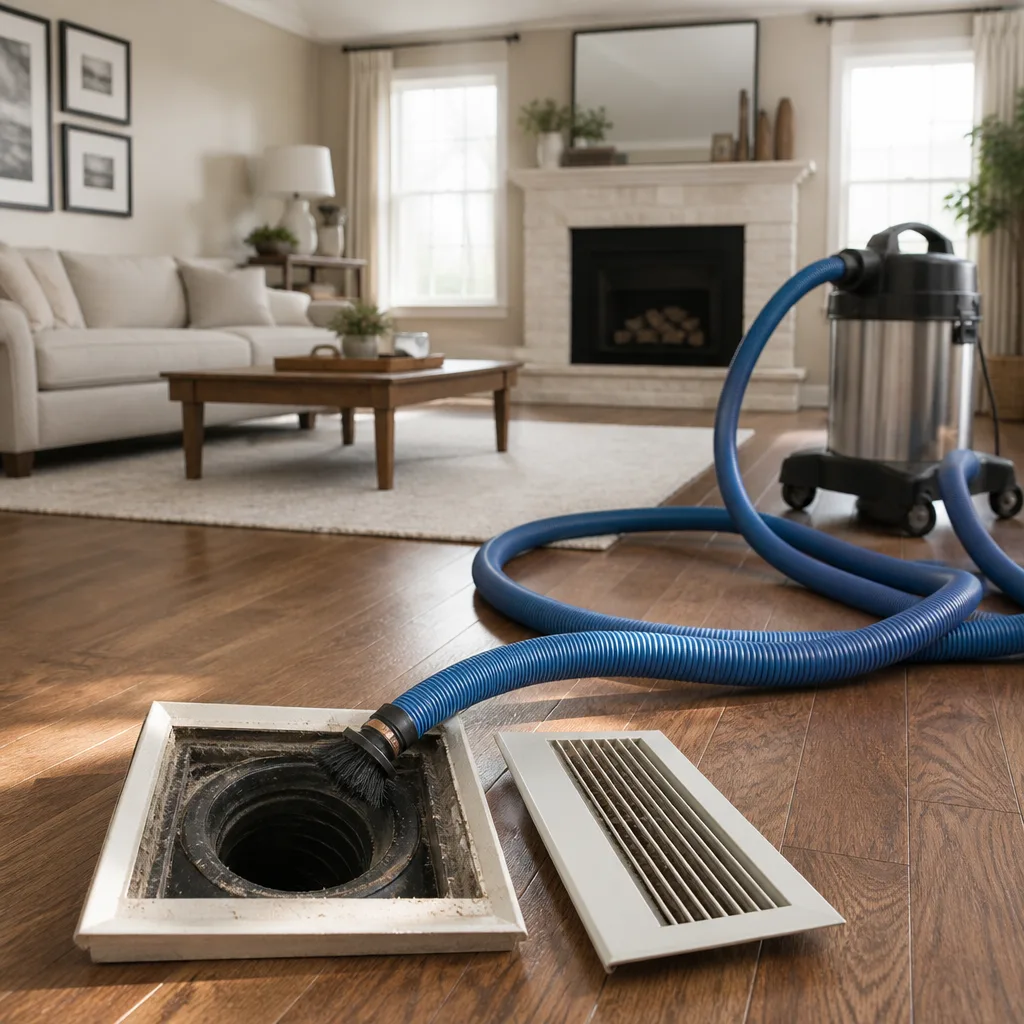 Whole-home duct cleaning
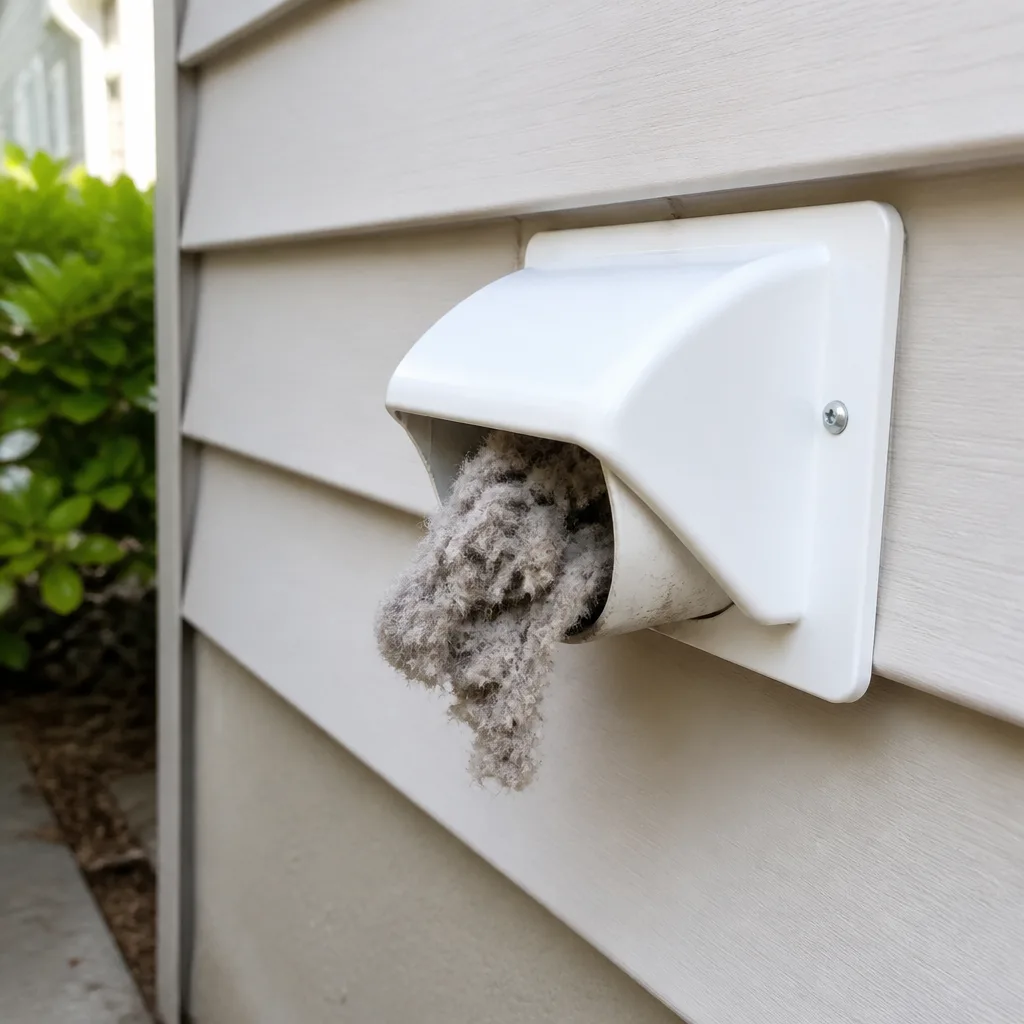 Dryer vent cleaning
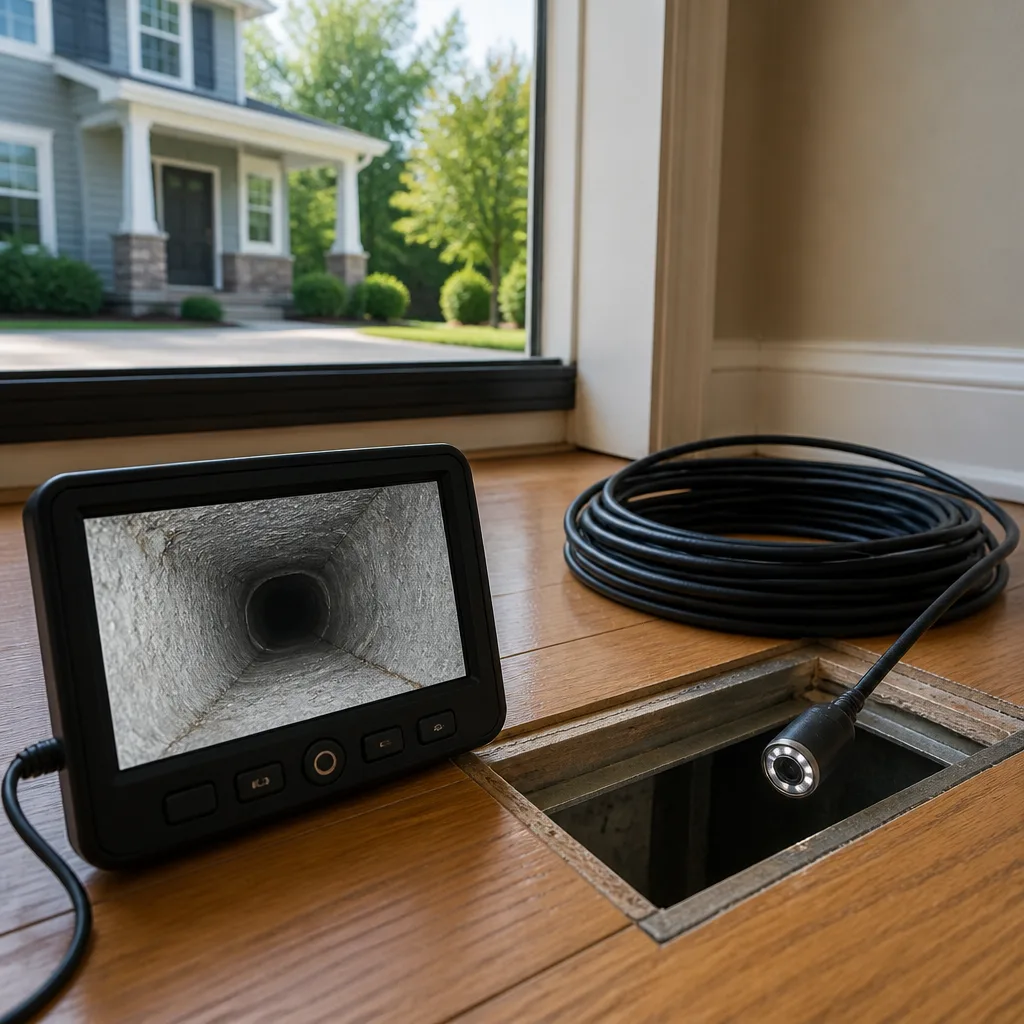 Camera inspection
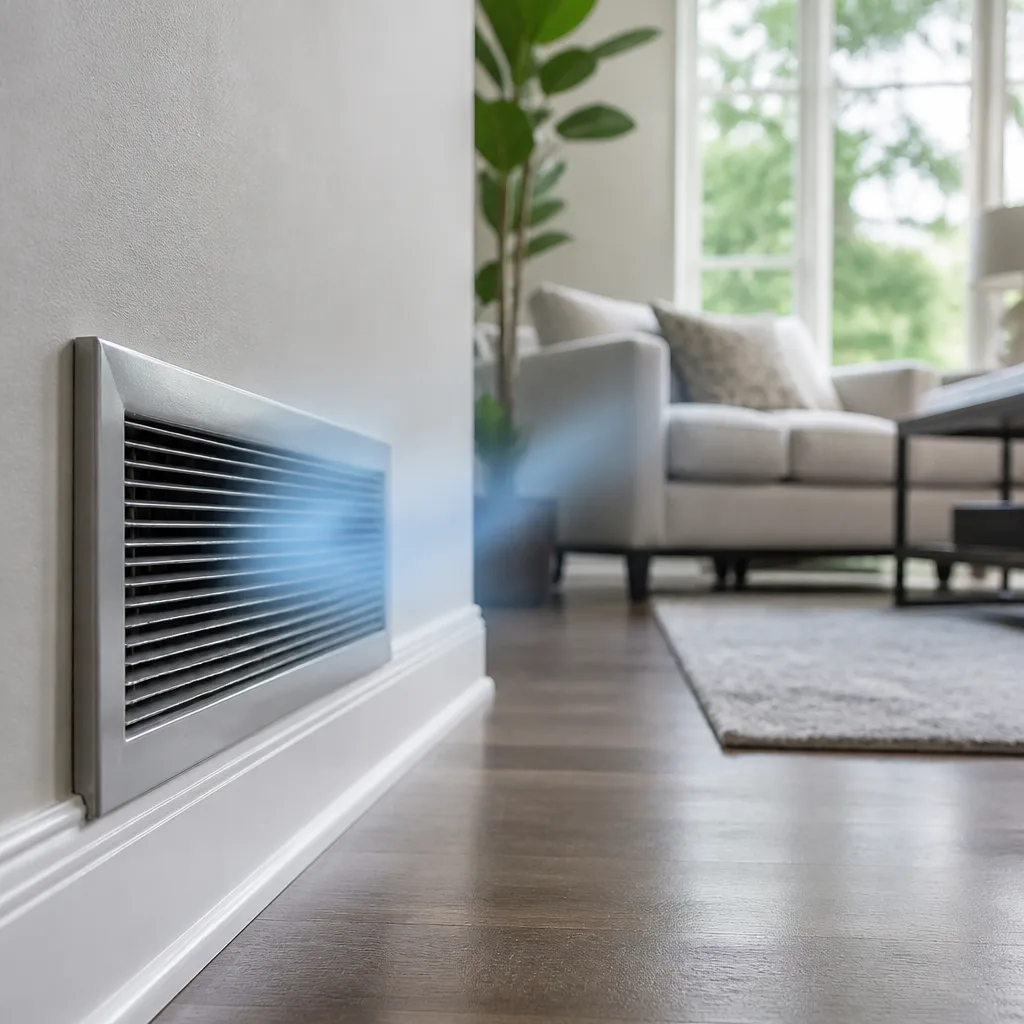 Sanitizing & deodorizing
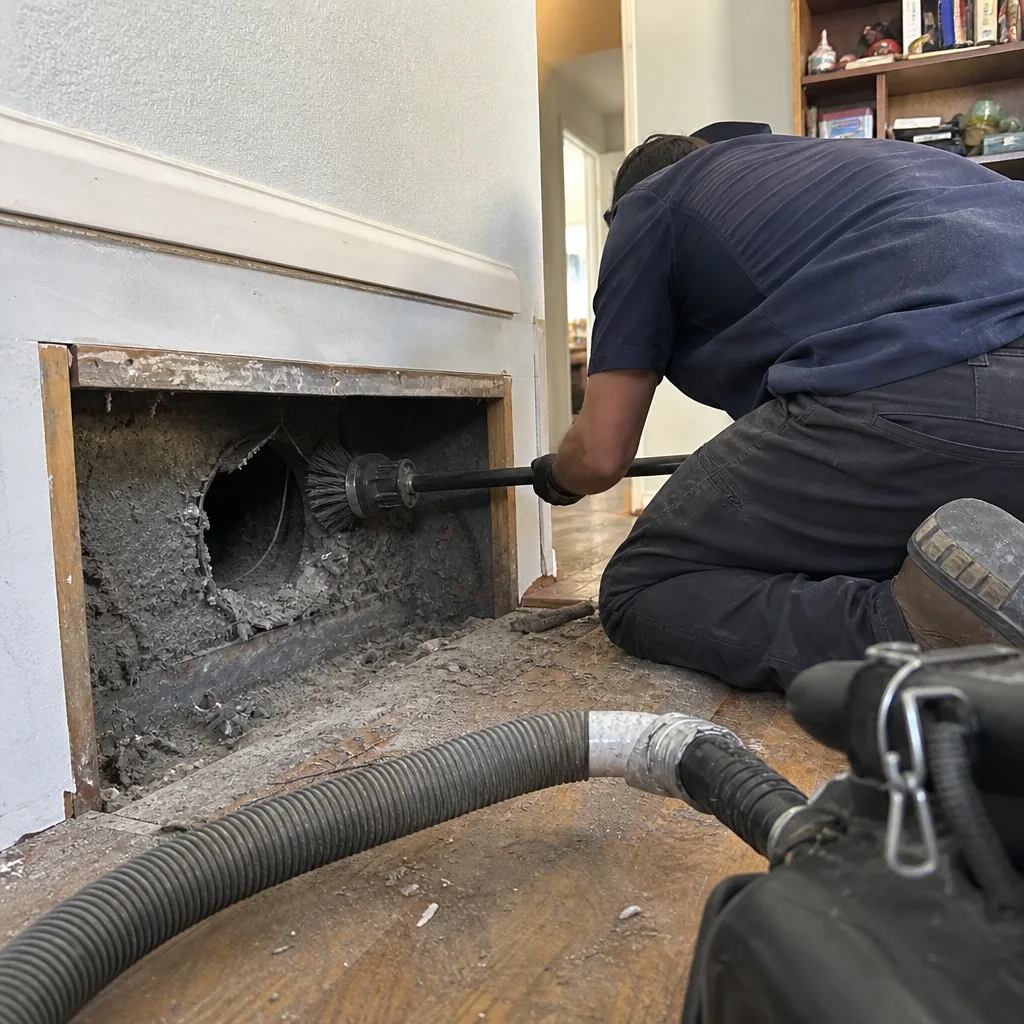
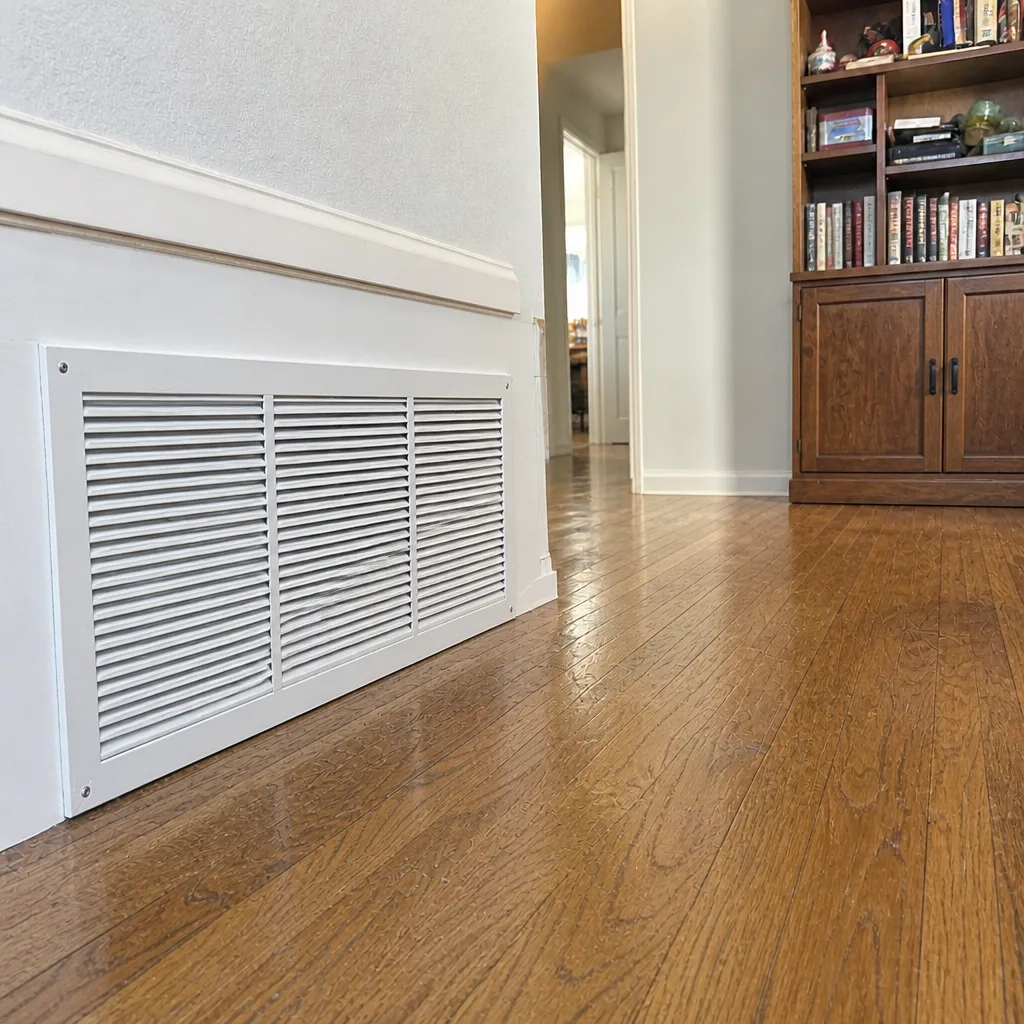
Whole-system duct and dryer vent check with before-and-after photos - you see exactly what came out of your vents
That "$99 whole-house special" is a bait ad - the real number appears once they are in your hallway, or the "clean" is a shop-vac at the register. We photograph the inside of your ducts before and after instead.
Air Duct Cleaning Cost Breakdown: The Gainesville Homeowner’s Reference for 2026
The $99 duct cleaning ad isn’t a deal. It’s an access fee. The actual job gets priced on-site after a technician is already standing in your hallway, and the final number rarely resembles the one on the postcard. We’ve pulled equipment out of homes where the “cleaning” consisted of a shop vac waved at a vent cover for twenty minutes. This guide breaks down what a real duct cleaning quote in Gainesville actually pays for: labor, equipment, scope, and the difference between removing debris and simply stirring it up. You’ll learn how to read a quote line by line, which add-ons earn their place, and where the money goes in a legitimate $400 to $800 job.
Quick Answer
Most legitimate whole-home air duct cleaning jobs in Gainesville run $400 to $800 for an average house, with larger homes or complicated systems landing at $800 to $1,200. The $99 to $199 quotes you see advertised are almost always a base price for a partial or superficial pass, and the final invoice climbs once the technician is inside. A fair quote states the full scope in writing before work begins.
Styles & brands we work with
- Whole-home duct cleaning
- Dryer vent cleaning
- Camera inspection
- Sanitizing & deodorizing
Table of Contents
- Why Do Air Duct Cleaning Prices Range So Widely?
- What Drives Legitimate Cost Variation in Gainesville?
- How Does Equipment Affect What You Pay?
- Which Add-Ons Are Worth It and Which Are Upsells?
- What Does Dryer Vent Cleaning Cost as a Separate Line Item?
- How Do You Read a Duct Cleaning Quote?
- Does the Number of Vents Change the Price?
- How Often Should Ducts Be Cleaned in Gainesville?
Why Do Air Duct Cleaning Prices Range So Widely?
Air duct cleaning prices spread across a huge range because “duct cleaning” describes at least four different jobs. At the low end, a contractor with a shop vac and a brush does a cosmetic pass over your supply registers. At the high end, a crew with commercial-grade negative-air equipment seals the system, creates controlled suction, agitates every branch line with a rotary brush, and captures the dislodged debris in a filtration unit so it never re-enters your living space. The price gap between those two approaches isn’t profit margin – it’s the fundamental difference between moving dust around and removing it.
Here’s what typically separates a cheap quote from a real one:
- Scope of work. A real job covers every supply and return, the trunk line, the plenum, and the air handler cabinet. A cheap job covers “up to 10 vents” and stops there.
- Equipment. A truck-mounted or portable negative-air machine runs into serious money. A shop vac runs $80 at a hardware store.
- Labor hours. A thorough whole-home cleaning takes a crew several hours. A cosmetic pass takes forty minutes.
- Documentation. Before-and-after photos of your own ducts are part of a legitimate job. Not an upsell.
In Gainesville, we see the same pattern play out. Homeowners call us after a $149 “special” turned into a $1,400 invoice for sanitizer, a filter, and “mold remediation” they never asked for. The cheap price got the technician through the door. The real price got invented on the spot.
The honest way to price duct cleaning is per system, not per vent. A flat price for the whole system, agreed in writing before work starts, leaves no room for the invoice to balloon once the equipment is unloaded.
What Drives Legitimate Cost Variation in Gainesville?
Even between two honest contractors, prices vary. That’s normal. Here’s what actually moves the number up or down on a real quote:
Square footage and vent count
A 1,400-square-foot home with 8 supply vents and 2 returns is a smaller job than a 2,800-square-foot home with 18 supplies and 4 returns. More vents mean more branch runs to agitate, more registers to remove and reinstall, and more linear feet of duct to evacuate. This is the biggest single driver of price.
Duct material type
Flex duct and rigid sheet metal behave differently under a rotary brush and negative pressure. Flex duct is more delicate – it can sag, tear, or collapse if it’s handled carelessly, and its corrugated interior traps debris in ways sheet metal doesn’t. Rigid metal duct takes aggressive agitation better but has more seams and joints to seal and inspect. A contractor who knows the difference prices accordingly.
System age and access difficulty
Older systems often have duct runs buried in soffits, crammed into tight attic spaces, or routed through walls with no cleanout access. Some Gainesville homes have air handlers in interior closets or in the attic, which affects how a crew sets up negative pressure. A house with easy attic access and clear duct routing takes less time than one where the crew is crawling through a tight crawlspace to reach a trunk line.
Contamination level
A home with a recent renovation, water intrusion, pet hair buildup, or visible debris at the registers needs more work than a home that’s been maintained. Heavy contamination means slower passes with the rotary brush and more frequent filter changes on the filtration unit.
None of these factors are negotiable. A contractor who quotes a firm price over the phone without seeing your system is either guessing or planning to revise the number on-site. A legitimate quote comes from an inspection or a detailed set of questions about your home.
How Does Equipment Affect What You Pay?
The single biggest reason one quote is $250 and another is $650 comes down to the truck in the driveway. A contractor running a shop vac and a manual brush has almost no overhead. A contractor running a Holloway Air Duct Cleaning rig with a Rotobrush rotary brush system, a Nikro negative-air vacuum, and Abatement Technologies filtration equipment has real capital tied up in the tools. That cost gets built into the price, and it’s the reason the job actually works.
Why negative pressure matters
When you agitate ducts with a brush or air whip, all the debris that’s been sitting on the duct walls goes airborne. Without negative pressure holding the system under vacuum, that debris drifts out of the registers and back into your living room. A negative-air machine pulls the whole system into a controlled vacuum and captures the dislodged material in a filtration unit. Abatement Technologies filtration equipment does exactly this – it contains the debris at the source instead of letting it settle on your furniture.
Why rotary brush systems matter
A manual brush only reaches what it can touch. A Rotobrush rotary brush system turns at high speed inside the duct, agitating the walls and loosening the layer of dust, dander, and construction debris that’s bonded to the surface. It reaches the full circumference of the duct, not just the bottom where gravity has dropped the bulk of the load. That’s the difference between a cleaned duct and a dusted one.
What that equipment difference delivers
- Debris is removed from the home, not redistributed into it.
- Every branch line gets agitated, not just the easy-to-reach runs.
- The system is documented with before-and-after photos of your actual ducts.
- Contaminants get captured before they can settle on surfaces or get pulled back into the air handler.
If two quotes differ by $300 and one contractor is using commercial equipment and the other is using a shop vac, the cheaper quote isn’t a discount. It’s a different service entirely.
Which Add-Ons Are Worth It and Which Are Upsells?
Add-on services are where the honest price and the inflated invoice separate. Some add-ons deliver real value. Others exist to pad the bill. Here’s the breakdown:
Legitimate add-ons
- Dryer vent cleaning. A genuinely separate service with a genuine safety purpose. Lint buildup in a dryer vent is a leading cause of residential fires. If the crew is already in the house with the equipment, bundling it makes logistical sense and usually saves money over booking it separately.
- Air duct repair. If the inspection turns up disconnected joints, crushed flex runs, or torn duct insulation, repairing them is a real fix that improves system performance and air quality. Not a cosmetic upgrade.
- High-efficiency filter replacement. If your filter is loaded, changing it during a cleaning is reasonable. The markup should be modest, and the filter should match your system’s spec – Honeywell and Aprilaire systems have specific filter requirements, so a generic replacement can do more harm than good.
Add-ons that rarely deliver value
- Chemical fogging or “sanitizer” sprayed into the ducts. The EPA has stated that chemical biocides are not generally recommended for duct interiors because of the risk of exposing occupants to vapor. If a contractor pushes a sanitizer as part of every job, ask what problem it’s solving.
- UV light installation sold as part of a cleaning. UV systems need to be sized and placed correctly to do anything useful. A UV light bolted onto a cleaning invoice is not a cleaning service – it’s a separate HVAC decision.
- “Mold remediation” declared on the spot. Real mold problems require testing and a remediation plan. If a technician diagnoses mold with a flashlight mid-cleaning and offers to fix it for $800, get a second opinion.
The right way to handle add-ons: ask for them as separate line items with separate prices. A contractor confident in their work will price each service clearly and let you decide.
What Does Dryer Vent Cleaning Cost as a Separate Line Item?
Dryer vent cleaning in Gainesville typically runs $100 to $200 as a standalone appointment. When bundled with a full air duct cleaning, the combined price is usually lower than booking the two services separately. The reason to keep it as a separate line item is simple: it’s a fire-safety service, not a value-add throw-in. It deserves its own scope and its own price.
What affects the price:
- Vent length and routing. A short straight run out the back of the dryer is quick. A long run through a wall, up through the attic, or out to a roof termination takes more time and more equipment.
- Lint load. A vent that’s been ignored for years has compacted lint that needs progressively looser passes with a rotary brush to clear completely.
- Access. If the vent termination is clogged with lint or screened in a way that blocks airflow, the technician needs to get to it to verify the line is actually clear.
- Transition and termination inspection. A real dryer vent cleaning includes checking the transition duct behind the dryer and the outdoor termination. Not every contractor does this.
A dryer vent cleaning that just blows air through the line without brushing and inspecting the full run isn’t a safety service. It’s a puff of air. Ask whether the technician will brush the full length, verify the outside termination is clear, and check the transition behind the dryer.
For the full breakdown of what a proper dryer vent cleaning involves, our service page covers the process step by step.
How Do You Read a Duct Cleaning Quote?
A quote you can trust reads like a scope of work, not a price tag. Here’s what a detailed quote includes, and what a vague one leaves out:
What a real quote includes
- Number of supply vents and return vents covered. Stated as a count, not as “up to.”
- Whether the trunk line and plenum are included. Some quotes cover branch lines but exclude the main trunk. That’s a partial cleaning.
- Whether the air handler cabinet and blower compartment are included. The air handler is where the dust ends up. If it isn’t listed, it isn’t part of the job.
- Equipment description. A legitimate quote mentions the negative-air machine and rotary brush system being used. If it doesn’t, ask.
- Before-and-after documentation. Photos of your own ducts, taken during the job.
- Repair scope if needed. If the inspection turns up disconnected or damaged duct, the quote should state the repair cost as a separate line.
- A firm total. One price for the whole system, agreed before work starts.
What a vague quote leaves out
- “Per vent” pricing with no cap on total vents means the price isn’t set until after the technician counts.
- “Starting at $99” with no scope means the $99 doesn’t cover a whole-home cleaning.
- “Includes sanitizer” without any description of what’s being applied and why.
- “Additional charges may apply” with no definition of what triggers them.
A quote that leaves scope undefined until the job starts isn’t a quote. It’s an opening offer. The written estimate is what sets the final price, and there should be no surprises when the work is done.
Does the Number of Vents Change the Price?
Yes and no. More vents mean more work, so a system with 18 branches costs more than one with 8. But a fair quote prices the whole system, not each vent individually. Per-vent pricing is where bait-and-switch operators make their money – they quote a low per-vent number, then find “extra” vents or “extra” branches that weren’t counted in the ad price.
In Gainesville, a typical single-family home with a standard 3-ton or 4-ton system runs somewhere between 10 and 16 supply vents, depending on square footage and layout. Homes with additions, converted garages, or zoned systems often have more. Pulled one direction, a per-vent quote can be $10 x 14 vents = $140 advertised, and then $55 x 14 vents = $770 on the invoice. Pulled the other way, a flat system price of $600 is $600, whether the crew finds 12 vents or 16.
What to ask: “Is this a per-vent price or a whole-system price? How many vents does the quote cover, and what happens if there are more?” If the answer to the second question is “we’ll figure it out on-site,” that’s the same access-fee model in a different jacket.
A whole-system, flat price for an air duct cleaning leaves no room for that game. The price is the price.
How Often Should Ducts Be Cleaned in Gainesville?
There’s no universal schedule, despite what the postcards say. Most homes don’t need duct cleaning on a calendar. The honest answer is that cleaning is warranted when conditions call for it, and the conditions are specific.
Signs it’s time for a cleaning
- Visible debris, dust, or mold growth at the supply registers or inside the duct at the vent opening.
- Recent renovation, remodeling, or construction work that sent drywall dust through the system.
- Water intrusion or a known moisture problem in the ductwork.
- A new-to-you home where the previous owner’s maintenance history is unknown.
- Persistent dust buildup on surfaces shortly after cleaning, suggesting the system is the source.
- Pest activity in the duct system.
Gainesville’s climate affects how often these conditions show up. The long humid season means the system runs hard for most of the year, moving more air and pulling more dust through the filter and ducts. Homes with pets, smokers, or occupants with allergies or respiratory conditions tend to need attention sooner. Homes with well-sealed ductwork and regular filter changes can go much longer between cleanings.
The one service that does follow a schedule is dryer vent cleaning, which most safety and appliance professionals recommend annually, and more often if the dryer runs frequently. Lint accumulates every load, and it doesn’t stop accumulating just because you cleaned the vent last year.
If you’re not sure whether your system needs cleaning, the right answer is a professional inspection, not a pre-scheduled cleaning. An inspection should tell you what’s actually in the ducts and whether cleaning is warranted.
Common Mistakes to Avoid
- Booking on the advertised price alone. A $99 ad tells you nothing about what the final invoice will be. Ask for the whole-system price before you book, and get it in writing.
- Accepting a per-vent quote. Per-vent pricing lets the price shift after the technician counts your vents. A whole-system, flat price eliminates that variable.
- Letting the technician diagnose mold, air quality, or “system health” on the spot. Real diagnoses come from testing and inspection, not a flashlight and a sales pitch. If a serious problem is declared mid-job, get a second opinion before agreeing to a fix.
- Paying for sanitizer as part of every job. Chemical biocides aren’t generally recommended for duct interiors. If a contractor won’t quote without a sanitizer add-on, ask what specific problem it’s solving.
- Skipping the dryer vent because it’s not the main event. Lint buildup in the dryer vent is a fire-safety issue. It’s the one cleaning service that deserves annual attention regardless of the ducts.
- Ignoring access and duct material when comparing quotes. A quote that didn’t ask about your duct material, attic access, or system age wasn’t a real quote. It was a guess.
- Assuming a coupon equals a full cleaning. Coupons typically cover a partial scope. Ask what’s excluded before you book.
See the difference
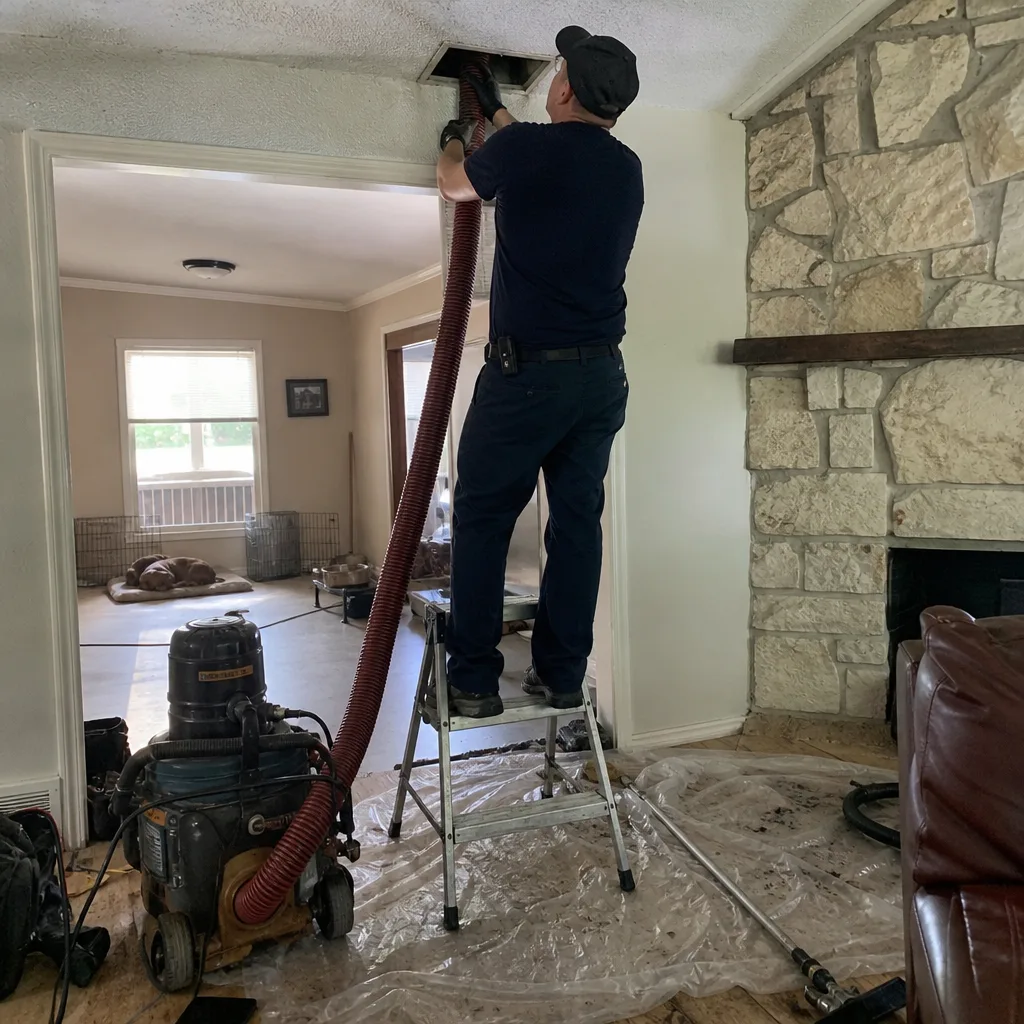 Before
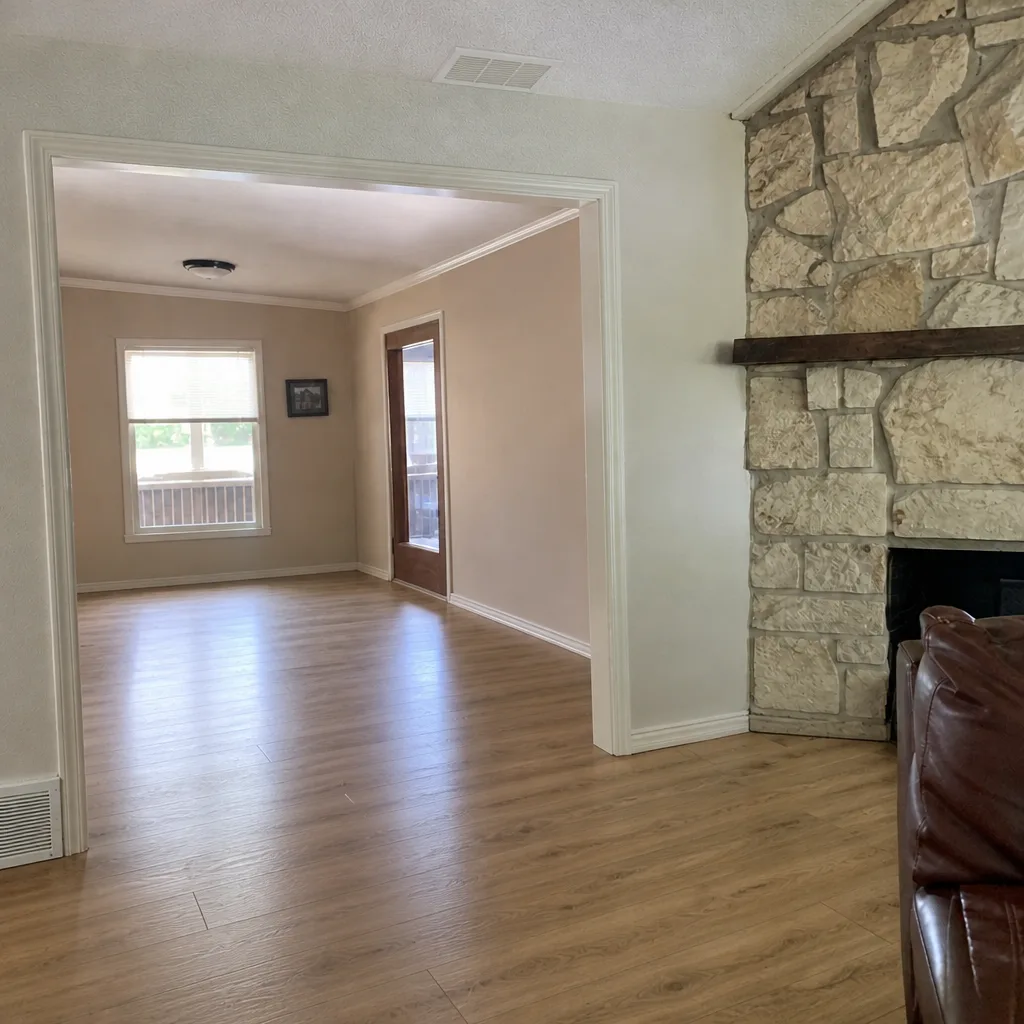 After
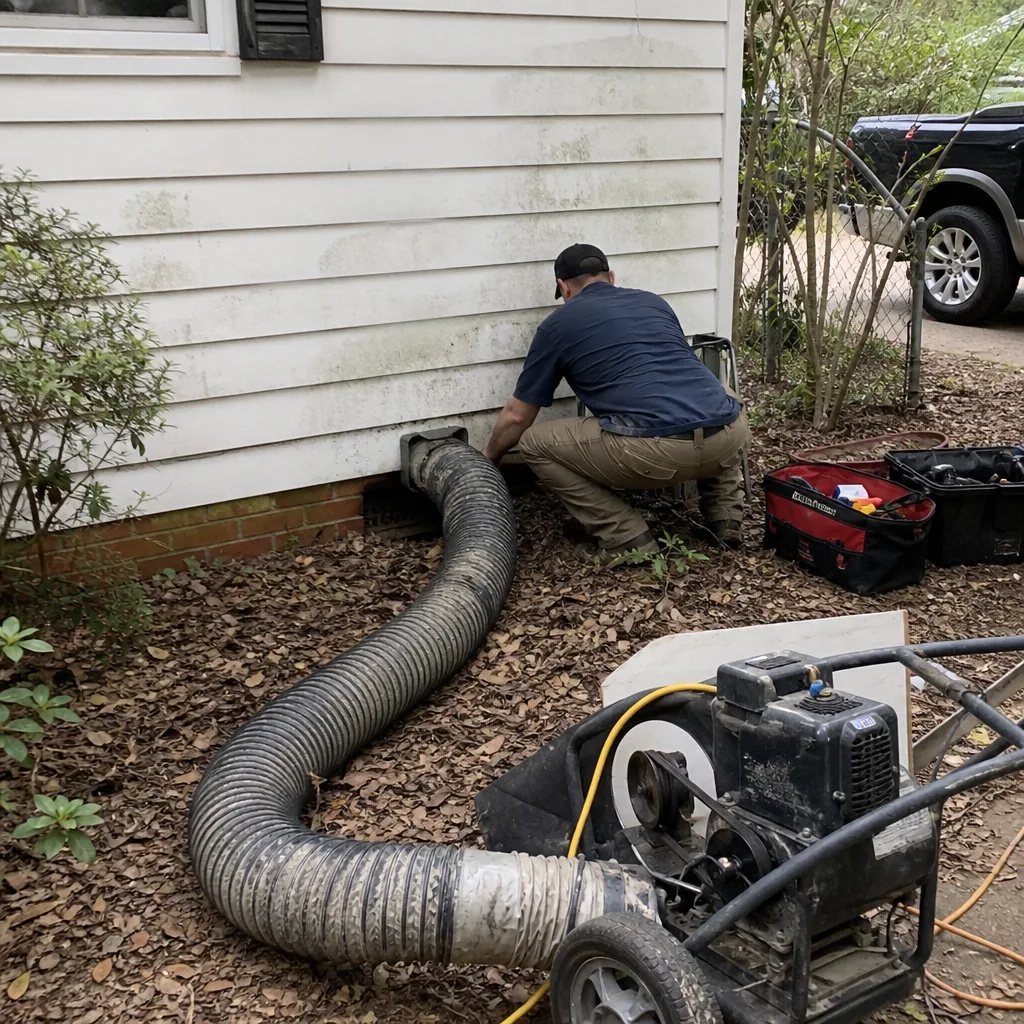 Before
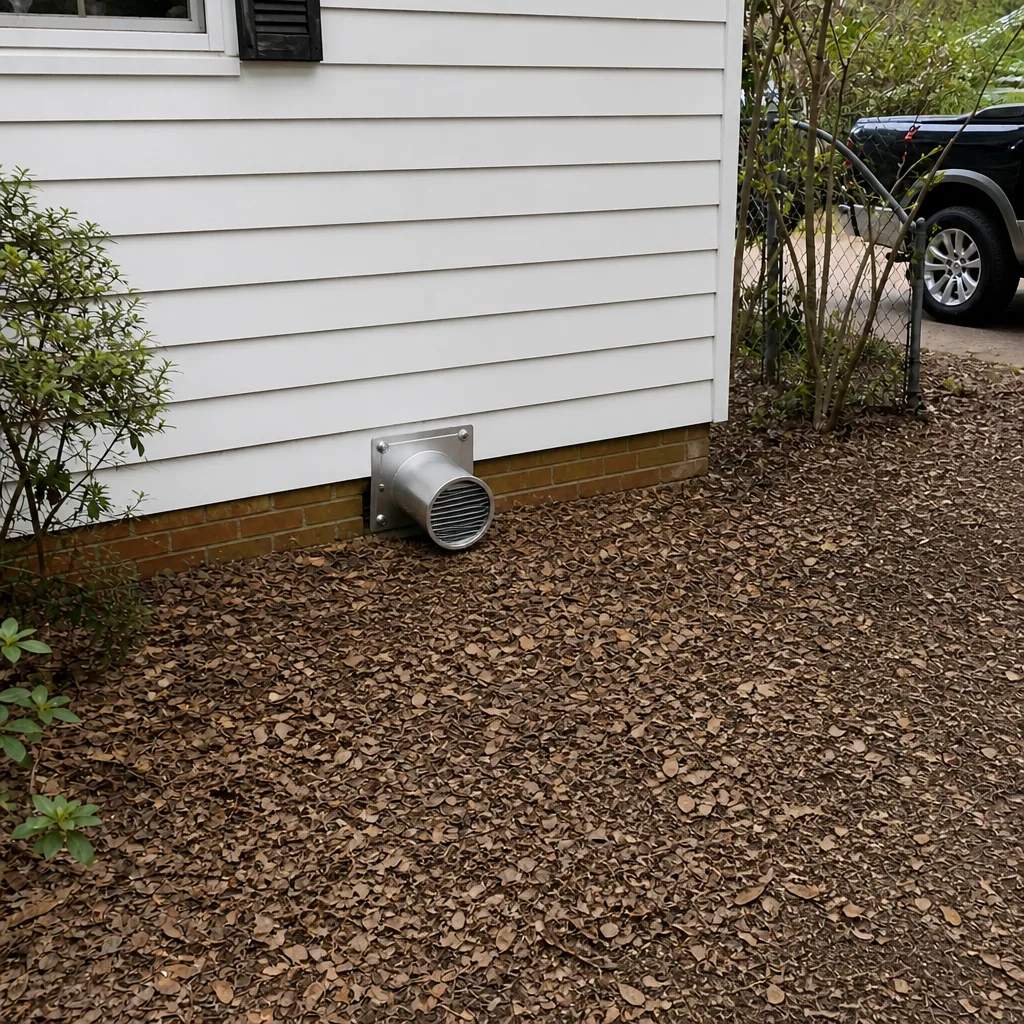 After
 Before
 After
When to Call a Professional
Call a professional when you can see debris, mold, or dust buildup at the registers. Call when you’ve had a renovation, water intrusion, or pest problem in the system. Call if a new-to-you home’s duct history is unknown, or if the system hasn’t been cleaned in years and you can’t say whether it ever was. For dryer vents, call annually – lint accumulation is a slow, steady fire risk that doesn’t pause for convenience. And if you’ve received a quote and can’t tell whether the scope is real, call for a comparison.
Holloway Air Duct Cleaning offers free estimates in Gainesville – call (855) 408-4151. We answer 24/7.
Frequently Asked Questions
Most legitimate whole-home air duct cleaning in Gainesville runs $400 to $800 for an average-size home, with larger or more complex systems landing at $800 to $1,200. A quote under $250 is almost always a partial or superficial service with scope added on later. Call (855) 408-4151 for an exact quote – estimates are free.
Cheap quotes are cheap because the scope is smaller, the equipment is cheaper, or the price is a base that gets revised on-site. A $99 ad might cover “up to 10 vents” with no trunk line, no air handler, and no documentation. The gap between that and a full-system cleaning is the gap between moving dust around and removing it. Call (855) 408-4151 for an honest whole-system price.
Ask for before-and-after photos of your own ducts, taken during the job. A legitimate contractor will provide them as part of the service, and the scope of work in the written quote should match what’s visible in the photos. If no documentation is offered, ask for it before work begins. Call (855) 408-4151 to schedule – estimates are free.
There’s no universal calendar. Cleaning is warranted when there’s visible debris, mold, water intrusion, recent renovation dust, pest activity, or a new home with unknown history. Gainesville’s long cooling season means the system moves a lot of air, so homes with pets or allergy concerns tend to need attention sooner. Call (855) 408-4151 for an assessment – estimates are free.
Bundling usually costs less than booking the two separately, and it makes logistical sense because the crew and equipment are already on-site. But DIY air duct cleaning is difficult to do correctly, and Gainesville homeowners are better served by treating each service as its own line item. Dryer vent cleaning in Gainesville typically runs $100 to $200 standalone. Call (855) 408-4151 for a combined quote.
More vents mean more work, so a house with 18 supply branches costs more than one with 8. But a fair quote prices the whole system flat, not per vent, so the price doesn’t change after the technician counts. Ask for a whole-system price in writing. Call (855) 408-4151 for an exact quote – estimates are free.
The Bottom Line
Duct cleaning pricing in Gainesville is a scope question dressed up as a price question. The $99 ad isn’t a discount – it’s an access fee. A legitimate $400 to $800 job pays for commercial equipment, thorough agitation of every branch line, contained debris capture, documented before-and-after photos, and a flat price agreed before work starts. The equipment matters: a Rotobrush rotary brush system agitates the full duct circumference, a Nikro negative-air machine holds the system under vacuum, and Abatement Technologies filtration contains the debris so it never re-enters your living space. Dryer vent cleaning belongs as its own safety line item, at $100 to $200. Read the quote. Ask about scope. Get the flat price in writing.
Holloway Air Duct Cleaning handles cleaning, repair, and dryer vent work as three distinct services, using commercial-grade equipment on every job. If you want to know what’s actually inside your ducts before you book anything, we’ll tell you straight.
Call (855) 408-4151 for a free estimate. We answer 24/7. Fast dispatch from 7am to 7pm, Sunday through Friday.
Written by the team at Holloway Air Duct Cleaning.