
Air Duct Cleaning Cost Guide: What Gainesville Homeowners Pay in 2026
Air duct cleaning in Gainesville typically runs $350 to $700 for a standard single-system home, with larger houses or more complex duct layouts landing between $700 and $1,100. Those ranges assume a real job: commercial-grade extraction, rotary brushing of every branch line, and filtration equipment to contain what comes loose. The $99 ad you saw this week is priced below what the disposable materials cost on a legitimate visit, which tells you plenty about what the service actually includes. If you’d rather skip the guesswork, call (855) 408-4151.
Why the $99 Duct Cleaning Ad Doesn’t Add Up
Think about what a genuine duct cleaning job consumes before anyone touches a duct. Filter bags, containment plastic, brush heads that wear out, PPE, fuel to get there. That’s before labor. When a company advertises a $99 special, something in that list has to give, and it’s almost never the profit margin.
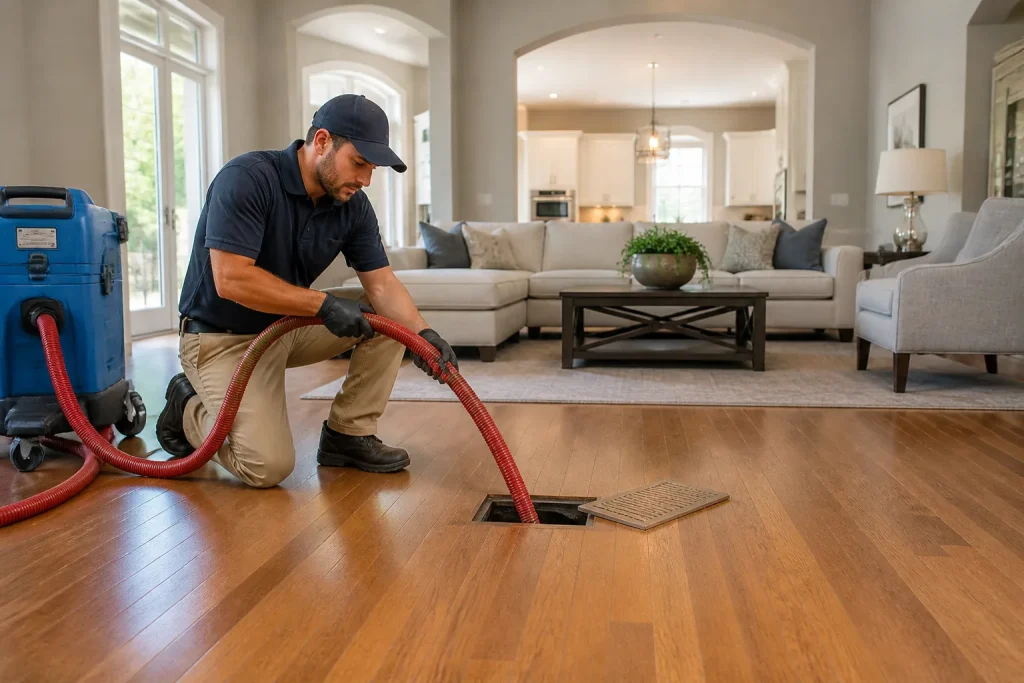
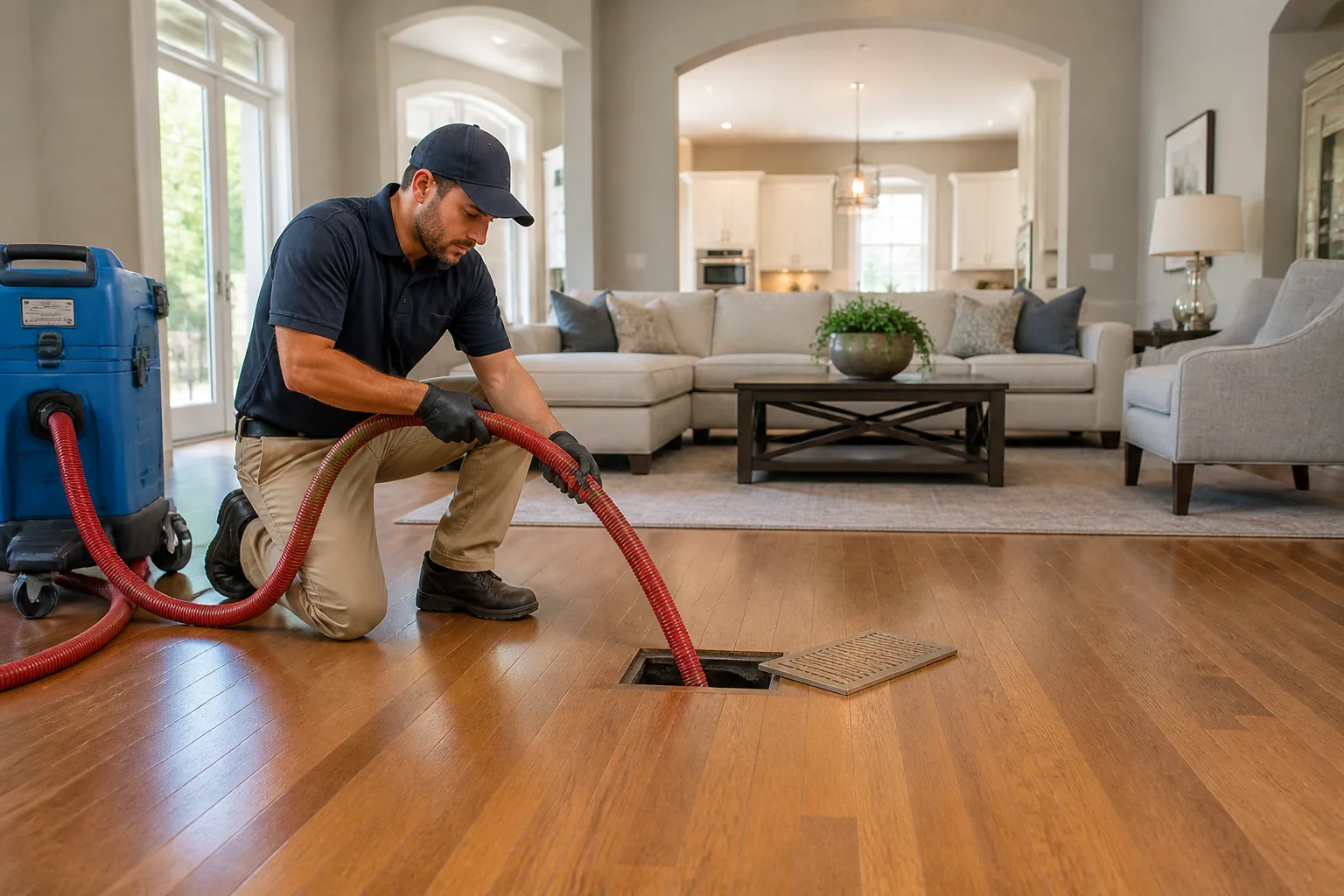
In our experience, the gap shows up on the truck. A shop vacuum and a hand brush will pull dust off the first few visible inches of a return, then stop. A Rotobrush rotary brush system and a Nikro negative-air vacuum work together to scour the full length of a branch line while pulling debris into a contained collection system. The equipment costs thousands of dollars more, and it’s the difference between a duct that looks cleaner at the register and a duct that is cleaner.
Here’s the math homeowners in Gainesville should keep in their back pocket: divide any quote by the number of supply and return openings in the home. A legitimate job generally lands somewhere between $25 and $55 per opening. A quote that comes in at $6 per opening is not a bargain – it’s a different service wearing the same name.
What Actually Drives the Price in Gainesville
Two houses on the same street can carry very different duct cleaning costs, and square footage is only part of it. Gainesville has a wide mix of housing stock, from older block homes near the Duckpond and Pleasant Street to newer construction out toward Haile and Tioga, and those systems were built with different materials and different layouts.
The variables that move the number most:
- Number of openings. More supply and return registers means more branch lines to brush and extract. This is the single biggest driver.
- Flex duct versus hard pipe. Flex duct has ridges that trap debris and requires a different brush approach. Long runs of flex also sag, which collects dust in low spots.
- Access difficulty. Registers buried behind furniture, ceiling runs with no attic walkway, or a system with no accessible plenum all add time and equipment setup.
- System size. A single-air-handler home and a two-story house with two systems are not the same job, even at the same square footage.
- Condition. A system that has never been cleaned, or one with obvious contamination near the return, takes more passes.
None of this is guesswork for a company that inspects first. A real estimate comes from actually looking at your system, not from a phone script and a square-footage formula.
The Equipment Difference Nobody Puts on the Invoice
This is the part of the cost conversation that gets skipped, and it’s the part that matters most. Low-bid operators cut cost in the same place every time: the machine.
A commercial extraction setup does two jobs at once. It agitates debris loose from the duct walls, and it captures that debris before it settles into your living room. That second part is where Abatement Technologies filtration equipment earns its place on the job – negative pressure and HEPA filtration keep dislodged dust out of the air you’re breathing while the work happens. Without it, a cleaning can genuinely make indoor air quality worse for a day or two, which defeats the purpose.
Nikro negative-air vacuums deliver the suction that makes extraction work at the far end of a long duct run. Rotobrush rotary brush systems handle the agitation inside the duct. Together they cover the full length of the system rather than just the mouth of it.
If you’re comparing quotes, ask one question: what equipment will be on site? The answer tells you whether you’re buying a cleaning or a vacuuming.
Add-On Services: What They Cost and Which Are Worth Combining
Add-ons are where a lot of quotes get confusing, so here’s the straight version. Each of these addresses a separate part of your system, and each carries its own cost because each is a separate job.
- Sanitizing. An antimicrobial application after cleaning. Worth it when there’s visible microbial growth or persistent odor, less so on a system that’s simply dusty.
- Coil cleaning. The evaporator coil sits wet most of the year in Gainesville’s humidity, and a dirty coil costs you efficiency every month. Worth doing if the coil hasn’t been cleaned in years.
- dryer vent cleaning. A separate service entirely, and arguably the most important one on this list. Lint buildup in a dryer vent is a leading cause of residential fires. It’s not a duct cleaning add-on and shouldn’t be treated as one.
Combining services in one visit usually saves money on the trip out, since setup and equipment are already there. It never makes sense to bundle something your system doesn’t need, which is why a good company will tell you what to skip.
What happens when you call
- 1
A real person answersNo phone trees – you reach a local pro.
- 2
You get an upfront price rangeHonest numbers before anyone is dispatched.
- 3
A background-checked tech heads outLicensed & insured, dispatched right away.
- 4
You approve before work beginsNothing starts until you say go.
How to Read an Itemized Estimate
A legitimate estimate is specific. It should tell you how many openings are being cleaned, what equipment is coming, what the price includes, and what it doesn’t. If a quote is one line and one number with no breakdown, that’s not an estimate, it’s a teaser.
What a real estimate includes:
- The number of supply and return openings, listed.
- The extraction and agitation equipment being used.
- Whether containment and filtration are part of the price.
- Any add-on services priced separately, not folded in.
- A clear statement of what happens if the system needs repair once it’s open.
One flat price per system, agreed before work starts, is the standard worth holding any company to. That single line eliminates the bait-and-switch risk that makes this trade so tiring for homeowners.
When to Call a Pro
Some of this you can check yourself. Pop a register cover off and look inside with a flashlight. Visible dust caking the duct walls, debris blowing out of a supply when the system kicks on, or a musty smell that gets stronger when the air runs – those are signs worth acting on.
What you shouldn’t do is reach into a duct with a shop vacuum and call it done, or open up a plenum to see what’s inside. Duct systems share space with electrical connections, and a careless reach can damage a seal that keeps conditioned air where it belongs. Repair work inside a duct system is a job for someone with the right tools and the training to use them.
Related services in Gainesville: we handle air duct cleaning, duct repair, and dryer vent cleaning under one company, so a single visit can cover the whole system rather than sending you hunting for a second contractor.
Why Gainesville Humidity Changes the Maintenance Math
Gainesville’s summers keep HVAC systems running hard and keep duct interiors damp for months at a time. Damp duct walls hold dust differently than dry ones – it clings, and it stays. A system that would stay reasonably clean for years in a drier climate can accumulate buildup faster here, especially on the return side where warm, humid house air gets pulled through first.
That doesn’t mean every home in Gainesville needs annual cleaning. It means the condition of the system matters more than a calendar. Homes with pets, recent renovation dust, or a system that’s never been opened are the ones that benefit most, and a proper inspection tells you which category you’re in.
The Bottom Line
Expect $350 to $700 for a standard Gainesville home, more for larger or more complex systems. The number should come from an inspection and land on paper before work begins, at one flat price per system. Watch the per-opening math, ask what equipment is coming, and treat a $99 special as a question rather than a deal.
If you’re in Gainesville and need help, Holloway Air Duct Cleaning offers free estimates – call (855) 408-4151. Our technicians have up to 9 years of experience, and we bring commercial-grade equipment to every job. We answer 24/7. Fast dispatch from 7am to 7pm, Sunday through Friday.
Frequently Asked Questions
Most Gainesville homes fall between $350 and $700, with larger or multi-system homes reaching $700 to $1,100. The written estimate sets the final price. Call (855) 408-4151 for an exact quote – estimates are free.
Cheap quotes cut equipment, not overhead. A shop vacuum and a hand brush cost a fraction of a Rotobrush and Nikro setup, and the price reflects which one is showing up. Call (855) 408-4151 to talk through what a real job involves.
Ask for before-and-after photos of your own ducts, not stock images. A company confident in its equipment will gladly show you. Call (855) 408-4151 for a free estimate.
There’s no universal schedule. Condition drives it: pets, renovation dust, visible buildup, or persistent odor all point to sooner rather than later. Call (855) 408-4151 and we’ll tell you honestly whether your system needs it now.
Written by the team at Holloway Air Duct Cleaning.
Need Air Duct Cleaning Help?
Call Holloway Air Duct Cleaning - licensed & insured, with free written estimates in Gainesville.
(855) 408-4151