
Emergency Air Duct Cleaning Near Me: What Gainesville Homeowners Should Do First
If water got into your duct system, calling for a cleaning is the wrong first call. The right move is to stop the water, dry the system, and confirm the problem is actually in the ducts before anyone runs a rotary brush through them. Most of what Gainesville homeowners describe as a duct emergency is really one of three things: water intrusion, a mechanical HVAC failure, or pests. Each one needs a different first step.
If you’d rather not sort through that yourself, call (855) 408-4151 and we’ll walk you through it before you book anything.
Is it a duct problem or an HVAC problem?
Start here. A surprising number of “duct emergencies” in Gainesville turn out to be a failing blower, a clogged condensate drain, or a compressor that quit. Cleaning the ducts won’t fix any of those, and paying for a cleaning before the mechanical issue is resolved usually means paying twice.
Run through this checklist before you call anyone:
- No airflow at all from any register. That points to the air handler, not the ducts. Call an HVAC contractor first.
- Weak airflow at some registers, strong at others. Often a duct problem: disconnected run, crushed flex, or a damper stuck closed.
- Air blows cold but the house stays warm. Usually a mechanical or refrigerant issue, not debris in the ducts.
- Musty smell only when the system runs. This is the classic duct signal. Moisture or biological growth inside the ductwork.
- Visible dust puffing out of a register. Material is sitting in the run. This is a duct cleaning job.
- Whistling or rattling. A pressure or fit problem. Worth an inspection, but rarely an emergency.
If you’re in Gainesville and the symptom is airflow, get the mechanical side checked first. If it’s odor, visible debris, or moisture, keep reading. That’s where air duct cleaning actually does something.
Water in the ducts: the order of operations after a flood, roof leak, or condensate overflow
Water in ductwork is the one situation where the sequence matters most, and it’s the one homeowners most often get backwards. A wet duct system left closed up becomes a growth environment within days. Cleaning it while it’s still wet just spreads the problem around.
Do this, in this order:
- Stop the source. Shut off the water if it’s a plumbing leak. Get the roof tarped if it’s a leak. Fix the condensate line if that’s what overflowed. Cleaning a duct system that’s still taking on water is wasted money.
- Kill power to the air handler. Running the system pushes humid air through every run and into the living space. Don’t run the fan to “dry it out.” That’s the opposite of what you want.
- Document everything. Photograph standing water, water staining on flex duct, and any visible growth. You’ll want this for your insurer and for the technician’s scope.
- Get air moving in the space, not through the ducts. Fans and dehumidifiers in the rooms. Open interior doors. The duct system stays off until it’s assessed.
- Call for an inspection before a cleaning. Some wet flex duct is a replace job, not a clean job. Rigid metal can often be cleaned and dried. The assessment decides which.
Our technicians have up to 9 years of experience and have seen both outcomes in Gainesville. The difference is almost always how fast the source got stopped and how long the system sat wet.
Pests in the ductwork: what to do (and not do) immediately
If you suspect rodents, squirrels, or birds have gotten into the ductwork, the single worst thing you can do is run the system. It distributes droppings, nesting material, and dander through every register in the house and turns a contained problem into a whole-home one.
What to do instead:
- Turn the system off at the thermostat and at the air handler. Keep it off.
- Seal the obvious entry point if you can safely reach it. A gap at an exterior penetration or a missing return grille cover. Don’t crawl into the attic if access is difficult.
- Don’t vacuum registers with a shop vac. Consumer vacuums stir more than they capture. You’ll spread it.
- Call for pest control and duct service together. The pest issue has to be resolved before the duct cleaning, or you’re cleaning a system that will be re-contaminated.
This is where equipment matters. We bring Nikro negative-air vacuum equipment to hold the system under negative pressure so dislodged debris goes into the machine instead of into your rooms, along with Abatement Technologies filtration to protect living spaces during the work. A shop vac and a hand brush isn’t in the same category.
Document the conditions before the technician arrives
The quality of a duct cleaning job depends heavily on the scope being right before work begins. A technician who arrives to a vague description of “it smells weird” has to guess. A technician who arrives to photos and a register-by-register account can price and plan it accurately.
Before anyone comes out, do this:
- Photograph every register and return. Open the grille and shoot the inside of the run if you can do it safely.
- Note which rooms smell, and when. Only when the system runs? All the time? Worse in the morning?
- Write down what changed and when. Recent roof work, a plumbing leak, new flooring, pest activity, a filter change.
- Check the filter. Photograph it. A filter that’s been in for a year tells the technician a lot.
- Note any recent HVAC work. New air handler, duct modifications, a run that was added or capped.
This is the kind of documentation that makes a written estimate accurate. We work with and around premium equipment including Honeywell and Aprilaire systems, and knowing what’s installed before arrival means the scope and the price hold up.
What “emergency air duct cleaning” actually means, and what it can’t fix
Duct cleaning is a scheduled service, not a same-hour emergency call. Realistically, an “emergency” here means a job that should happen promptly because the condition is getting worse: active water intrusion, a confirmed pest problem, or a strong odor that’s affecting the household. It does not mean a crew arrives within the hour.
What a single visit can do:
- Remove accumulated debris and biological growth from the duct runs and main trunk.
- Address a specific contamination source, once that source has been stopped.
- Clear a clogged dryer vent, which is a fire-safety service and not a quick add-on. See our dryer vent cleaning page.
- Repair a disconnected, crushed, or leaking run. Duct repair is a separate service from cleaning, and we handle both.
What it can’t do:
- Fix a failing air handler, compressor, or blower motor.
- Dry out a system that’s still taking on water.
- Replace wet flex duct that should be replaced rather than cleaned.
- Solve a pest problem that hasn’t been treated.
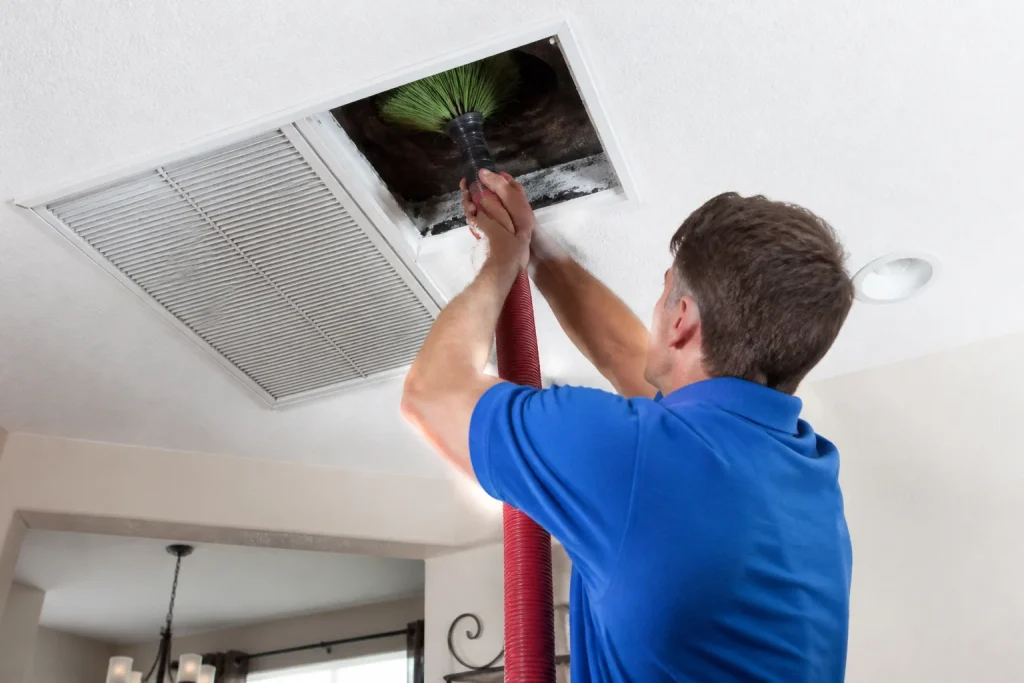
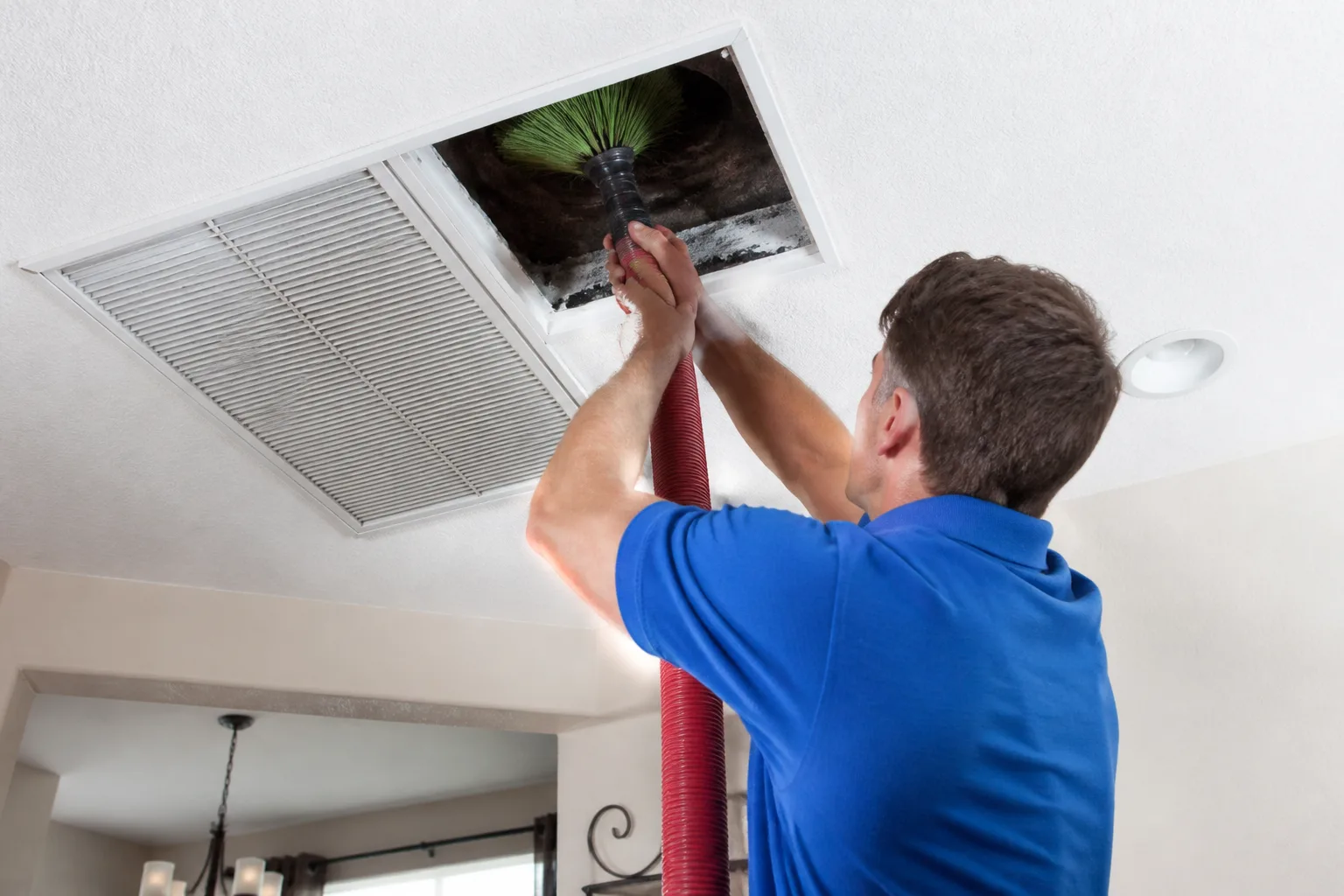
One thing we hear a lot in Gainesville: “the last company was in and out in twenty minutes.” That’s a sign the equipment wasn’t matched to the job. Commercial-grade equipment brought to your home is the difference between a thorough cleaning and a surface pass. Our technicians use the Rotobrush rotary brush system and Nikro negative-air extraction on every job, and we take before-and-after photos so you can see what was actually removed. On that note – if a duct cleaner won’t show you the inside of your own ducts, that’s your answer.
When to call a pro
Call a professional when the situation involves water, pests, or a system that’s been off for a while and smells wrong when it comes back on. Those three conditions are where DIY approaches usually make things worse and where the right equipment actually matters. For routine dust and general upkeep, a pro is worth it too, but the urgency is lower.
If you’re in Gainesville and you’re not sure which category you’re in, that’s a reasonable reason to call. We answer 24/7 and can help you figure out whether you need duct service, an HVAC contractor, or a pest company first.
Related services in Gainesville: air duct cleaning, air duct repair, and dryer vent cleaning. We clean, we repair, we clear dryer vents – one company for the full scope.
The Bottom Line
The sequence matters more than the speed. Stop the source, kill power to the system, document the conditions, and get an assessment before you book a cleaning. If it’s water, dry it before you clean it. If it’s pests, treat it before you clean it. If it’s mechanical, fix the mechanical side first. Only then does a duct cleaning do what it’s supposed to do.
Holloway Air Duct Cleaning brings commercial-grade equipment to the job – Rotobrush, Nikro, and Abatement Technologies filtration – and produces before-and-after photos so you can see the work. We clean, we repair, and we clear dryer vents. If you’re in Gainesville and need help, Holloway Air Duct Cleaning offers free estimates. Call (855) 408-4151. We answer 24/7. Fast dispatch from 7am to 7pm, Sunday through Friday.
Frequently Asked Questions
There’s no single price, and any company that quotes one over the phone without looking at the system is guessing. Cost depends on the number of runs, the size of the system, the condition, and whether repair is needed alongside cleaning. The written estimate sets the final price, and it’s free. Call (855) 408-4151 for an exact quote.
Duct cleaning is a scheduled service. We answer 24/7 and dispatch Sunday through Friday, 7am to 7pm, and a call outside those hours gets booked into the next opening. If the situation involves active water or pests, the first step is stopping or treating that source, and we can help you sort out the order. Call (855) 408-4151.
Sometimes, and sometimes the right answer is replacement. Rigid metal ductwork can often be cleaned and dried once the water source is stopped. Wet flex duct is frequently a replace job because the interior liner traps moisture. The assessment comes before the cleaning. Call (855) 408-4151 and we’ll talk through what you’re seeing.
Ask for before-and-after photos of your own ducts. We take them on every job. The photo shows what was in the run before and what’s there after. If a company won’t show you, that’s a sign the equipment wasn’t matched to the job. Call (855) 408-4151 for a free estimate.
Written by the team at Holloway Air Duct Cleaning.
Need Air Duct Cleaning Help?
Call Holloway Air Duct Cleaning - licensed & insured, with free written estimates in Gainesville.
(855) 408-4151